Temperature22 – 27 °C
Natural range
- Sabah area
- Borneo area
Labyrinth fishConservation status: Data deficient DD
The scientific name Betta balunga refers to a fish known as Betta balunga or Balunga Betta, belonging to the family Osphronemidae. These fish are named after the region on the island of Borneo where they were first discovered. Their keeping involves specific water parameter requirements – slightly acidic and soft pH and dGH values are necessary. Providing such conditions can be challenging for beginners, so this species is not recommended for novice aquarists.
- Required aquarium volume
- 50 L
- Size in aquarium
- 4.5 – 5 cm
- Temperature
- 22 – 27 °C
- Temperament
- Peaceful (regular)
Parameters
Water pHSlightly acidic (5) – Neutral (7)
Water dHVery soft (1) – Soft (5)
Water salinityno salt (freshwater)
Size in aquarium4.5 – 5 cm
Lifespan3 years
TemperamentPeaceful (regular)
Toward small fishnot a predator
Required aquarium volume50 L
Lightingdimmed
Substrateany, but dark
Water flownone or stagnant (no flow)
FeedingAny (universal)
CareMixed (solitary / pair / group)
Description
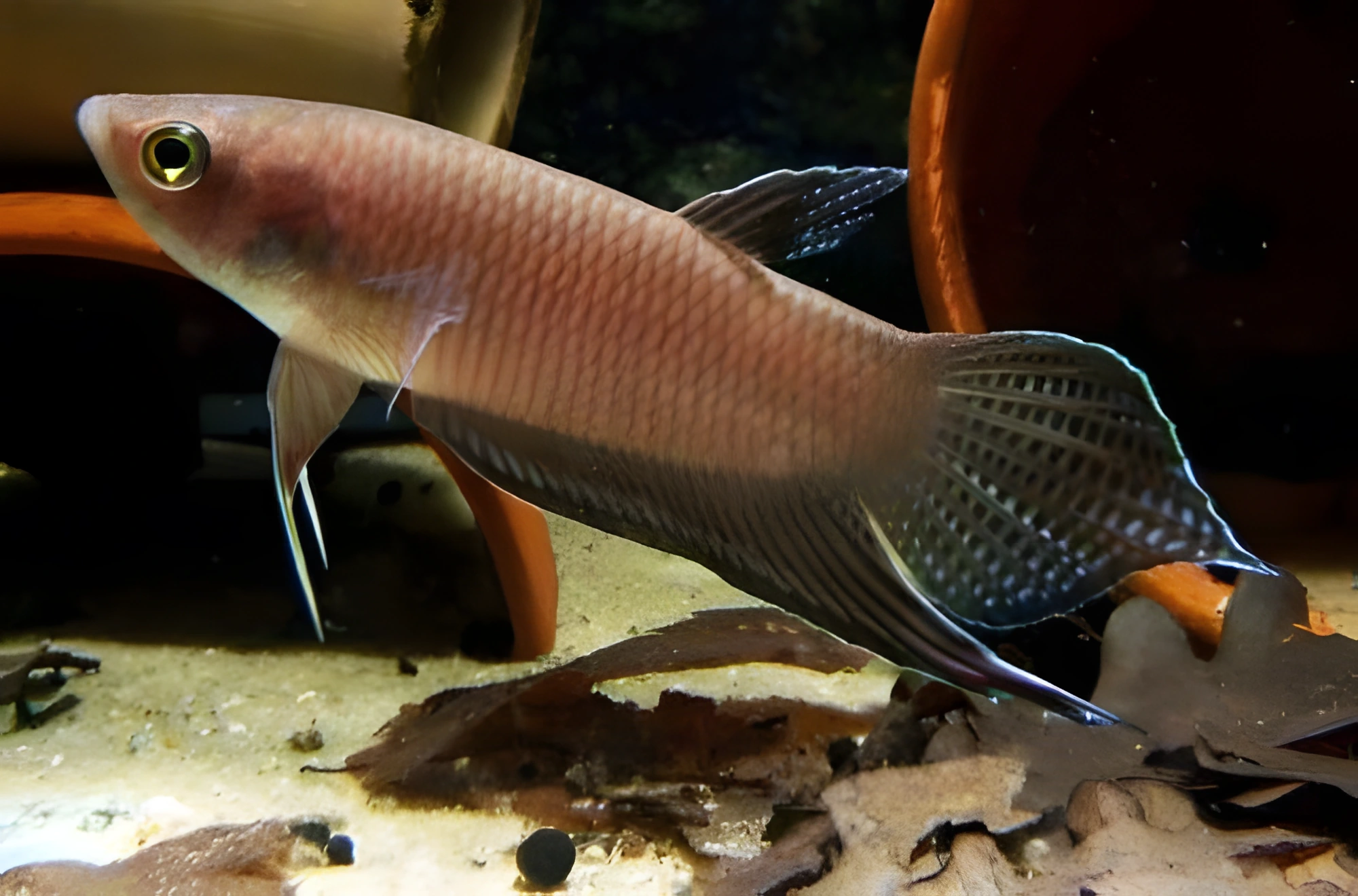
Adults typically reach about 5 cm in length. Males differ from females by being slightly larger and having more pointed fins. Coloration also has its peculiarities: male specimens show light stripes on a gray background, and their fins shimmer with turquoise hues. Females, on the other hand, display a more uniform coloration.
Habitat
Betta balunga inhabits Southeast Asia, specifically the Malaysian part of Borneo, in Sabah province. The natural habitat of this species is found in the Balung River basin. Typical biotopes are shallow streams, barely reaching 5–10 cm in depth, flowing under the dense canopy of the tropical forest. The beds of these water bodies are often covered with fallen leaves and branches, and along the banks, there are dense thickets of aquatic plants, mosses, and ferns.
Behavior and Compatibility
These fish are distinguished by their peaceful and calm disposition. Among males, competition for hierarchical position and female attention may be observed, manifesting as "displays of strength." However, unlike other Bettas, such skirmishes are rare and not aggressive. They can be kept both in pairs (male/female) and in small mixed-sex groups. They coexist well with other non-aggressive species of comparable size.
Care and Maintenance
For a small group of these fish, the optimal aquarium volume starts from 50–60 liters. Various natural or artificial decor elements should be chosen to create several suitable hiding places. A combination of shade-loving plants and driftwood will be an excellent choice. Using a leaf litter substrate will not only add naturalness to the decor but also help enrich the water with tannins, recreating the conditions of Betta balunga's natural habitat. Additional information can be found in the article "Which tree leaves can be used in an aquarium." Maintaining high water quality within the acceptable temperature and hydrochemical parameters is a key aspect for long-term keeping. Water stability is ensured by regular aquarium maintenance and the uninterrupted operation of equipment, especially the filtration system.
Diet
In the wild, the diet of these fish consists mainly of small insects and various zooplankton. In home keeping, Betta balunga readily accept alternative foods, including popular dry, frozen, and live products in the aquarium hobby.
Breeding and Reproduction
Balunga Bettas show care for their offspring at the most vulnerable stage of their development. Instead of scattering eggs on the substrate or among plants, leaving them to fend for themselves, as many other fish do, males mouthbrood the eggs. During this time, females guard the area where the male has secluded himself. It is interesting to note that females in this species play a more active role, and they initiate the courtship process during the breeding season. The incubation period lasts from 14 to 21 days, after which fully formed fry emerge. After this point, the parents cease to pay attention to their offspring but do not attempt to eat them, allowing the young to grow alongside the adult fish. It is important to consider that if other species are present in the aquarium, they may perceive the new generation of Bettas as a potential food source.
Diseases
Most health problems in fish often arise from unsuitable keeping conditions. Maintaining a stable and comfortable habitat is a key factor for successful keeping. If symptoms of illness appear, the first step is to check the water quality. If deviations are found, it is important to take immediate measures to eliminate them. If the symptoms do not disappear or worsen, medicinal treatment may be required. More detailed information on symptoms and treatment methods can be found in the "Diseases of Aquarium Fish" section.
How to choose
When purchasing, choose active specimens with clean fins and no visible damage or film on the body. It is important to ensure that the fish shows interest in food and does not appear emaciated. Since the species is sensitive to water quality, avoid acquiring specimens from aquariums with signs of mass fish mortality or poor equipment condition. Healthy fish should have natural coloration, be alert to their surroundings, and not show signs of apathy or labored breathing. It is recommended to ask the seller about the water parameters in which the fish were kept to ensure smooth adaptation when transferring to a new aquarium. Avoid buying fish with sunken bellies or signs of parasitic infestation, as the recovery of such specimens requires specific conditions and experience.
Frequently asked questions
The essentials: size, tank volume, water parameters and care
How big does Betta balunga get?
An adult reaches 4.5–5 cm in length. Plan the tank around the maximum size: the fish quickly outgrows a cramped setup.
What size aquarium does Betta balunga need?
The minimum recommended volume is 50 L. A smaller tank speeds up nitrate build-up and raises stress levels.
What water parameters does Betta balunga need?
Temperature 22–27 °C, pH 5–7, hardness 1–5 dGH. Stability matters more than exact values: sudden swings are harder on the fish than a small deviation from the ideal.
How long does Betta balunga live?
Around 3 years when kept properly. Lifespan depends directly on tank volume, water quality and a varied diet.
Is Betta balunga aggressive?
Temperament: peaceful (regular). Keep this in mind when choosing tank mates.
How many Betta balunga should be kept together?
Recommended setup: mixed (solitary / pair / group). Ignoring this is a common cause of stress and disease.
What does Betta balunga eat?
Diet type: any (universal). Feed small portions that are finished within a couple of minutes — overfeeding does more harm than underfeeding.
What is the scientific name of Betta balunga?
The scientific name of the species is Betta balunga, family Osphronemidae.