Temperature23 – 26 °C
Natural range
- Northern India area
- Bangladesh area
- Bhutan area
- Ganges-Brahmaputra Basin
Loaches
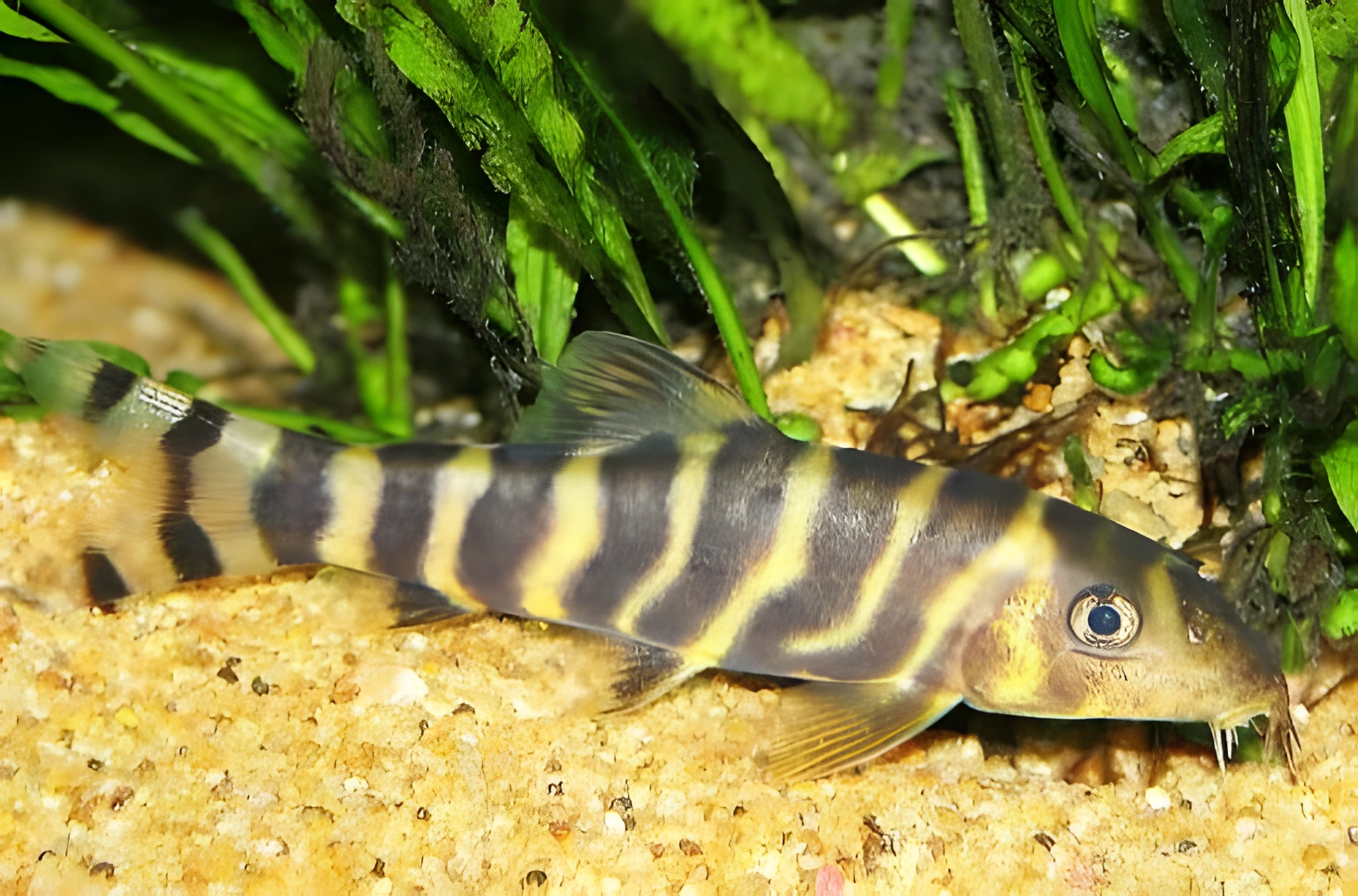
Botia dario, also known as the Bengal Loach (scientific name Botia dario), belongs to the family Cobitidae (Loaches). This fish is undemanding and easy to keep, coexisting well with many popular aquarium inhabitants. It can be an excellent addition to a community tank.
- Required aquarium volume
- 80 L
- Size in aquarium
- 12 – 13 cm
- Temperature
- 23 – 26 °C
- Temperament
- Peaceful (regular)
Parameters
Water pHSlightly acidic (6) – Neutral (7.5)
Water dHVery soft (1) – Medium hardness (10)
Water salinityno salt (freshwater)
Size in aquarium12 – 13 cm
Lifespan8 years
TemperamentPeaceful (regular)
Toward small fishnot a predator
Required aquarium volume80 L
Lightingdimmed
Substratefine sand
Water flowweak or moderate
FeedingSinking (any)
CareSmall group (5–6 individuals)
Description
Adult Botia dario reach a length of approximately 12–13 cm. Sexual dimorphism is not pronounced, although females are usually slightly larger than males. The fish has an elongated body with a noticeably large head. Sensitive barbels are located around the mouth, helping it find food in the substrate layer. The coloration is characterized by alternating stripes: narrow yellow and wider brown.
Habitat
The natural habitat of this species extends across northern India, Bangladesh, and Bhutan, where Botia dario is found in the basins of the great rivers Ganges and Brahmaputra. These fish inhabit both permanent watercourses and temporary bodies of water and channels that form during the monsoon season.
Behavior and Compatibility
These fish combine well with many popular, non-aggressive species of similar size. However, avoid cohabitation with very small ornamental fish, especially those with long fins. Within their own group, Botia dario establish hierarchical relationships among adult individuals. If kept in a group of at least 5–6 fish, they remain calm and peaceful. With fewer individuals, behavior may change, and the likelihood of aggression towards tank mates increases.
Care and Maintenance
For comfortable keeping of a group of 5–6 fish, the optimal aquarium volume starts from 80 liters. The decor can be arbitrary, but creating conditions close to the natural environment is always welcome. It is recommended to use a sandy or fine gravel substrate, and to place several snags and rock formations that create crevices, caves, or other shelters. Plants with a delicate root system are best planted in separate pots, while those with a more massive root system can be planted directly into the substrate. It should be noted that these fish have a habit of digging through the substrate, which can lead to accidental uprooting of plants. Lighting should be subdued. Successful keeping of the Bengal Loach does not present particular difficulties if stable hydrochemical parameters and proper water quality are maintained within acceptable limits. Essential care measures include regular cleaning of the aquarium from organic waste and weekly partial water changes (25–30% of the total volume) with fresh water, especially with an effective filtration system.
Diet
Since these fish feed at the bottom, sinking foods should be preferred. They are omnivorous and readily accept all types of dry, frozen, and live foods, with no special dietary requirements. An important aspect is the presence of plant components in their diet, otherwise there is a risk of damage to aquarium plants.
Breeding and Reproduction
In natural conditions, the breeding period of Botia dario coincides with the rainy season, accompanied by long migrations. Significant changes in external conditions serve as one of the stimuli for spawning. In home aquariums, reproducing such conditions for breeding this species is extremely problematic, so at the time of writing, no successful breeding cases have been recorded. Botia fry sold in stores usually come from commercial fish farms, where they are obtained through hormonal injections.
Diseases
Non-ornamental fish species that have retained a close resemblance to their wild relatives usually exhibit high endurance, strong immunity, and resistance to various diseases. The occurrence of health problems most often indicates unsuitable keeping conditions. Therefore, before proceeding with treatment, it is strongly recommended to check the water quality and parameters. Only after all indicators have been brought back to normal should treatment begin, if it is still necessary. Detailed information on diseases, their symptoms, and therapy methods can be found in the “Aquarium Fish Diseases” section.
How to choose
When choosing a Bengal Loach, pay attention to the overall activity of the individuals and the condition of their integument. A healthy fish should show curiosity, swim in the water column or explore the substrate, rather than constantly hiding in the corners of the aquarium. Avoid specimens with signs of emaciation, sunken bellies, fin damage, or whitish spots on the body.
- inspect the scales: they should be intact, without ulcers or film;
- check breathing: it should be even, without rapid gill cover movements;
- assess behavior: fish should react to external stimuli, not appear apathetic or sluggish.
Remember that loaches have sharp spines under their eyes, which can get caught in a net when catching them. When purchasing, it is advisable to ensure that the seller uses suitable containers or receptacles for catching to minimize the risk of injury to the fish and damage to the net.
Frequently asked questions
The essentials: size, tank volume, water parameters and care
How big does Bengal Loach get?
An adult reaches 12–13 cm in length. Plan the tank around the maximum size: the fish quickly outgrows a cramped setup.
What size aquarium does Bengal Loach need?
The minimum recommended volume is 80 L. A smaller tank speeds up nitrate build-up and raises stress levels.
What water parameters does Bengal Loach need?
Temperature 23–26 °C, pH 6–7.5, hardness 1–10 dGH. Stability matters more than exact values: sudden swings are harder on the fish than a small deviation from the ideal.
How long does Bengal Loach live?
Around 8 years when kept properly. Lifespan depends directly on tank volume, water quality and a varied diet.
Is Bengal Loach aggressive?
Temperament: peaceful (regular). Keep this in mind when choosing tank mates.
How many Bengal Loach should be kept together?
Recommended setup: small group (5–6 individuals). Ignoring this is a common cause of stress and disease.
What does Bengal Loach eat?
Diet type: sinking (any). Feed small portions that are finished within a couple of minutes — overfeeding does more harm than underfeeding.
What is the scientific name of Bengal Loach?
The scientific name of the species is Botia dario, family Botiidae.