Temperature24 – 28 °C
Natural range
- Mekong River Basin
- Chao Phraya River Basin
- Thailand area
- Laos area
CatfishConservation status: Data deficient DD
The White-whiskered Catfish, scientifically known as Bagrichthys majusculus, belongs to the family Bagridae, or Bagrid Catfishes. This fish will find its admirers, despite its tendency to hide in shelters for most of the time and its rather unfriendly attitude towards conspecifics and other bottom dwellers. However, it is undemanding and easy to care for, making it a suitable choice even for beginner aquarists.
- Required aquarium volume
- 250 L
- Size in aquarium
- 17 cm
- Temperature
- 24 – 28 °C
- Temperament
- Semi-peaceful (including aggression during spawning / intraspecific conflicts)
Parameters
Water pHSlightly acidic (5.5) – Neutral (7)
Water dHVery soft (1) – Very hard (21)
Water salinityno salt (freshwater)
Size in aquarium17 cm
Lifespan6 years
TemperamentSemi-peaceful (including aggression during spawning / intraspecific conflicts)
Toward small fishnot a predator
Required aquarium volume250 L
Lightingdimmed
Substrateany (no restrictions)
Water flownone or stagnant (no flow)
FeedingSinking (any)
CareHarem (1 male and several females)
Description
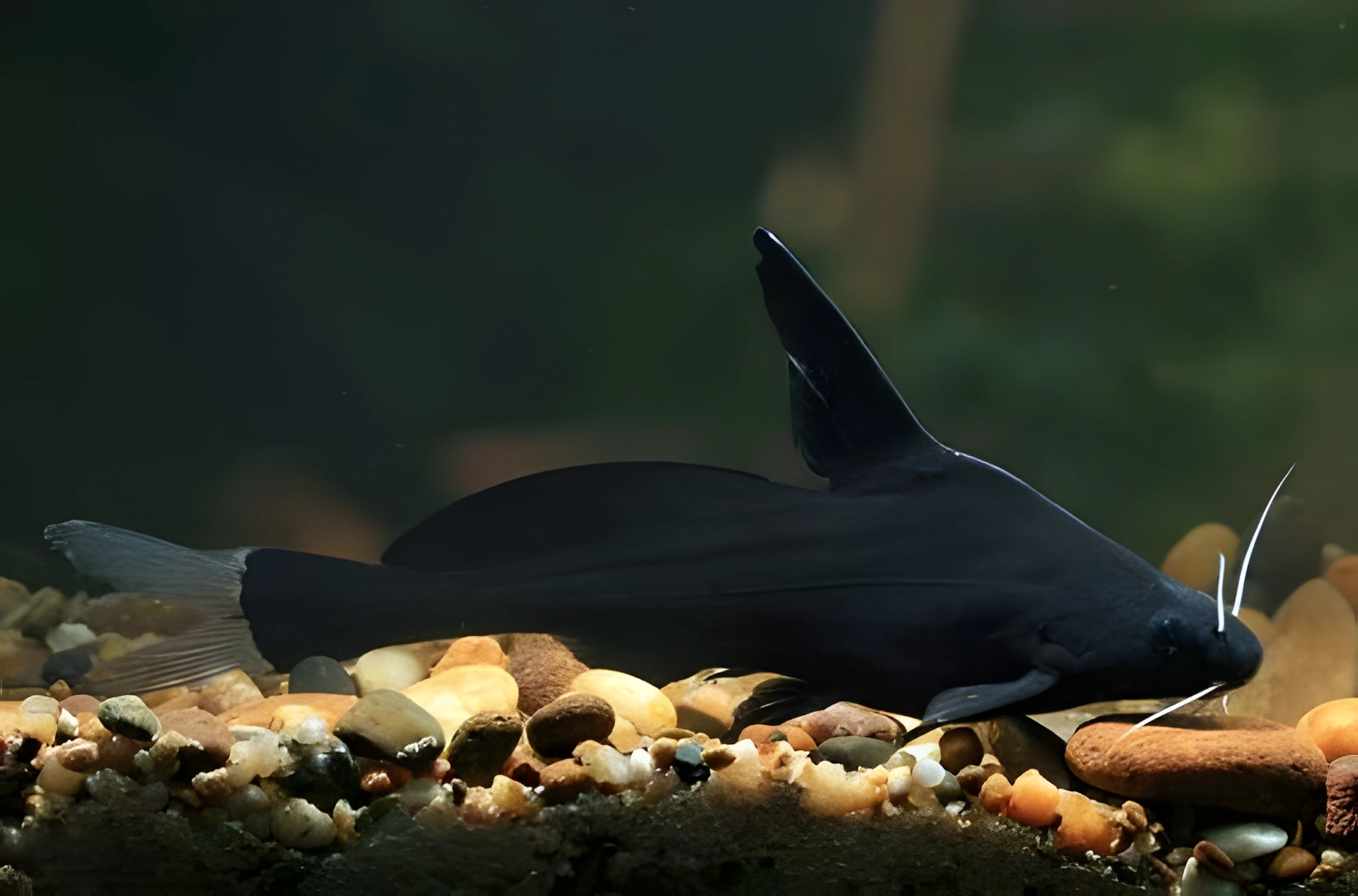
Adults can reach a length of about 17 cm. This catfish has an elongated body of a dark, almost black coloration. Its dorsal fin is split: the first part appears high and raised, while the second, lower part extends to the caudal fin, which, in turn, is translucent. The most recognizable feature is its snow-white whiskers. There are no significant differences between males and females.
Habitat
The native range of this species is Southeast Asia, specifically the Mekong and Chao Phraya river basins in Thailand and Laos, and presumably Cambodia. Catfish prefer sections of rivers with slow currents and silty bottoms. During the rainy season, they move to flooded coastal areas of tropical forests.
Behavior and Compatibility
These fish exhibit territorial behavior. In particular, males usually do not tolerate the presence of rivals or other bottom-dwelling fish in their vicinity. Females, however, show greater tolerance. It is advisable to keep them in a harem-type group: one male to 3–4 females. However, distinguishing males from females is quite difficult due to weakly expressed sexual dimorphism. Compatible tank mates include fish of comparable size that inhabit the middle or upper water layers.
Care and Maintenance
The optimal aquarium volume for a group of 3-4 White-whiskered Catfish should start from 250 liters. Since they are nocturnal, it is important to provide reliable shelters in the aquarium decor where the fish can hide during the day. These can be grottoes and crevices created with driftwood and stones, or ordinary ceramic pots lying on their side. Vegetation is not a mandatory element and is chosen at the aquarist's discretion, or based on the needs of other inhabitants. Long-term and successful keeping of these catfish directly depends on maintaining stable water parameters within acceptable ranges of hydrochemical indicators and temperatures. Although the filtration system plays a key role in ensuring water quality, one should not forget about mandatory regular maintenance, including weekly partial water changes with fresh water and the removal of organic debris.
Diet
Being an omnivorous species, this catfish readily accepts most common aquarium foods. Its diet can include dry sinking flakes and granules, as well as live or frozen foods such as bloodworms, Artemia, and Daphnia.
Breeding and Reproduction
Currently, no successful cases of breeding White-whiskered Catfish in home aquariums have been recorded. In their natural environment, their spawning is seasonal and closely linked to the alternation of dry and wet seasons. During periods of heavy rain, coastal areas and tropical forest sections are flooded, and it is there that the fish migrate for reproduction. Recreating such complex conditions outside of their natural environment seems very difficult.
Diseases
When kept in favorable conditions, fish rarely experience health deterioration. The occurrence of diseases usually indicates problems in keeping, such as polluted water, poor quality food, or injuries. In most cases, eliminating the root cause leads to recovery. However, sometimes medication may be required. Detailed information on symptoms and treatment methods can be found in the section "Diseases of aquarium fish."
How to choose
When choosing a White-whiskered Catfish, pay attention to the fish's activity at night, as it tends to be secretive during the day. A healthy specimen should have clean integuments without visible damage, ulcers, or white film, as well as intact fins. It is important to check the condition of the whiskers – they should be long and show no signs of erosion, which often occurs when kept in low-quality water.
Avoid purchasing fish with sunken bellies or signs of emaciation, as this may indicate internal parasitic infections or problems with adapting to food. Since the species is territorial, it is advisable to observe the fish's behavior in the community tank at the store: it should not show signs of severe stress or be subjected to constant attacks from tank mates.
Frequently asked questions
The essentials: size, tank volume, water parameters and care
How big does White-whiskered Catfish get?
An adult reaches 17 cm in length. Plan the tank around the maximum size: the fish quickly outgrows a cramped setup.
What size aquarium does White-whiskered Catfish need?
The minimum recommended volume is 250 L. A smaller tank speeds up nitrate build-up and raises stress levels.
What water parameters does White-whiskered Catfish need?
Temperature 24–28 °C, pH 5.5–7, hardness 1–21 dGH. Stability matters more than exact values: sudden swings are harder on the fish than a small deviation from the ideal.
How long does White-whiskered Catfish live?
Around 6 years when kept properly. Lifespan depends directly on tank volume, water quality and a varied diet.
Is White-whiskered Catfish aggressive?
Temperament: semi-peaceful (including aggression during spawning / intraspecific conflicts). Keep this in mind when choosing tank mates.
How many White-whiskered Catfish should be kept together?
Recommended setup: harem (1 male and several females). Ignoring this is a common cause of stress and disease.
What does White-whiskered Catfish eat?
Diet type: sinking (any). Feed small portions that are finished within a couple of minutes — overfeeding does more harm than underfeeding.
What is the scientific name of White-whiskered Catfish?
The scientific name of the species is Bagrichthys majusculus, family Bagrid Catfishes (Bagridae).