Temperature21 – 27 °C
Natural range
- Sri Lanka area
- Sri Lankan Wet Zone area
Labyrinth fishConservation status: Vulnerable VU
Other scientific names: Macropodus signatus, Platycanthus signatus, Polyacanthus signatus
Belontia signata, also known as the Combtail Gourami, belongs to the family Osphronemidae. It is sometimes called the "Sri Lankan Fighting Fish" due to its aggressive nature. It is not suitable for a community tank; it is recommended to keep these fish individually or in pairs. Ease of keeping largely depends on whether they are accustomed to dry food; otherwise, difficulties may arise in finding live foods.
- Required aquarium volume
- 140 L
- Size in aquarium
- 12 cm
- Temperature
- 21 – 27 °C
- Temperament
- Aggressive / incompatible / unfriendly
Parameters
Water pHSlightly acidic (6) – Neutral (7.5)
Water dHVery soft (1) – Hard (12)
Water salinityno salt (freshwater)
Size in aquarium12 cm
Lifespan6 years
TemperamentAggressive / incompatible / unfriendly
Toward small fishnot a predator
Required aquarium volume140 L
Lightingdimmed
Substrateany (no restrictions)
Water flownone or stagnant (no flow)
FeedingMeat / protein (live, frozen, fresh)
CarePair (male/female)
Description
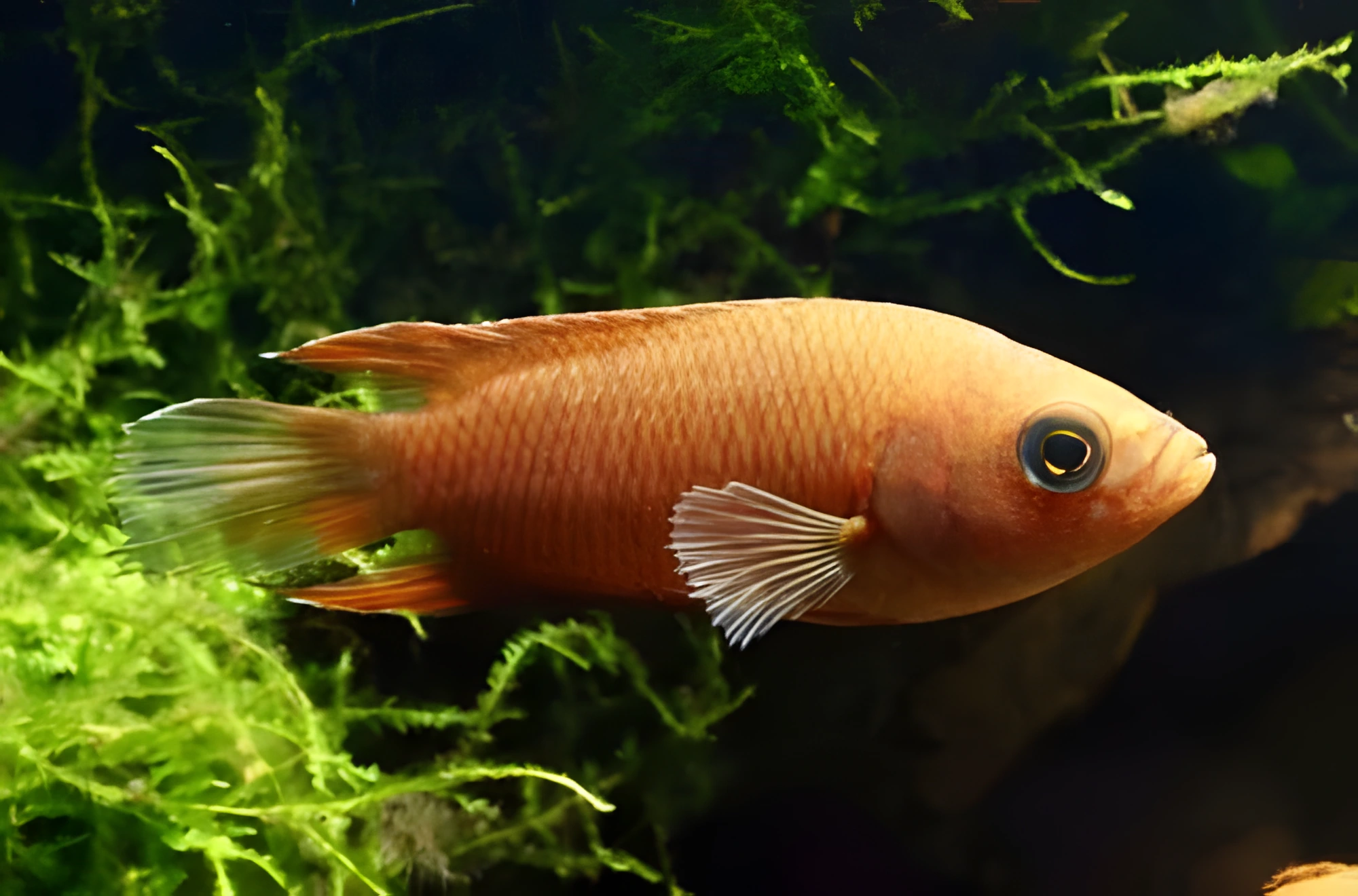
Adults often reach about 12 cm in length. The caudal fin has an uneven edge, resembling the teeth of a comb. The dorsal and anal fins are pointed. The coloration is usually monochromatic, varying from red to yellow-brown hues. Sexual dimorphism is weakly expressed; females differ from males only in their smaller size.
Habitat
This species is endemic to the island of Sri Lanka, located in Southeast Asia, near the coast of India. It inhabits river systems and small streams that wind their way through tropical forests. Belontia prefers bodies of water with slow currents, clear water, a substrate of sand or stones, and abundant riparian vegetation.
Behavior and Compatibility
This fish is characterized by pronounced aggression towards both its conspecifics and representatives of other species. This is mainly observed in males. Solitary keeping or keeping in pairs (male/female) is recommended. In more spacious aquariums, from 200 liters, cohabitation with some large carp species comparable in size to Belontia signata is permissible. Any small fish species may become targets of persecution and be eaten.
Care and Maintenance
For keeping a single pair of fish, an aquarium of at least 140 liters is required. For decoration, use a soft sandy substrate; it is recommended to place dense thickets of rooted plants in groups, supplementing them with areas of floating species. Many shelters in the form of snags, roots, and tree branches are also welcome. Keeping conditions involve low lighting and gentle filtration to avoid excessive internal current. Hydrochemical water parameters should correspond to neutral pH values with low hardness (dGH). It is advisable to equip the aquarium with a lid to maintain a warm, humid layer of air above the surface, which is critically important for the respiration of labyrinth fish. Care includes regular cleaning of the substrate from organic debris and weekly replacement of 10–15% of the water volume with fresh water.
Diet
Belontia signata are predatory species. Their diet should include large live or frozen foods, such as earthworms or mollusks (mussels, shell-less snails, etc.). Young fish can feed on bloodworms and brine shrimp. It should be noted that Belontia are often successfully accustomed to dry granulated foods, so when purchasing, be sure to clarify what the fish have been fed.
Breeding and Reproduction
Unlike most labyrinth fish, male Belontia signata do not pay much attention to nest building, so it is usually quite primitive. After spawning, the male remains with the clutch to protect the future offspring. During this period, his behavior becomes excessively aggressive, even towards the female, so it is recommended to temporarily transfer her to a separate aquarium. When the fry appear, the female can be returned, and the young can be placed in a separate tank to avoid being eaten by the parents.
Diseases
The main cause of most diseases in Leaf Fish is unsuitable keeping conditions and poor-quality nutrition. If initial symptoms are observed, it is first necessary to check water parameters and the concentration of dangerous substances such as ammonia, nitrites, and nitrates. If the indicators deviate from the norm, they should be brought back into order, and only then should treatment begin. More detailed information on symptoms and treatment methods can be found in the "Aquarium Fish Diseases" section.
How to choose
When choosing Belontia signata, it is important to assess the fish's overall condition: it should be active, without visible scale damage, ulcers, or white film on the body. Avoid individuals with sluggish behavior, clamped fins, or signs of emaciation, as this species is prone to aggression, which often leads to injuries in overcrowded aquarium conditions.
- Ask the seller about the current diet: whether the fish is accustomed to dry foods, as it can be difficult to transition a predator to artificial food.
- Check for signs of infection, such as rapid breathing or an unnaturally swollen abdomen.
- Consider the territorial nature of the species: even young individuals can show pronounced aggression towards neighbors, so it is best to choose fish of approximately the same size.
Frequently asked questions
The essentials: size, tank volume, water parameters and care
How big does Belontia signata get?
An adult reaches 12 cm in length. Plan the tank around the maximum size: the fish quickly outgrows a cramped setup.
What size aquarium does Belontia signata need?
The minimum recommended volume is 140 L. A smaller tank speeds up nitrate build-up and raises stress levels.
What water parameters does Belontia signata need?
Temperature 21–27 °C, pH 6–7.5, hardness 1–12 dGH. Stability matters more than exact values: sudden swings are harder on the fish than a small deviation from the ideal.
How long does Belontia signata live?
Around 6 years when kept properly. Lifespan depends directly on tank volume, water quality and a varied diet.
Is Belontia signata aggressive?
Temperament: aggressive / incompatible / unfriendly. Keep this in mind when choosing tank mates.
How many Belontia signata should be kept together?
Recommended setup: pair (male/female). Ignoring this is a common cause of stress and disease.
What does Belontia signata eat?
Diet type: meat / protein (live, frozen, fresh). Feed small portions that are finished within a couple of minutes — overfeeding does more harm than underfeeding.
What is the scientific name of Belontia signata?
The scientific name of the species is Belontia signata, family Osphronemidae. It also appears in the literature as: Macropodus signatus, Platycanthus signatus, Polyacanthus signatus.