Temperature24 – 30 °C
Natural range
- Central America area
- Yucatán Peninsula area
Predators LivebearersConservation status: Least concern LC
Other scientific names: Belonesox maxillosus
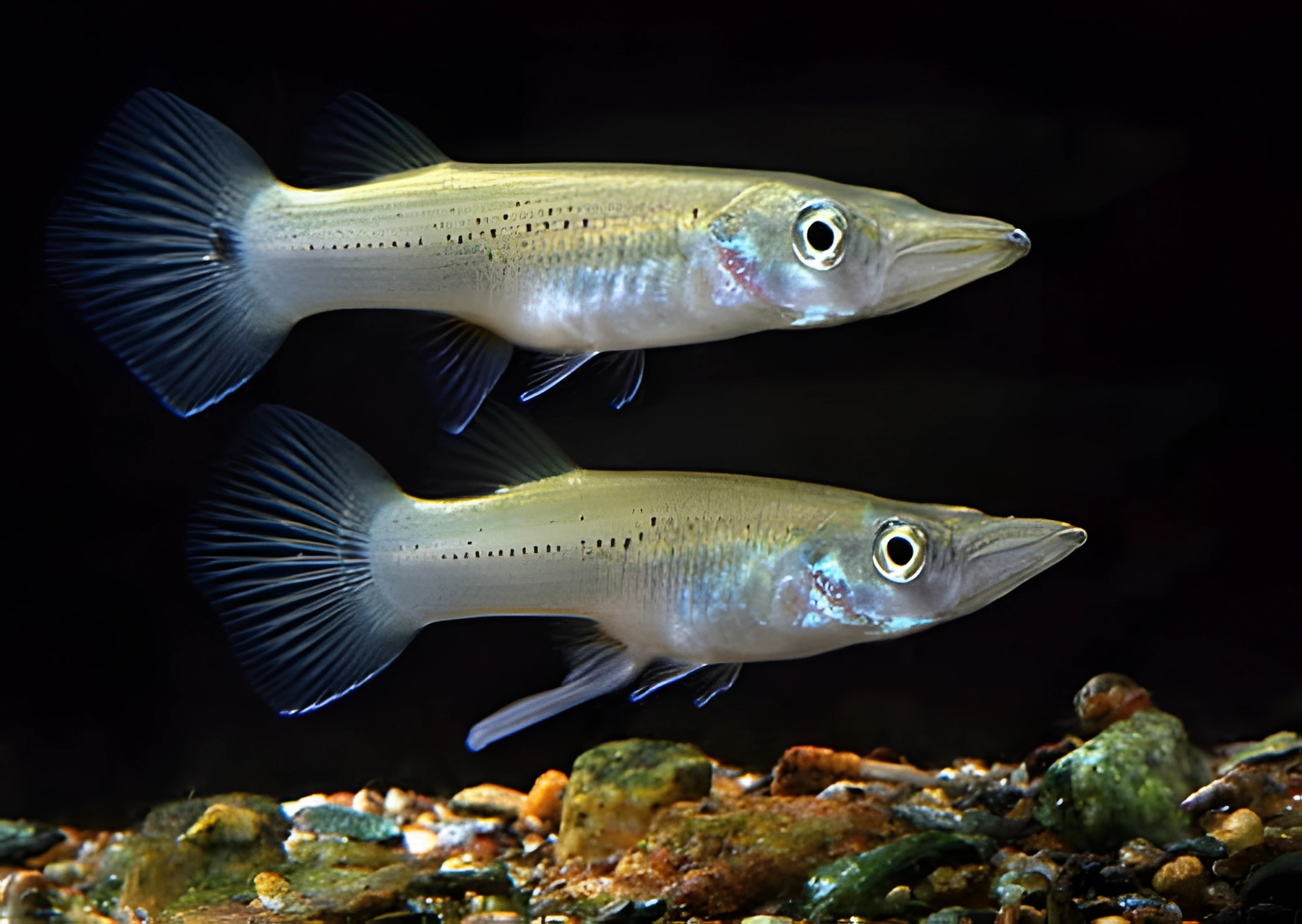
The Belonesox, scientifically known as Belonesox belizanus, is a member of the Poeciliidae family. Despite its relatively small size, this species is considered a formidable predator, preferring to hunt from ambush. Its prey can even include fish comparable in size to itself. Its body contours, behavior, and hunting strategy strongly resemble a miniature version of the Central European pike.
- Required aquarium volume
- 200 L
- Size in aquarium
- 18 cm
- Temperature
- 24 – 30 °C
- Temperament
- Predator (dangerous to small, incompatible)
Parameters
Water pHNeutral (7) – Slightly alkaline (8.5)
Water dHHard (12) – Very hard (25)
Water salinityvery low (up to ~3 g/L)
Size in aquarium18 cm
Lifespan5 years
TemperamentPredator (dangerous to small, incompatible)
Toward small fishpredator
Required aquarium volume200 L
Lightingmoderate (regular)
Substrateany (no restrictions)
Water flowweak or moderate
FeedingFor carnivores (live fish, insects, etc.)
CarePair (male/female)
Description
The body of the Belonesox is elongated, with a spindle-shaped head and an extended mouth lined with teeth. A distinctive feature is the displacement of the dorsal and anal fins closer to the large caudal fin, which provides powerful acceleration during a sudden lunge. The overall appearance of the fish indeed resembles a river pike. Females are noticeably larger than males. The coloration is usually gray-brown, with a series of black spots forming a longitudinal line along the entire body. The fins are transparent, and a noticeable dark spot is present at the base of the tail.
Habitat
This species originates from the warm, marshy areas of Central America, actively inhabiting river deltas that flow into the sea. Its natural habitat is rich in aquatic vegetation and various fish species, among which representatives of the same Poeciliidae family hold a special place, forming the basis of the Belonesox's diet.
Behavior and Compatibility
Belonesox is an aggressive predator and will attack any fish smaller than itself. These fish form stable pairs (male/female), and it is not recommended to keep them individually.
Care and Maintenance
For the aquarium, ordinary dechlorinated tap water with neutral or slightly alkaline pH values is often suitable. The species can also live in slightly brackish water. Maintaining high water quality is ensured by weekly water changes of 10–20% of its volume, regular cleaning of the substrate from organic debris, and the installation of a high-performance filtration system. Other important equipment includes a heater, an aeration system, and lighting. When aquascaping, attention should be paid to plant cover: it should consist of robust rooted plants, securely anchored in the substrate. Create zones with dense vegetation, which will serve as cover for prey until it is caught.
Diet
The diet of Belonesox consists entirely of live foods. Small, fast-breeding fish such as Formosa, Guppies, Gambusia, and other similar species can be offered as food. Additionally, worms and large insect larvae can be included in the diet. Feeding is recommended every other day. If the fish is satiated, the remaining prey can safely stay in the aquarium until the next meal.
Breeding and Reproduction
Optimal conditions for the spawning process are considered to be warm, slightly brackish water and a sufficient amount of food. The onset of the breeding season can be noticed in females: their abdomen noticeably swells, giving the impression that they have just eaten. Fertilized eggs develop inside the female's body throughout the incubation period, and fully formed fry are born. This evolutionary feature is an effective mechanism for protecting offspring. It is advisable to transfer the fry to a separate tank and feed them small worms, insect larvae, or the fry of other fish.
Diseases
Predatory fish are generally not susceptible to diseases unless caused by injuries or poor water conditions. Their diet consists of other fish, which are often weakened or sick, as part of natural selection. Thanks to this, Belonesox has excellent immunity and does not contract diseases from its prey.
How to choose
When choosing Belonesox, special attention should be paid to the integrity of its jaws, as any damage or signs of fungal infections in the mouth area are critical defects. A healthy individual should be active, have clean skin without spots or ulcers, and demonstrate the species' natural wariness. Avoid purchasing fish that appear lethargic, emaciated, or have visible fin damage.
Given the predatory nature of the species, it is important to clarify with the seller in advance the type of food the fish has been accustomed to. Many individuals refuse any food other than live food, which can create difficulties in keeping them. It is also recommended to inspect the aquarium where the fish are kept: the presence of small tankmates may indicate that the Belonesox has already adapted to eating live fish, which confirms its predatory behavior and good appetite.
Frequently asked questions
The essentials: size, tank volume, water parameters and care
How big does Belonesox get?
An adult reaches 18 cm in length. Plan the tank around the maximum size: the fish quickly outgrows a cramped setup.
What size aquarium does Belonesox need?
The minimum recommended volume is 200 L. A smaller tank speeds up nitrate build-up and raises stress levels.
What water parameters does Belonesox need?
Temperature 24–30 °C, pH 7–8.5, hardness 12–25 dGH. Stability matters more than exact values: sudden swings are harder on the fish than a small deviation from the ideal.
How long does Belonesox live?
Around 5 years when kept properly. Lifespan depends directly on tank volume, water quality and a varied diet.
Is Belonesox aggressive?
Temperament: predator (dangerous to small, incompatible). This is a predatory species — any fish small enough to fit in its mouth will eventually be eaten.
How many Belonesox should be kept together?
Recommended setup: pair (male/female). Ignoring this is a common cause of stress and disease.
What does Belonesox eat?
Diet type: for carnivores (live fish, insects, etc.). Feed small portions that are finished within a couple of minutes — overfeeding does more harm than underfeeding.
What is the scientific name of Belonesox?
The scientific name of the species is Belonesox belizanus, family Poeciliidae. It also appears in the literature as: Belonesox maxillosus.