Temperature23 – 27 °C
Natural range
- Brazil area
- Bahia area
Predators CharacinsConservation status: Least concern LC
Other scientific names: Serrasalmo brandtii
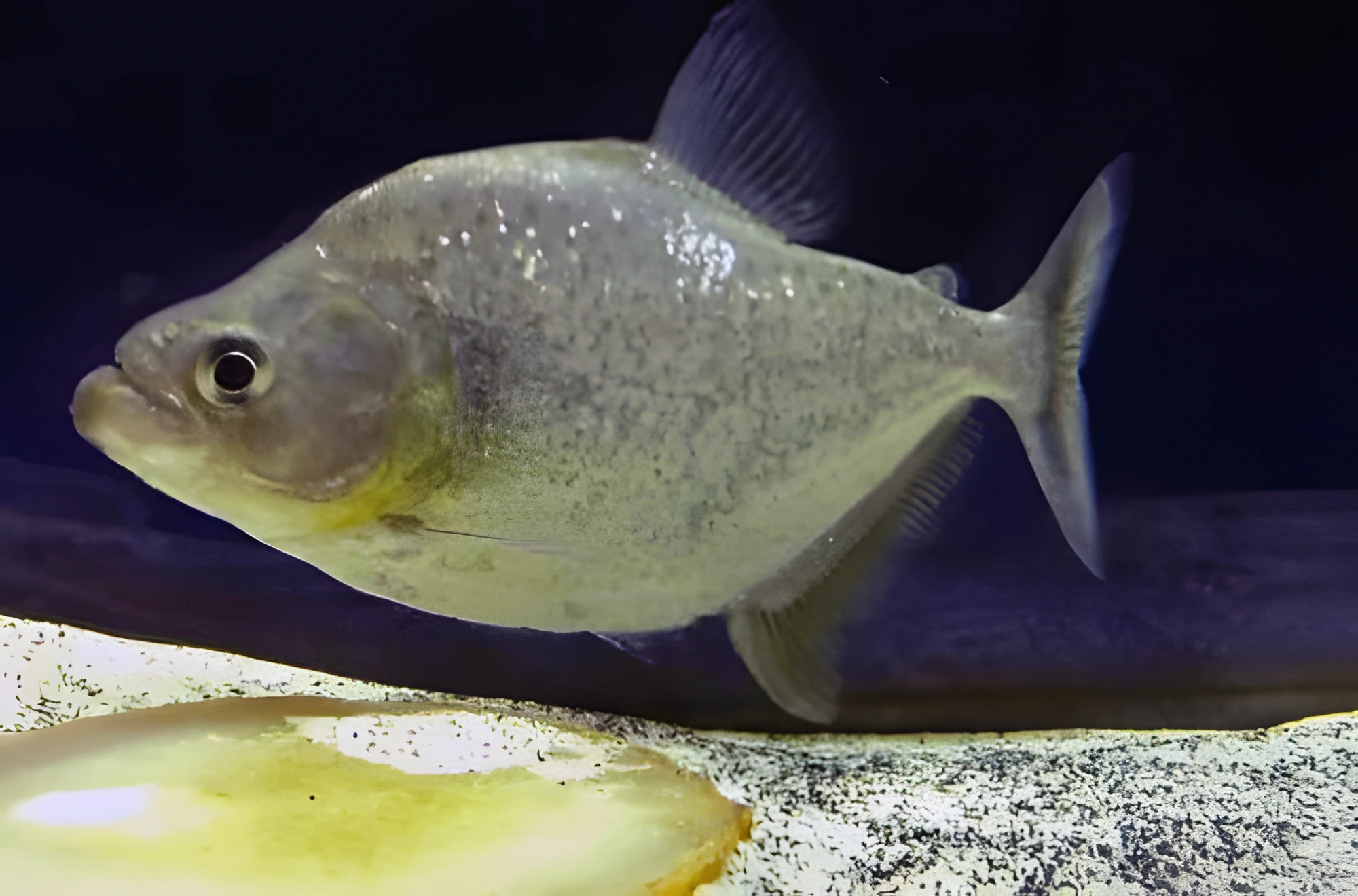
The White Piranha, also known as Brandt's Piranha (Serrasalmus brandtii), is a member of the family Serrasalmidae. Its name commemorates the German naturalist Johann Friedrich von Brandt (1802–1879), the first researcher and describer of this species. Keeping this fish presents certain difficulties, but its presence in an aquarium, creating a very impressive effect, often outweighs these challenges for affluent aquarists.
- Required aquarium volume
- 400 L
- Size in aquarium
- 25 cm
- Temperature
- 23 – 27 °C
- Temperament
- Aggressive / incompatible / unfriendly
Parameters
Water pHSlightly acidic (5) – Slightly alkaline (8)
Water dHVery soft (3) – Very hard (23)
Water salinityno salt (freshwater)
Size in aquarium25 cm
Lifespan10 years
TemperamentAggressive / incompatible / unfriendly
Toward small fishpredator
Required aquarium volume400 L
Lightingdimmed
Substrateany (no restrictions)
Water flowweak or moderate
FeedingMeat / protein (live, frozen, fresh)
CareSolitary
Description
Adults of this fish reach a length of 20 to 25 cm. Their body is massive, rhomboid in shape, and strongly compressed laterally. The fins appear translucent but are darker at the base; they are quite short and located closer to the caudal part. Young individuals are distinguished by their silvery coloration with numerous dark speckles. As they mature, the main color changes to a golden-bronze. Sexual dimorphism is weakly expressed, making sex determination difficult.
Habitat
Its natural habitat is in South America, within Brazil. Specifically, the White Piranha is widespread in the São Francisco River basin, covering eastern states such as Bahia, Pernambuco, Alagoas, and Sergipe. It inhabits various biotopes of this region: river channels, floodplains, lakes, and reservoirs.
Behavior and Compatibility
In a small aquarium, which for this species includes 400-liter tanks, it is recommended to keep only one adult piranha. They do not show much loyalty to their kin and are quite comfortable alone. Due to their diet, the number of species compatible with the White Piranha is extremely limited. Practically any other fish is at risk, with the exception of very large species or some Armored Catfish, which have reliable protection in the form of bony plates and spines.
Care and Maintenance
For keeping a single White Piranha, an aquarium of at least 400 liters is recommended. The decor is not critically important, but it is necessary to provide enough space for free swimming and several shelters, such as driftwood with dense vegetation. A key aspect of successful keeping is maintaining high water quality within optimal temperatures and hydrochemical parameters. As a predator, this fish produces a significant amount of waste, which requires the installation of a powerful external filter system, regular removal of organic debris (uneaten food, excrement), and weekly replacement of 30–50% of the water volume. Performing such large-scale water changes manually can be very laborious unless an automated top-off/drain system is installed with a connection to the water supply, water treatment system, and sewage. Otherwise, weekly manual replacement of 200 liters or more of water becomes a serious task. Fish of this level are rarely found among hobbyists, and their cost significantly exceeds the price of more common species. Those who can afford such pets usually provide the aquarium with everything necessary, and its maintenance is often handled by specialists. The owner is then left only to feed their fish and enjoy their appearance.
Diet
Although the White Piranha is considered omnivorous, its main diet in its natural environment consists of other fish. In a home aquarium, you can offer earthworms, large bloodworms, as well as shrimp, mussel, and other fish meat, adjusting the portion size according to the piranha's size. Daily feeding with animal products such as pork or beef should be avoided, as the lipids they contain are poorly digested.
Breeding and Reproduction
Currently, there are no recorded successful cases of Brandt's Piranha breeding in home aquariums. In their natural environment, their reproductive cycle continues throughout the year, with spawning occurring under favorable conditions, usually coinciding with the rainy season.
Diseases
This fish is distinguished by its hardiness and unpretentiousness. Health problems are most often associated with injuries, inadequate nutrition, or unsuitable water composition. When signs of illness appear, such as lethargy, changes in body shape, or loss of appetite, it is often enough to normalize the keeping conditions for the fish's body to cope with the ailment. However, in some cases, medication may be required. More detailed information on symptoms and treatment methods is available in the "Diseases of Aquarium Fish" section.
How to choose
When purchasing a White Piranha, choose an active specimen with clear, transparent eyes and undamaged fins. Avoid fish with signs of emaciation, sunken bellies, film on their scales, or unnatural behavior (e.g., sluggish swimming or constantly lying on the bottom). Given the aggressive nature of the species, fish are often kept individually in stores, so it's important to check for wounds and bite marks on the body.
Since this species is rarely available for sale and can be timid during transportation, it is recommended to ask the seller in advance what the specific individual eats. A healthy fish should show interest in food and react adequately to external stimuli. Due to the high cost and complexity of keeping, ensure the supplier has reliable information about the fish's origin, as this species is often confused with other members of the family.
Frequently asked questions
The essentials: size, tank volume, water parameters and care
How big does White Piranha get?
An adult reaches 25 cm in length. Plan the tank around the maximum size: the fish quickly outgrows a cramped setup.
What size aquarium does White Piranha need?
The minimum recommended volume is 400 L. A smaller tank speeds up nitrate build-up and raises stress levels.
What water parameters does White Piranha need?
Temperature 23–27 °C, pH 5–8, hardness 3–23 dGH. Stability matters more than exact values: sudden swings are harder on the fish than a small deviation from the ideal.
How long does White Piranha live?
Around 10 years when kept properly. Lifespan depends directly on tank volume, water quality and a varied diet.
Is White Piranha aggressive?
Temperament: aggressive / incompatible / unfriendly. This is a predatory species — any fish small enough to fit in its mouth will eventually be eaten.
How many White Piranha should be kept together?
Recommended setup: solitary. Ignoring this is a common cause of stress and disease.
What does White Piranha eat?
Diet type: meat / protein (live, frozen, fresh). Feed small portions that are finished within a couple of minutes — overfeeding does more harm than underfeeding.
What is the scientific name of White Piranha?
The scientific name of the species is Serrasalmus brandtii, family Serrasalmidae. It also appears in the literature as: Serrasalmo brandtii.