Temperature23 – 32 °C
Natural range
- Madagascar area
- Eastern Madagascar area
RainbowfishConservation status: Endangered EN
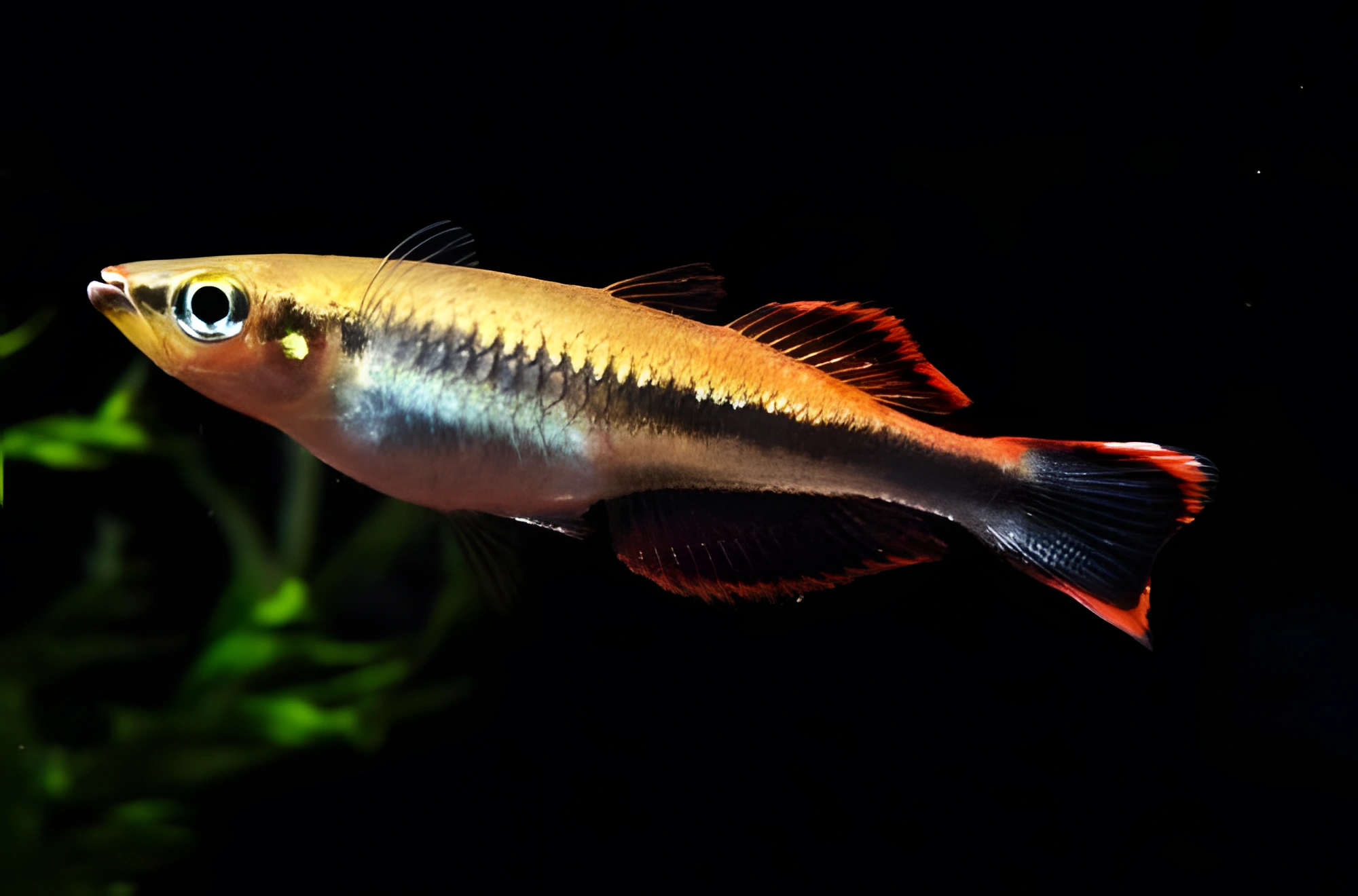
Bedotia madagascariensis, also known as the Red-tailed Bedotia, belongs to the family Bedotiidae. This species appeared in hobbyists' aquariums relatively recently, around the 1950s, but has since gained widespread recognition in Europe and America. Its popularity is due to its beautiful coloration, unpretentious care, and good compatibility with other fish species.
- Required aquarium volume
- 100 L
- Size in aquarium
- 8 – 10 cm
- Temperature
- 23 – 32 °C
- Temperament
- Peaceful (regular)
Parameters
Water pHAcidic (4.5) – Neutral (7.5)
Water dHVery soft (1) – Hard (15)
Water salinityno salt (freshwater)
Size in aquarium8 – 10 cm
Lifespan7 years
TemperamentPeaceful (regular)
Toward small fishnot a predator
Required aquarium volume100 L
Lightingdimmed
Substrateany (no restrictions)
Water flowweak
FeedingFloating (protein)
CareGroup (8–10 individuals)
Description
Adults of this fish can reach a length of about 10 cm. Males typically have brighter and more diverse coloration compared to females. Their bodies are gray with a yellow or blue sheen, and their fins and tail combine several shades: yellow, black, and red.
Habitat
Endemic to the island of Madagascar, this fish is found exclusively in the eastern part of the island. Its natural habitat consists of small streams and the lower reaches of rivers that flow into lagoons and coastal lakes. The Red-tailed Bedotia prefers areas with slow currents, where aquatic and riparian vegetation grows abundantly. All these locations are characterized by very soft and acidic water, often acquiring a tea-like tint due to high tannin content. Young individuals usually stay in shallow areas near the shore, while adult fish form schools and inhabit deeper waters. Currently, in some Bedotia biotopes, there is displacement by local populations of invasive species, such as Gambusia, which was introduced to the island to combat blood-sucking insects (malaria mosquitoes).
Behavior and Compatibility
This species is peaceful and non-aggressive, allowing it to successfully coexist with many other fish of similar size and temperament, avoiding compatibility issues. It is recommended to keep them in a school consisting of at least 8–10 individuals of both sexes. In the presence of competitors, males will display their best coloration, striving to attract the attention of females.
Care and Maintenance
For a small group of these fish, the minimum aquarium volume should be at least 100 liters. The decor can be varied, but it has been noted that the closer it resembles their natural habitat, the more vibrant and expressive the fish's coloration becomes. For decoration, you can use dense thickets of floating and rooted plants, various snags resembling tree roots and branches, and a layer of leaves on the bottom. Dry leaves should first be soaked until they sink before being placed in the aquarium (otherwise they will float on the surface). Leaves should be replaced every few weeks; it is during their decomposition that they impart the characteristic tea-like tint to the water. In general, the Red-tailed Bedotia is quite undemanding regarding living conditions, but, like any fish from flowing waters, it requires very clean and well-oxygenated water. Therefore, regular weekly water changes (30–35% of the total volume) and the installation of a powerful filter are essential conditions.
Diet
In natural conditions, the diet of Bedotia primarily consists of insects and other invertebrates. In a home aquarium, a protein-rich diet is recommended. Daphnia, bloodworms, and brine shrimp should be offered regularly, supplemented with a daily portion of high-quality dry food.
Breeding and Reproduction
When the breeding season arrives, males show increased courtship activity, which sometimes forces females to temporarily seek refuge among dense vegetation and snags to avoid excessive attention. Spawning continues for several days, during which the fish lay eggs among dense thickets of fine-leaved plants, mosses, or their artificial counterparts, such as spawning mops made of synthetic threads. Typically, Bedotia madagascariensis does not eat its eggs and fry, but this cannot be expected from other aquarium inhabitants. Therefore, it is recommended to transfer the future offspring to a separate tank with identical water conditions, a simple sponge filter, and abundant plants. The incubation period lasts 7–10 days, after hatching the fry immediately begin to swim and feed. It is worth noting that initially, the young stay in a vertical position and only transition to normal horizontal swimming after a couple of days.
Diseases
Health problems in these fish arise only in the presence of injuries or keeping in unsuitable conditions, which leads to a weakening of the immune system and the subsequent occurrence of various diseases. At the first signs of illness, it is necessary first to check the water parameters for exceeding permissible values or the presence of toxic substances (such as nitrites, nitrates, ammonia). If deviations are found, all indicators should be normalized, and then treatment should begin. More detailed information on symptoms and treatment methods is available in the "Diseases of Aquarium Fish" section.
How to choose
When choosing Bedotias, it is recommended to opt for young individuals, as they adapt much more easily to new living conditions than adult fish. Adult individuals are extremely sensitive to changes in water parameters and transportation, which can lead to severe stress or death. When inspecting them in the store, make sure the fish are actively swimming, have clean fins without signs of damage or film, and their coloration meets species standards. Avoid purchasing fish with sunken bellies or signs of sluggish behavior, as the species is prone to various diseases with improper care.
Frequently asked questions
The essentials: size, tank volume, water parameters and care
How big does Madagascar Rainbowfish get?
An adult reaches 8–10 cm in length. Plan the tank around the maximum size: the fish quickly outgrows a cramped setup.
What size aquarium does Madagascar Rainbowfish need?
The minimum recommended volume is 100 L. A smaller tank speeds up nitrate build-up and raises stress levels.
What water parameters does Madagascar Rainbowfish need?
Temperature 23–32 °C, pH 4.5–7.5, hardness 1–15 dGH. Stability matters more than exact values: sudden swings are harder on the fish than a small deviation from the ideal.
How long does Madagascar Rainbowfish live?
Around 7 years when kept properly. Lifespan depends directly on tank volume, water quality and a varied diet.
Is Madagascar Rainbowfish aggressive?
Temperament: peaceful (regular). Keep this in mind when choosing tank mates.
How many Madagascar Rainbowfish should be kept together?
Recommended setup: group (8–10 individuals). Ignoring this is a common cause of stress and disease.
What does Madagascar Rainbowfish eat?
Diet type: floating (protein). Feed small portions that are finished within a couple of minutes — overfeeding does more harm than underfeeding.
What is the scientific name of Madagascar Rainbowfish?
The scientific name of the species is Bedotia madagascariensis, family Bedotiidae.