Temperature25 – 28 °C
Natural range
- Amazon River Basin
- Orinoco River Basin
- Paraguay River Basin
- Essequibo River Basin
CatfishConservation status: Least concern LC
Other scientific names: Batrachoglanis raninus, Pimelodus raninus, Pseudopimelodus acanthochirus, Pseudopimelodus raninus
Batrochoglanis, scientifically known as Batrochoglanis raninus, belongs to the family Pseudopimelodidae. This fish originates from South America, inhabiting many river systems in the lower Amazon basin, as well as water bodies in Guyana and French Guiana. In its natural habitat, it can be found among accumulations of silty substrate, in thickets of submerged snags, and, of course, hiding in a layer of fallen leaves.
- Required aquarium volume
- 50 L
- Size in aquarium
- 8 – 20 cm
- Temperature
- 25 – 28 °C
- Temperament
- Semi-peaceful (dangerous to smaller ones)
Parameters
Water pHSlightly acidic (6) – Neutral (7)
Water dHMedium hardness (10) – Hard (15)
Water salinityno salt (freshwater)
Size in aquarium8 – 20 cm
Lifespan10 years
TemperamentSemi-peaceful (dangerous to smaller ones)
Toward small fishnot a predator
Required aquarium volume50 L
Lightingdimmed
Substratesoft sandy (including silted)
Water flowweak
FeedingSinking (any)
CareBoth solitary and in group (flexible)
Description
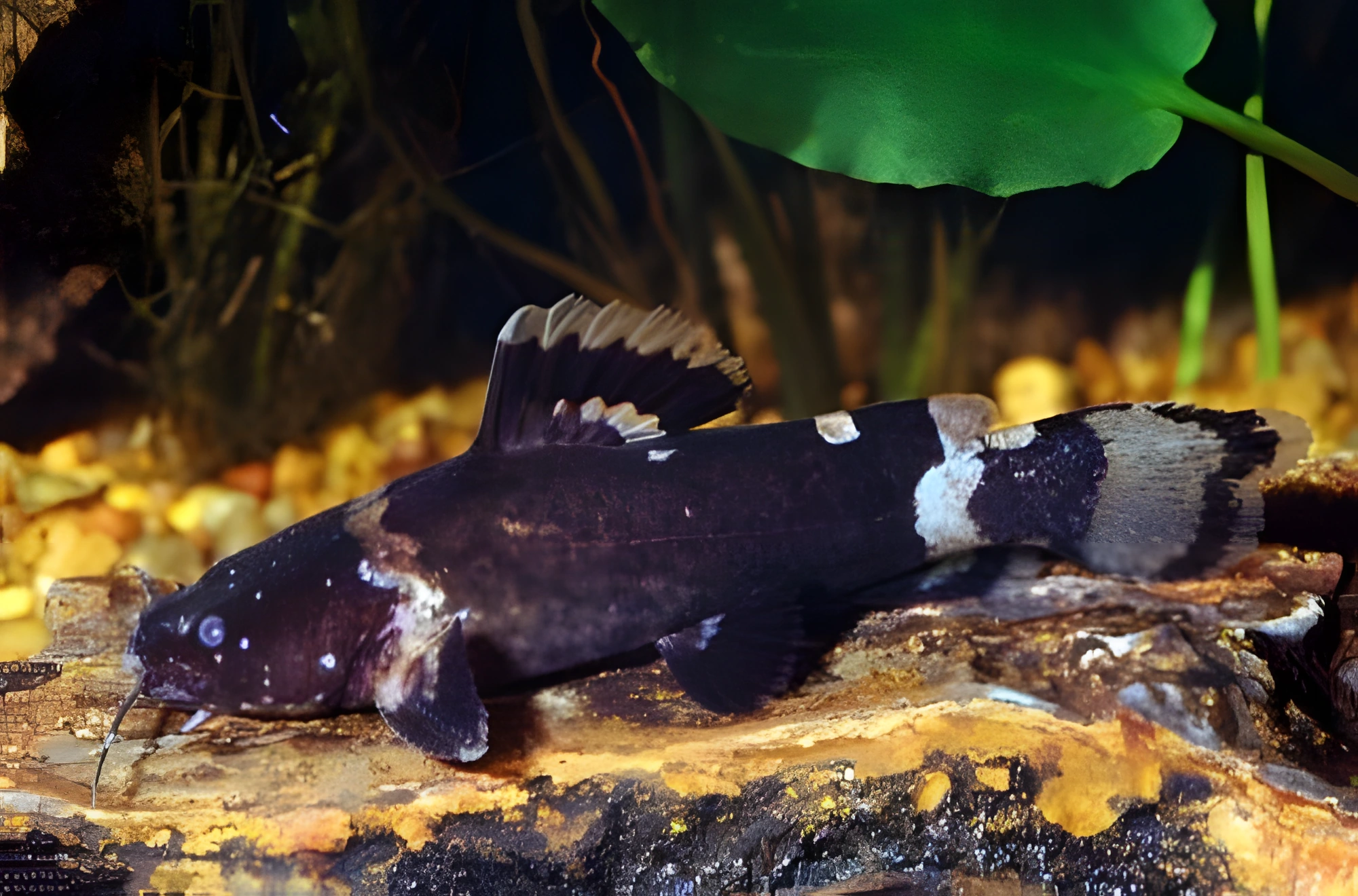
Adults of this catfish can reach a length of up to 20 cm. However, in aquarium conditions, their growth typically stops at 8–10 cm. The catfish's body appears stout, with short fins; the first rays of the fins are thickened and modified, forming spines. The caudal fin is rounded. The predominant coloration is dark brown or almost black, with light cream speckles. The tail stands out as it contains more light pigments compared to the body.
Habitat
The genus's range covers the Amazon, Orinoco, Paraguay, and Essequibo river basins, as well as water bodies in Ecuador, Colombia, Guyana, and French Guiana. These fish are demersal inhabitants of tropical freshwater bodies. In nature, they prefer deep, shaded sections of rivers with slow currents, where the bottom is covered with gravel, plant debris, and an abundance of snags used as shelters.
Behavior and Compatibility
This catfish leads a rather secretive lifestyle, preferring to stay in shelters during daylight hours. It is peaceful and gets along well with its conspecifics, but it does not exhibit excessive sociability, feeling perfectly fine alone. It can be kept with most non-aggressive fish species. However, it is important to consider the omnivorous nature of Batrochoglanis: it is capable of eating small fish or fry.
Care and Maintenance
Given the sedentary nature of this catfish, an aquarium of at least 50 liters will be sufficient for a single specimen. Accordingly, a larger tank will be required for a group of several fish of comparable size. The decor can be chosen arbitrarily, based on the aquarist's personal preferences or the needs of other inhabitants. The main condition is the mandatory presence of numerous shelters. These can be natural elements such as snags, rock formations creating caves and grottoes, or dense plant thickets, as well as artificial items. PVC pipe fragments also serve as simple and effective shelters. For successful long-term keeping, it is important to provide soft, slightly acidic water, although the fish can successfully adapt to higher pH and dGH values. Batrochoglanis tolerates excessive current poorly. Soft filtration, providing gentle water movement, is recommended. Aquarium maintenance should be standard: weekly partial water changes, timely removal of organic waste, regular equipment maintenance, and cleaning of glass and decorative elements.
Diet
In their natural environment, the diet of these fish consists primarily of plant material and small invertebrates. In a home aquarium, Batrochoglanis readily accepts almost all popular types of food: dry, frozen, fresh, and live. It is important to remember that in a confined space and with a high population density, Batrochoglanis may shift its attention to its smaller neighbors.
Breeding and Reproduction
Based on available sources, a separate block cannot be compiled: the data is insufficient or contradictory. The entry can be updated later when verified information becomes available.
Diseases
Based on available sources, a separate block cannot be compiled: the data is insufficient or contradictory. The entry can be updated later when verified information becomes available.
How to choose
When selecting specimens, attention should be paid to their activity at night, as these catfish lead a predominantly secretive lifestyle. A healthy fish should have clean integuments without visible damage, ulcers, or film, and should exhibit a natural reaction to feeding. It is important to consider that these fish are predators, so when purchasing, assess the size of the specimen to rule out the possibility of them eating smaller aquarium neighbors in the future.
Frequently asked questions
The essentials: size, tank volume, water parameters and care
How big does Batrochoglanis get?
An adult reaches 8–20 cm in length. Plan the tank around the maximum size: the fish quickly outgrows a cramped setup.
What size aquarium does Batrochoglanis need?
The minimum recommended volume is 50 L. A smaller tank speeds up nitrate build-up and raises stress levels.
What water parameters does Batrochoglanis need?
Temperature 25–28 °C, pH 6–7, hardness 10–15 dGH. Stability matters more than exact values: sudden swings are harder on the fish than a small deviation from the ideal.
How long does Batrochoglanis live?
Around 10 years when kept properly. Lifespan depends directly on tank volume, water quality and a varied diet.
Is Batrochoglanis aggressive?
Temperament: semi-peaceful (dangerous to smaller ones). Keep this in mind when choosing tank mates.
How many Batrochoglanis should be kept together?
Recommended setup: both solitary and in group (flexible). Ignoring this is a common cause of stress and disease.
What does Batrochoglanis eat?
Diet type: sinking (any). Feed small portions that are finished within a couple of minutes — overfeeding does more harm than underfeeding.
What is the scientific name of Batrochoglanis?
The scientific name of the species is Batrochoglanis raninus, family Pseudopimelodidae. It also appears in the literature as: Batrachoglanis raninus, Pimelodus raninus, Pseudopimelodus acanthochirus.