Temperature22 – 26 °C
Natural range
- Borneo area
- Kalimantan area
CyprinidsConservation status: Data deficient DD
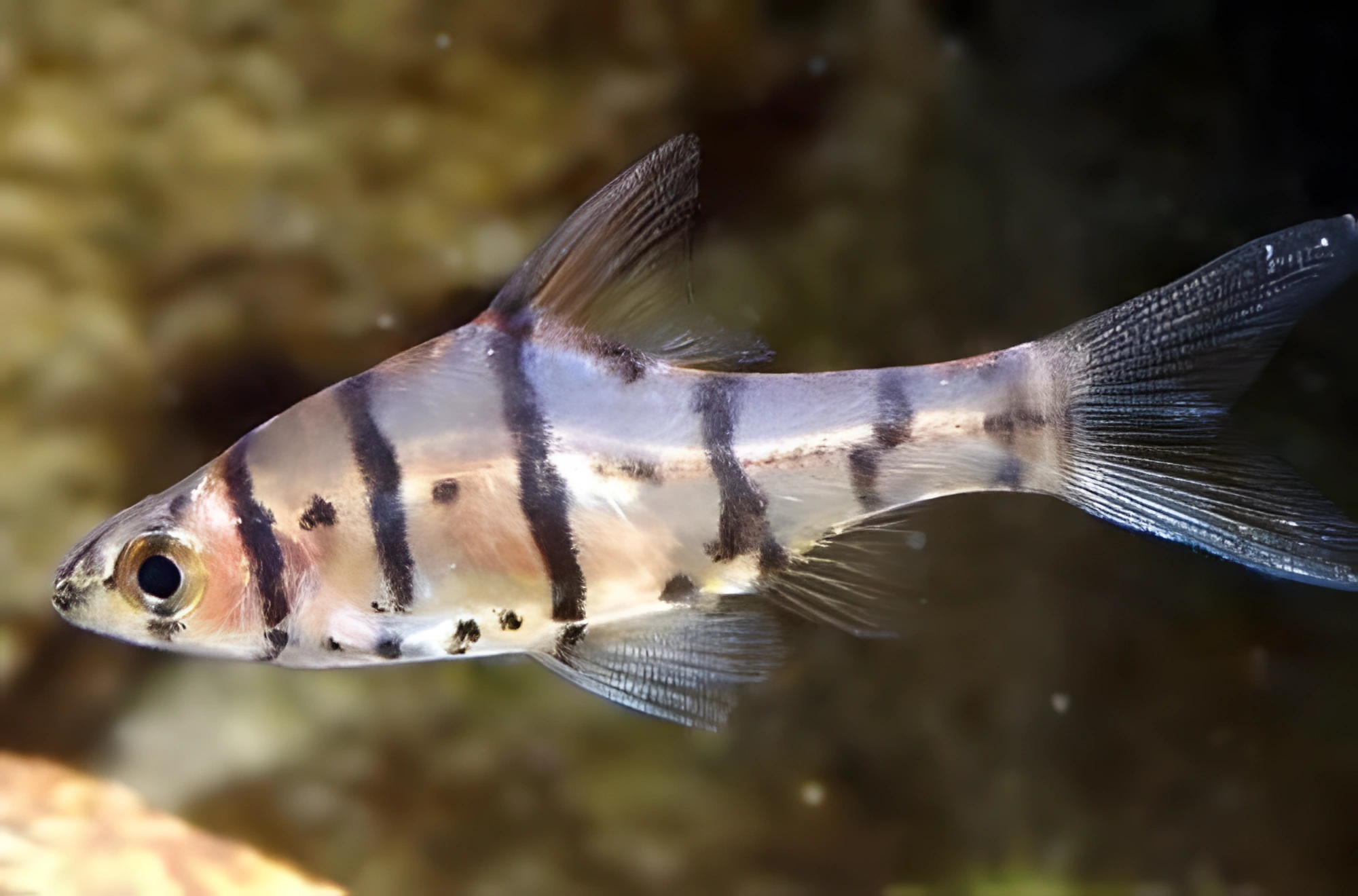
A member of the family Cyprinidae, known as the Eight-banded Barb or Eight-striped Barb, scientifically named Eirmotus octozona, is a small schooling fish. It has a peaceful disposition and will perfectly complement a community of small freshwater fish, while being relatively easy to care for.
- Required aquarium volume
- 40 L
- Size in aquarium
- 3 – 4 cm
- Temperature
- 22 – 26 °C
- Temperament
- Peaceful (regular)
Parameters
Water pHSlightly acidic (5) – Neutral (7)
Water dHVery soft (1) – Medium hardness (8)
Water salinityno salt (freshwater)
Size in aquarium3 – 4 cm
Lifespan5 years
TemperamentPeaceful (regular)
Toward small fishnot a predator
Required aquarium volume40 L
Lightingdimmed
Substrateany, but dark
Water flownone or stagnant (no flow)
FeedingAny (universal)
CareGroup (8–10 individuals)
Description
Adults typically reach 3–4 cm in length. A distinctive feature of this species is the pattern on its body: 8 dark vertical stripes on a uniform silvery background. Their bodies appear translucent, allowing the skeleton and internal organs to be seen through the outer coverings. Males differ from females by being smaller and having a more slender physique.
Habitat
Its origin is associated with Southeast Asia, specifically the Malay Peninsula and the island of Kalimantan (Borneo). These fish inhabit river backwaters, lakes, and peat swamps located within humid tropical forests. Their typical habitat is characterized by dense aquatic vegetation, silty substrates covered with a layer of fallen leaves and branches, and murky brown water. It is important to note that currently, wild populations of these barbs are found exclusively on the island of Kalimantan, as active human economic activity has led to the destruction of their natural habitat.
Behavior and Compatibility
These fish are peaceful and active, and intraspecific conflicts are not observed. Due to their modest size, they are compatible only with similarly miniature species, such as rasboras, otocinclus, Corydoras catfish, and others.
Care and Maintenance
To keep a school of 8–10 of these fish, the optimal aquarium volume should be at least 40 liters. When aquascaping, it is important to provide a sufficient number of shelters. These can include natural driftwood and dense thickets of shade-loving plants, such as Java fern, Java moss, or Cryptocorynes, as well as various artificial decorations. It is desirable to maintain subdued lighting, and floating plants will help create additional shading. Experienced aquarists can also add leaves from certain trees to the aquarium, which not only serve as a natural decorative element but also favorably affect the water's chemical composition. More details on this can be found in the article "Which tree leaves can be used in an aquarium." These fish are considered quite easy to keep. Aquarium maintenance for Eight-banded Barbs includes several standard procedures: weekly partial water changes (at least 10% of the total volume) with fresh water, regular removal of organic waste (uneaten food, excrement), cleaning of tank walls and decorations, and prophylactic inspection of equipment.
Diet
Being an omnivorous species, this fish will readily accept most popular foods. Its daily diet can consist of dry flakes, granules, and other appropriately sized products. For complete nutrition, it is recommended to include live or frozen foods, such as Artemia, bloodworms, Daphnia, and others, offering them approximately once a week.
Breeding and Reproduction
In favorable conditions, with optimal temperature and a high-protein diet, these fish quickly enter a spawning state. One of the key signs of a female's readiness to spawn is a noticeable enlargement of her abdomen. For breeding, it is advisable to use a separate tank. The eggs are scattered by the fish across the bottom; they do not form a clutch. Since parental instincts are not developed, there is a risk of Eight-banded Barbs eating their own eggs. As soon as eggs become visible on the substrate surface, the fish should be immediately returned to the main aquarium. The incubation period ends in approximately 3 days. In the initial days after hatching, the fry feed on the contents of their yolk sac, and then switch to microscopic food, such as infusoria. As they grow, Artemia nauplii can be gradually introduced into their diet.
Diseases
Most often, diseases are caused by unsuitable keeping conditions. Maintaining a stable environment in the aquarium is a key factor for successful keeping. If any symptoms of illness appear, the first step is to check the water quality. If deviations are found, measures should be taken immediately to correct them. If symptoms persist or even worsen, medicinal treatment will be required. Detailed information on the symptoms of various diseases and their treatment methods can be found in the “Aquarium Fish Diseases” section.
How to choose
When choosing an Eight-banded Barb, caution should be exercised, as this species often arrives in weakened condition and tolerates transportation poorly. Healthy individuals should be active, have clean fins without signs of damage or film, and a robust, non-emaciated body. Avoid purchasing fish with sunken bellies, unless they are males, as males of this species are typically slender, but this should not appear sickly.
- Carefully observe the school in the store: the fish should show interest in their surroundings and not constantly hide in corners.
- Refrain from purchasing individuals with signs of lethargy, rapid breathing, or an unnatural body position in the water column.
- Keep in mind that due to their high sensitivity to water parameters, fish can experience severe stress when conditions change, so prepare the aquarium in advance with soft, slightly acidic water and plenty of hiding places.
Frequently asked questions
The essentials: size, tank volume, water parameters and care
How big does Eight-banded Barb get?
An adult reaches 3–4 cm in length. Plan the tank around the maximum size: the fish quickly outgrows a cramped setup.
What size aquarium does Eight-banded Barb need?
The minimum recommended volume is 40 L. A smaller tank speeds up nitrate build-up and raises stress levels.
What water parameters does Eight-banded Barb need?
Temperature 22–26 °C, pH 5–7, hardness 1–8 dGH. Stability matters more than exact values: sudden swings are harder on the fish than a small deviation from the ideal.
How long does Eight-banded Barb live?
Around 5 years when kept properly. Lifespan depends directly on tank volume, water quality and a varied diet.
Is Eight-banded Barb aggressive?
Temperament: peaceful (regular). Keep this in mind when choosing tank mates.
How many Eight-banded Barb should be kept together?
Recommended setup: group (8–10 individuals). Ignoring this is a common cause of stress and disease.
What does Eight-banded Barb eat?
Diet type: any (universal). Feed small portions that are finished within a couple of minutes — overfeeding does more harm than underfeeding.
What is the scientific name of Eight-banded Barb?
The scientific name of the species is Eirmotus octozona, family Cyprinids (Cyprinidae).