Temperature18 – 25 °C
Natural range
- Tamil Nadu area
- Western Ghats area
CyprinidsConservation status: Endangered EN
Other scientific names: Puntius arulius, Puntius tambraparniei
The fish known as the Tamirabarani Barb (scientific name Dawkinsia tambraparniei) belongs to the family Cyprinidae. Its name comes from the Tamirabarani River, which is the species' natural habitat. This species is quite easy to keep and breed, and it coexists well with other species of similar characteristics. Due to these qualities, it can be recommended for aquarists taking their first steps in this hobby.
- Required aquarium volume
- 200 L
- Size in aquarium
- 10 – 13 cm
- Temperature
- 18 – 25 °C
- Temperament
- Peaceful (regular)
Parameters
Water pHSlightly acidic (6) – Slightly alkaline (8)
Water dHVery soft (3) – Hard (15)
Water salinityno salt (freshwater)
Size in aquarium10 – 13 cm
Lifespan6 years
TemperamentPeaceful (regular)
Toward small fishnot a predator
Required aquarium volume200 L
Lightingdimmed or moderate
Substraterocky (rock formations, boulders, etc.)
Water flowmoderate
FeedingSmall / appropriate size / pieces
CareGroup (8–10 individuals)
Description
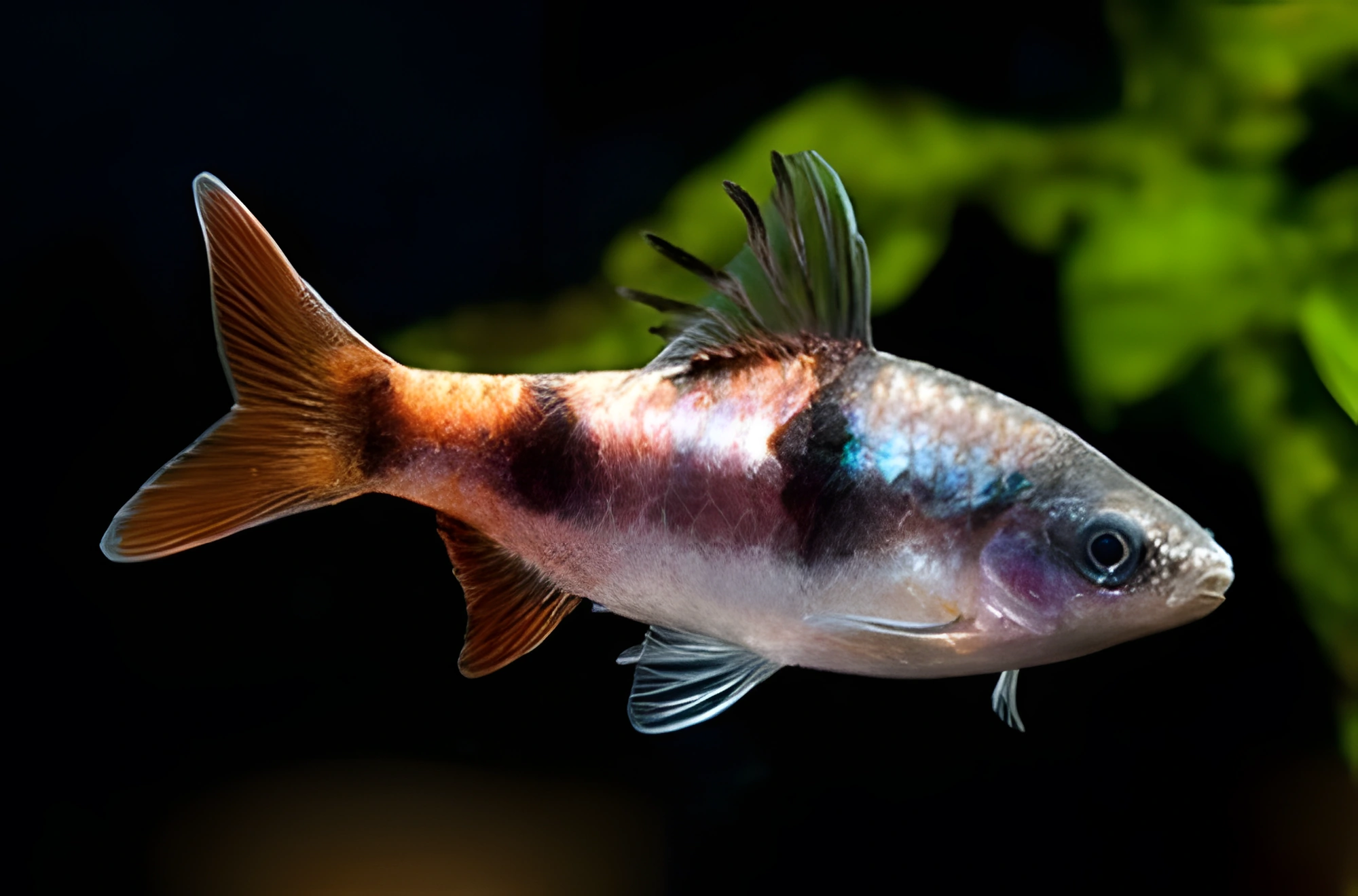
Adults of this fish reach up to 13 cm in length. Their coloration is mainly silvery, characterized by three dark stripes located along the sides of the body. A distinctive feature is the red edging on the anal fin and caudal fin. Males are typically larger than females and are distinguished by brighter coloration, in which emerald hues can be observed. Male individuals have another interesting feature: filamentous rays on the dorsal fin and small tubercle-like growths on the head, which appear during spawning.
Habitat
The natural habitats of this fish are located in the southern part of India, in the state of Tamil Nadu. It is found in the Tamirabarani River basin, whose source is in the Western Ghats mountains and mouth is in the Gulf of Mannar. The habitat here is very diverse and depends on many factors, such as local features and seasonal changes. These can be both mountainous areas with fast currents and lowland bodies of water with calmer, sometimes even marshy, water.
Behavior and Compatibility
This peaceful schooling fish is perfectly compatible with other non-aggressive species of similar size, provided they can live in similar conditions, for example, with loaches. It is recommended to keep them in a group of at least 8–10 individuals. This helps to avoid serious conflicts between males, which can occasionally arise in the struggle for hierarchy within the school, and keeps them within the bounds of normal group behavior.
Care and Maintenance
For a small group of these fish, an aquarium of at least 200 L is considered optimal. Although the Tamirabarani Barb can inhabit various conditions, the best environment for it will be one that resembles mountain rivers with a gently sloping bottom. In the aquarium setup, large rocky substrate can be used, supplemented with boulders and snags. Among plants, unpretentious live species such as Anubias, aquatic mosses, and ferns, or their artificial counterparts, are suitable. Lighting should be moderate. A key aspect of successful keeping is maintaining high water quality. Essential care procedures include: weekly replacement of 30–50% of the water volume with fresh water, regular removal of organic waste, checking and servicing equipment, as well as monitoring pH, dGH, and oxidation levels. Given the fish's origin from flowing waters, it is desirable to provide current, which can be created by a filtration system. Some filter models can create quite active water movement.
Diet
The diet of these aquarium fish usually includes most common foods. Daily feeding can be a combination of dry foods, such as flakes or pellets, and live, fresh, or frozen supplements, such as bloodworms or brine shrimp.
Breeding and Reproduction
The breeding process in these fish is similar to that observed in other carp species. During the breeding season, females lay eggs directly in the water column, and males then fertilize them. These fish lack parental instincts, so adult individuals may eat their own offspring after spawning, which leads to very low fry survival in a community tank. If you plan to breed Tamirabarani Barbs, a separate spawning aquarium with the same water conditions will be required to preserve the offspring. A small aquarium of about 10 L, equipped with a simple sponge filter and a heater, will be suitable for this. An additional light source is not required, and the decor can be arbitrary. After spawning is complete, the eggs should be transferred to a pre-prepared spawning aquarium. The incubation period lasts from 24 to 48 hours, and after another day, the fry begin to swim freely and search for food. They should be fed specialized foods for aquarium fish fry, as well as Artemia nauplii.
Diseases
In a balanced aquarium ecosystem, closely matching the requirements of this species, diseases are extremely rare. Illnesses often arise due to deteriorating habitat quality, contact with already sick fish, or physical injuries. If these factors could not be avoided, the “Aquarium Fish Diseases” section will provide detailed information on symptoms and treatment methods.
How to choose
When purchasing, choose active individuals that show interest in their surroundings and demonstrate synchronized behavior in the school. Avoid fish with signs of sluggishness, fin damage, whitish spots on the body, or an unnaturally bloated abdomen. Healthy barbs should have clear eyes and smooth scales without signs of ulcers or hemorrhages.
- Inspect the fish for parasites and signs of infections, as this species is susceptible to bacterial diseases under stress or poor keeping conditions.
- Note that young individuals may be paler than adults, but they should not appear emaciated or apathetic.
- Check the conditions in the seller's aquarium: water quality and the absence of aggressive tank mates are key factors influencing the fish's subsequent adaptation.
Frequently asked questions
The essentials: size, tank volume, water parameters and care
How big does Tamirabarani Barb get?
An adult reaches 10–13 cm in length. Plan the tank around the maximum size: the fish quickly outgrows a cramped setup.
What size aquarium does Tamirabarani Barb need?
The minimum recommended volume is 200 L. A smaller tank speeds up nitrate build-up and raises stress levels.
What water parameters does Tamirabarani Barb need?
Temperature 18–25 °C, pH 6–8, hardness 3–15 dGH. Stability matters more than exact values: sudden swings are harder on the fish than a small deviation from the ideal.
How long does Tamirabarani Barb live?
Around 6 years when kept properly. Lifespan depends directly on tank volume, water quality and a varied diet.
Is Tamirabarani Barb aggressive?
Temperament: peaceful (regular). Keep this in mind when choosing tank mates.
How many Tamirabarani Barb should be kept together?
Recommended setup: group (8–10 individuals). Ignoring this is a common cause of stress and disease.
What does Tamirabarani Barb eat?
Diet type: small / appropriate size / pieces. Feed small portions that are finished within a couple of minutes — overfeeding does more harm than underfeeding.
What is the scientific name of Tamirabarani Barb?
The scientific name of the species is Dawkinsia tambraparniei, family Cyprinids (Cyprinidae). It also appears in the literature as: Puntius arulius, Puntius tambraparniei.