Temperature23 – 28 °C
Natural range
- Brahmaputra River Basin
- India area
- Bangladesh area
CyprinidsConservation status: Data deficient DD
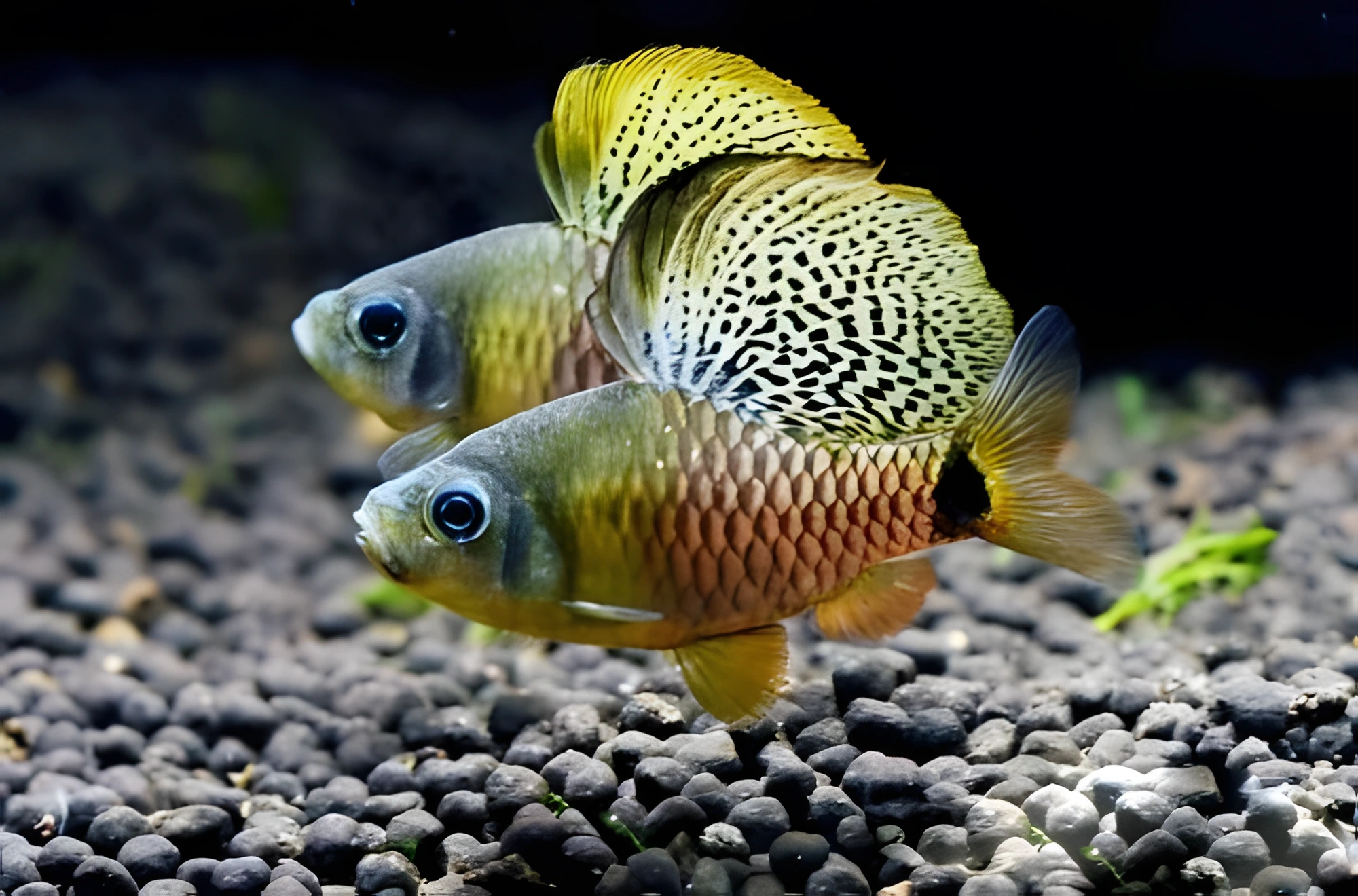
The Oreichthys barb, known scientifically as Oreichthys crenuchoides, belongs to the carp family (Cyprinidae). Among barbs, this fish stands out due to noticeable differences between males and females. Males are brighter, larger, and more striking compared to females. These fish are undemanding to keep and coexist easily with other species, making them an excellent choice for a freshwater aquarium.
- Required aquarium volume
- 60 L
- Size in aquarium
- 5 cm
- Temperature
- 23 – 28 °C
- Temperament
- Peaceful (regular)
Parameters
Water pHSlightly acidic (6) – Neutral (7)
Water dHVery soft (1) – Medium hardness (10)
Water salinityno salt (freshwater)
Size in aquarium5 cm
Lifespan4 years
TemperamentPeaceful (regular)
Toward small fishnot a predator
Required aquarium volume60 L
Lightingdimmed
Substratesoft sandy (including silted)
Water flowweak
FeedingSmall / appropriate size / pieces
CareMedium group (6–8 individuals)
Description
These fish reach a length of 3 to 4.5 cm. This barb species exhibits pronounced sexual dimorphism. Males are usually larger, their bodies are colored in yellow-pink tones, and a black spot is visible at the base of the tail. Their main distinguishing feature is a large, yellow dorsal fin with black speckles. During spawning, males look particularly impressive: they spread their dorsal fin, and their coloration becomes noticeably more intense. In contrast, females may seem less remarkable: they are smaller, have a silvery coloration with a dark spot near the tail, and a black and yellow stripe on the dorsal fin. Outwardly, the Oreichthys barb has much in common with a related species, the Cosuatis barb, under which name it is often mistakenly sold.
Habitat
The natural habitats of this fish are found in India and Bangladesh, primarily in the Brahmaputra River basin. There, silty substrates alternate with sandy areas, and the banks are overgrown with aquatic vegetation and strewn with snags. The water here is usually clear, not overloaded with organic matter, as is often the case in stagnant, swampy bodies of water.
Behavior and Compatibility
This peaceful schooling fish coexists well with most other species of similar size and temperament. However, cohabitation with larger or, especially, aggressive fish should be avoided. It is preferable to keep them in a school of at least 6–8 individuals. Intraspecific conflicts are not observed. Although males may compete for female attention during the breeding period, this usually does not lead to serious skirmishes. An interesting observation: if females are kept separately from males, one of them may, within a couple of months, develop the typical large dorsal fin and coloration characteristic of male individuals.
Care and Maintenance
The optimal aquarium volume for a small group of these fish starts from 60 liters. For decoration, it is recommended to use a soft substrate, dense plant thickets; floating plants, various snags, and other shelters can also be added. To make the aquarium look more natural, mimicking their natural environment, dried tree leaves can be added. Dried leaves also affect the chemical composition of the water; you can learn more about this in the article “Which tree leaves can be used in an aquarium.” The key to successful keeping is maintaining stable water parameters, which requires several mandatory procedures: weekly partial water changes, regular cleaning of the aquarium from organic debris, checking basic parameters (such as pH, dGH, oxidizability, etc.), and monitoring equipment operation. Depending on the aquarium setup, the scope of work may vary. When choosing a filtration system, it is worth preferring models that do not create excessive water movement, as the Oreichthys barb is not adapted to strong currents.
Diet
These fish readily accept most common foods, whether dry, live, or frozen. It is important to note that the brightness of their coloration directly depends on the quality of their diet, so it is preferable to purchase high-quality foods enriched with all necessary vitamins and trace elements, preferably those that enhance color. Additionally, foods such as bloodworms or Artemia can be included in their diet.
Breeding and Reproduction
Breeding Oreichthys barbs is considered accessible even for beginner aquarists. A separate aquarium of about 30 liters is used for spawning, with a separator net placed at the bottom to protect the eggs from being eaten by the parents. Fine-leaved plants or artificial spawning mops are suitable as a substrate. The fish do not exhibit parental care. After spawning, the parents should be removed. Fry feeding begins with infusoria, gradually transitioning to Artemia nauplii.
Diseases
In a balanced aquarium ecosystem, closely matching the requirements of this species, diseases are extremely rare. Illnesses often arise due to deteriorating habitat quality, contact with already sick fish, or physical injuries. If these factors could not be avoided, the “Aquarium Fish Diseases” section will provide detailed information on symptoms and treatment methods.
How to choose
When purchasing, it is important to consider that this species is often confused with the related Cosuatis barb. Healthy individuals should be active, without visible damage to scales or fins. Avoid fish with signs of emaciation, as they may be weakened during transportation. Since the fish are timid and prone to stress during transfer, it is recommended to prepare a quarantine tank in advance. It is best to purchase a group of 6–8 individuals, as fish kept alone become withdrawn and lose their vibrant coloration.
Frequently asked questions
The essentials: size, tank volume, water parameters and care
How big does Oreichthys Barb get?
An adult reaches 5 cm in length. Plan the tank around the maximum size: the fish quickly outgrows a cramped setup.
What size aquarium does Oreichthys Barb need?
The minimum recommended volume is 60 L. A smaller tank speeds up nitrate build-up and raises stress levels.
What water parameters does Oreichthys Barb need?
Temperature 23–28 °C, pH 6–7, hardness 1–10 dGH. Stability matters more than exact values: sudden swings are harder on the fish than a small deviation from the ideal.
How long does Oreichthys Barb live?
Around 4 years when kept properly. Lifespan depends directly on tank volume, water quality and a varied diet.
Is Oreichthys Barb aggressive?
Temperament: peaceful (regular). Keep this in mind when choosing tank mates.
How many Oreichthys Barb should be kept together?
Recommended setup: medium group (6–8 individuals). Ignoring this is a common cause of stress and disease.
What does Oreichthys Barb eat?
Diet type: small / appropriate size / pieces. Feed small portions that are finished within a couple of minutes — overfeeding does more harm than underfeeding.
What is the scientific name of Oreichthys Barb?
The scientific name of the species is Oreichthys crenuchoides, family Cyprinids (Cyprinidae).