Temperature16 – 25 °C
Natural range
- Myanmar area
CyprinidsConservation status: Data deficient DD
Other scientific names: Puntius padamya
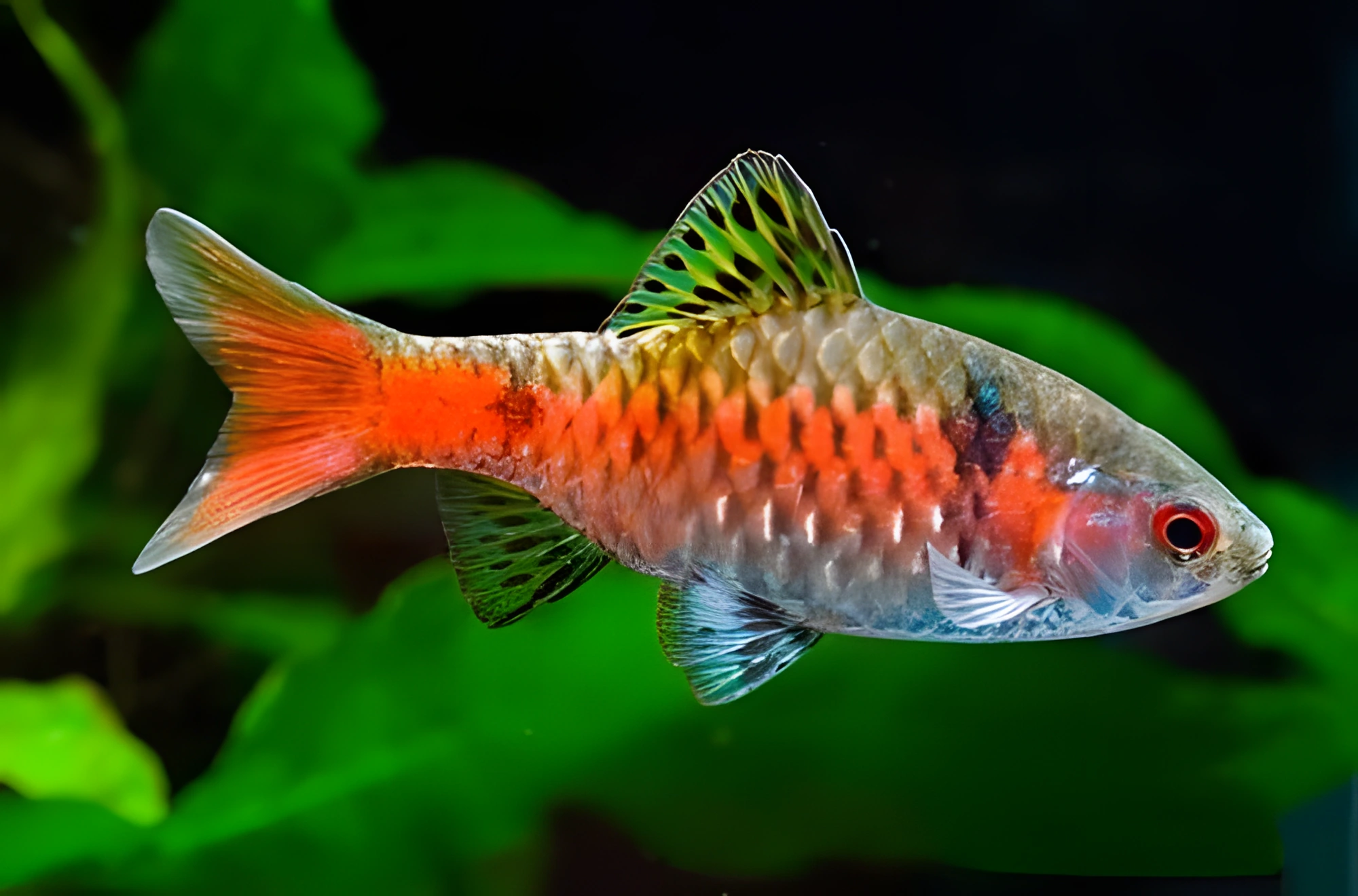
Scientifically named Pethia padamya, this species belongs to the Cyprinidae family and is known as the Odessa Barb. Despite its name, this fish does not inhabit Ukraine. It entered the aquarium hobby in the 1970s, but its true origin remained unknown until 2003. The name stuck in common parlance because the first shipments of this species for sale came from Odesa — a large port city.
- Required aquarium volume
- 80 L
- Size in aquarium
- 4 cm
- Temperature
- 16 – 25 °C
- Temperament
- Peaceful (regular)
Parameters
Water pHSlightly acidic (6) – Slightly alkaline (8)
Water dHSoft (5) – Very hard (20)
Water salinityno salt (freshwater)
Size in aquarium4 cm
Lifespan4 years
TemperamentPeaceful (regular)
Toward small fishnot a predator
Required aquarium volume80 L
Lightingdimmed or moderate
Substraterocky (rock formations, boulders, etc.)
Water flowweak or moderate
FeedingSmall / appropriate size / pieces
CareGroup (8–10 individuals)
Description
Adults reach approximately 4 cm in length. Males are distinguished by their rich red coloration, and their fins are adorned with black speckles. A black vertical stripe is also visible on their body, located immediately behind the operculum. Females, in turn, are larger, although their coloration is less vibrant. However, the pattern on their body is more distinct, and their scales have a noticeable black outline.
Habitat
Its homeland is Southeast Asia, specifically the territory of modern Myanmar (Burma). It can be found in the Chindwin River basin, one of the largest in the region. The river flows through mountainous, sometimes hilly, terrain composed of limestone rocks, which gives the water high hardness (dGH). Natural habitats are characterized by rocky bottoms and sparse vegetation. Wild specimens of this species have been found at altitudes exceeding 3000 meters.
Behavior and Compatibility
This active and peaceful fish coexists well with other non-aggressive species of similar size, provided the keeping conditions are suitable for them too. It is recommended to keep a school of 8–10 mixed individuals (males and females) and maintain the group's numbers at this level.
Care and Maintenance
For a small group of fish, an aquarium of 80 L or more will be optimal. The choice of decor is at the aquarist's discretion and may be determined by the needs of other inhabitants. Observations show that dark substrate and soft, subdued lighting contribute to deeper and richer colors in the fish, while bright light can make them appear paler. Keeping Odessa Barbs is not difficult and does not require significant time or financial investment. To maintain a stable and comfortable habitat, several standard procedures must be performed: weekly partial water changes, regular removal of organic waste, and monitoring of pH, dGH, and oxidizability levels.
Diet
Being an omnivorous species, this fish readily accepts most common foods intended for aquarium inhabitants. The vibrancy of their coloration directly depends on the quality and composition of their diet, so it is recommended to choose foods from reputable manufacturers, enriched with all necessary vitamins and trace elements.
Breeding and Reproduction
The breeding process of Odessa Barbs is typical for most cyprinids. During spawning, females scatter eggs into the water column, and males fertilize them at this time. Fertilized eggs sink to the bottom and develop independently from this point. Incubation takes 24 to 48 hours, and after another day, the hatched fry begin to swim actively. Since adult individuals lack parental instincts, they tend to eat their offspring, leading to minimal fry survival in a community tank. If there is an intention to save the young, a separate tank — a breeding tank — with identical water parameters must be prepared in advance. The eggs will be transferred there after spawning. This is usually a small container, about 10 L, equipped with a simple sponge air-lift filter and a heater. A separate light source is not required. Artificial plants or shade-loving aquatic mosses and ferns are suitable for decoration.
Diseases
With a balanced aquarium ecosystem and conditions that meet the specific needs of the species, diseases rarely occur. Diseases usually arise due to deteriorating habitat, contact with infected fish, or injuries. If these factors could not be avoided, more detailed information on symptoms and treatment methods can be found in the "Aquarium Fish Diseases" section.
How to choose
When choosing Odessa Barbs in a store, pay attention to the overall activity of the school. Healthy fish are constantly in motion, show curiosity, and actively interact with each other. Avoid individuals that keep to themselves, appear lethargic, hover near the surface or bottom, or have visible damage to scales, fins, or unusual spots on their body.
- Choose fish with clear, non-cloudy eyes and opercula tightly pressed to the body.
- Assess the plumpness of the individuals: healthy fish should not have a severely sunken belly or, conversely, an unnaturally bloated abdomen.
- Check for signs of emaciation, where the fish's skeleton is visible.
- Ensure that there are no dead or visibly sick individuals in the tank with the fish, as barbs are sensitive to water quality and infections in overcrowded commercial tanks.
Frequently asked questions
The essentials: size, tank volume, water parameters and care
How big does Odessa Barb get?
An adult reaches 4 cm in length. Plan the tank around the maximum size: the fish quickly outgrows a cramped setup.
What size aquarium does Odessa Barb need?
The minimum recommended volume is 80 L. A smaller tank speeds up nitrate build-up and raises stress levels.
What water parameters does Odessa Barb need?
Temperature 16–25 °C, pH 6–8, hardness 5–20 dGH. Stability matters more than exact values: sudden swings are harder on the fish than a small deviation from the ideal.
How long does Odessa Barb live?
Around 4 years when kept properly. Lifespan depends directly on tank volume, water quality and a varied diet.
Is Odessa Barb aggressive?
Temperament: peaceful (regular). Keep this in mind when choosing tank mates.
How many Odessa Barb should be kept together?
Recommended setup: group (8–10 individuals). Ignoring this is a common cause of stress and disease.
What does Odessa Barb eat?
Diet type: small / appropriate size / pieces. Feed small portions that are finished within a couple of minutes — overfeeding does more harm than underfeeding.
What is the scientific name of Odessa Barb?
The scientific name of the species is Pethia padamya, family Cyprinids (Cyprinidae). It also appears in the literature as: Puntius padamya.