Temperature18 – 24 °C
Natural range
- Maharashtra area
- Western Ghats area
CyprinidsConservation status: Least concern LC
Puntius sahyadriensis, or Maharashtra Barb, is a member of the Cyprinidae family. Among various barb species, it stands out with its distinctive angular body shape, making it easily recognizable. This species is easy to keep and breed successfully, and it coexists well with many other freshwater fish. Due to these qualities, the Maharashtra Barb can be recommended to beginner aquarists.
- Required aquarium volume
- 80 L
- Size in aquarium
- 6 cm
- Temperature
- 18 – 24 °C
- Temperament
- Peaceful (regular)
Parameters
Water pHSlightly acidic (6) – Slightly alkaline (7.8)
Water dHVery soft (2) – Hard (15)
Water salinityno salt (freshwater)
Size in aquarium6 cm
Lifespan5 years
TemperamentPeaceful (regular)
Toward small fishnot a predator
Required aquarium volume80 L
Lightingdimmed
Substrateany (no restrictions)
Water flowmoderate or strong
FeedingAny (universal)
CareGroup (8–10 individuals)
Description
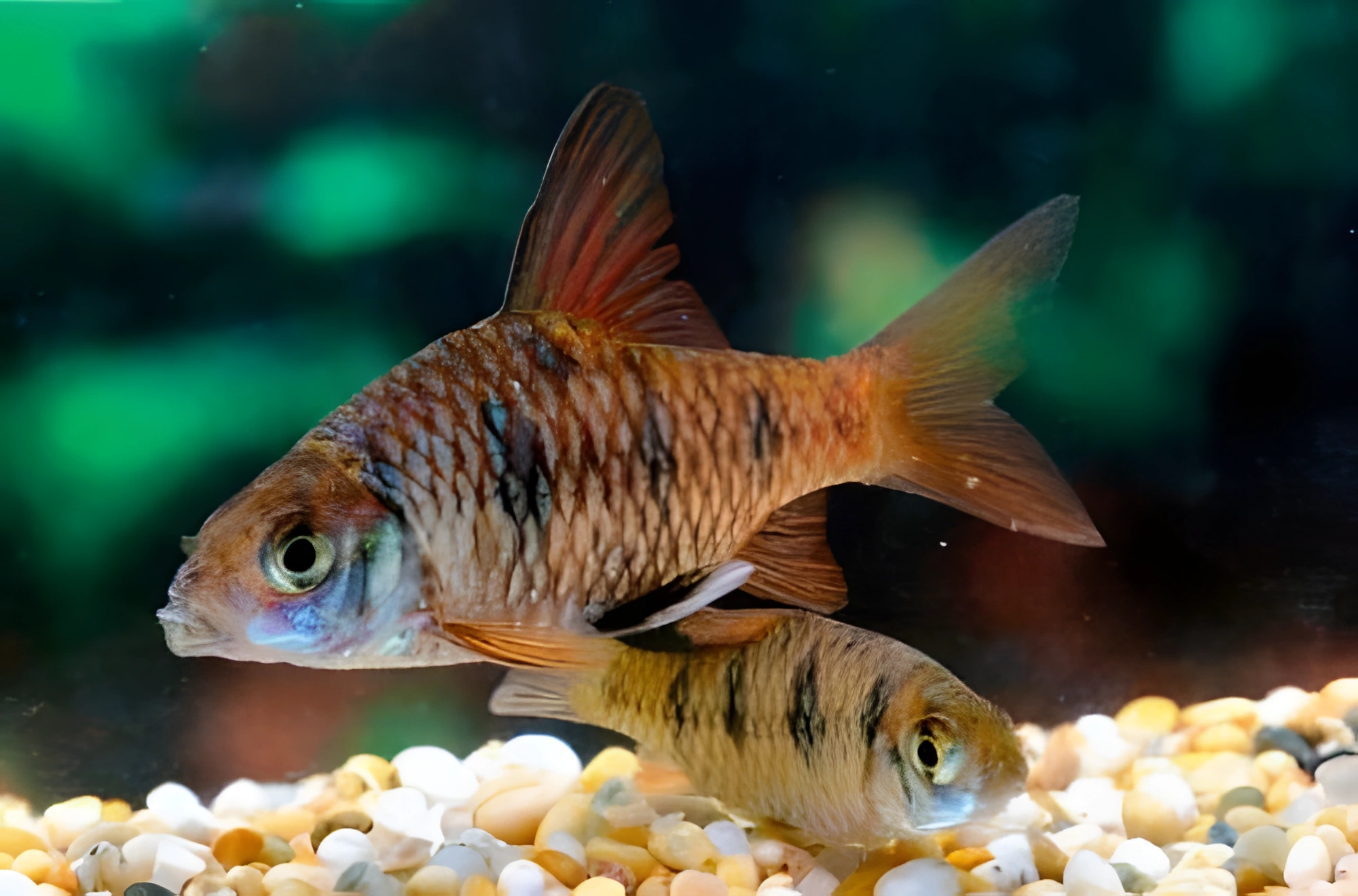
Adults reach approximately 6 cm in length. Their coloration is predominantly red, and large, dark, rhomboid or oval-shaped markings are present on their flanks. Males exhibit more intense coloration compared to females, and their pelvic fins have white tips. During spawning, males develop small tubercle-like growths on their heads, which disappear at other times.
Habitat
Its homeland is the state of Maharashtra in India, from which the species derives its name. The fish inhabit rivers that originate in the Western Ghats and then flow into the Arabian Sea. Their natural habitat is characterized by rivers with moderate currents, where the bottom is covered with sand and gravel, and the riverbed is abundant with snags and a layer of fallen leaves. Aquatic vegetation is primarily concentrated along the banks.
Behavior and Compatibility
This is a peaceful and active fish, capable of coexisting with other non-aggressive species of comparable size. They prefer to live in shoals of 8–10 individuals, comprising both males and females.
Care and Maintenance
For a group of 8–10 fish, the optimal aquarium volume starts from 80 liters. It is desirable for the aquascape to closely mimic their natural habitat, including a sandy substrate and various snags. Lighting should be subdued, so it is recommended to plant shade-loving plants, mosses, or ferns along the tank walls. Since the Maharashtra Barb inhabits flowing waters in nature, it tolerates the accumulation of organic waste poorly and requires high water quality. To achieve this, in addition to an effective filtration system, several important aquarium maintenance procedures must be performed regularly. Specifically, it is necessary to replace 30–50% of the water volume weekly with fresh water, systematically clean the substrate and decor elements of waste (food remnants, excrement) and biofilm, and constantly monitor and maintain stable pH and dGH parameters.
Diet
This omnivorous species is undemanding regarding food. In a home aquarium, the fish will readily accept most common foods, whether dry, freeze-dried, frozen, or live. Their daily diet can consist solely of prepared foods, such as dry flakes or granules.
Breeding and Reproduction
Breeding in a home aquarium is possible and does not require any special conditions. However, since parental care is absent, fry survival will be minimal if the eggs are not promptly transferred to a separate tank. This is usually a small container of 10 liters or more, filled with water from the main aquarium. The minimum equipment set includes a simple sponge filter and a heater. A special light source is not required; ambient room light will be sufficient. The aquascape can be arbitrary. The incubation period lasts 24–36 hours, after which the fry will feed on the contents of their yolk sac for 3–4 days, and then begin to swim freely in search of food. They should be fed specialized fry food, and if available, Artemia nauplii, small Daphnia, and similar.
Diseases
In a balanced aquarium ecosystem, closely matching the requirements of this species, diseases are extremely rare. Illnesses often arise due to deteriorating habitat quality, contact with already sick fish, or physical injuries. If these factors could not be avoided, the “Aquarium Fish Diseases” section will provide detailed information on symptoms and treatment methods.
How to choose
When selecting Maharashtra Barbs, prioritize individuals with clean, undamaged fins and no visible sores, spots, or film on their scales. Healthy fish should be active, constantly moving in the water column, and exhibiting pronounced schooling behavior. Avoid purchasing individuals that are isolated, appear lethargic, have bloated bellies, or, conversely, are severely emaciated.
Since this species is schooling, it is recommended to acquire a group of 8–10 individuals simultaneously to minimize stress during adaptation. It is important to ensure that the fish in the store are kept in conditions close to those required, with good filtration and aeration, as the species is sensitive to water quality and the accumulation of organic waste. Inspecting the conditions in the seller's aquarium allows for an assessment of the overall health of the entire batch, which is critically important for preventing the introduction of infections.
Frequently asked questions
The essentials: size, tank volume, water parameters and care
How big does Maharashtra Barb get?
An adult reaches 6 cm in length. Plan the tank around the maximum size: the fish quickly outgrows a cramped setup.
What size aquarium does Maharashtra Barb need?
The minimum recommended volume is 80 L. A smaller tank speeds up nitrate build-up and raises stress levels.
What water parameters does Maharashtra Barb need?
Temperature 18–24 °C, pH 6–7.8, hardness 2–15 dGH. Stability matters more than exact values: sudden swings are harder on the fish than a small deviation from the ideal.
How long does Maharashtra Barb live?
Around 5 years when kept properly. Lifespan depends directly on tank volume, water quality and a varied diet.
Is Maharashtra Barb aggressive?
Temperament: peaceful (regular). Keep this in mind when choosing tank mates.
How many Maharashtra Barb should be kept together?
Recommended setup: group (8–10 individuals). Ignoring this is a common cause of stress and disease.
What does Maharashtra Barb eat?
Diet type: any (universal). Feed small portions that are finished within a couple of minutes — overfeeding does more harm than underfeeding.
What is the scientific name of Maharashtra Barb?
The scientific name of the species is Puntius sahyadriensis, family Cyprinids (Cyprinidae).