Temperature20 – 27 °C
Natural range
- Sri Lanka area
CyprinidsConservation status: Endangered EN
Other scientific names: Barbus cumingii, Barbus cummungi, Puntius cumingi
The fish known as Cuming's Barb (its scientific name is Pethia cumingii) belongs to the carp family (Cyprinidae). Its peaceful and friendly nature makes it an excellent addition to a community aquarium with inhabitants of a similar temperament. Its unpretentiousness in keeping and minimal care requirements allow this species to be recommended to aquarists with both little and beginner experience.
- Required aquarium volume
- 60 L
- Size in aquarium
- 5 cm
- Temperature
- 20 – 27 °C
- Temperament
- Peaceful, active/mobile
Parameters
Water pHSlightly acidic (5.5) – Neutral (7)
Water dHVery soft (1) – Hard (12)
Water salinityno salt (freshwater)
Size in aquarium5 cm
Lifespan5 years
TemperamentPeaceful, active/mobile
Toward small fishnot a predator
Required aquarium volume60 L
Lightingdimmed or moderate
Substrategravel (regular)
Water flowmoderate
FeedingAny (universal)
CareSchooling (usually from 5–6 individuals and more)
Description
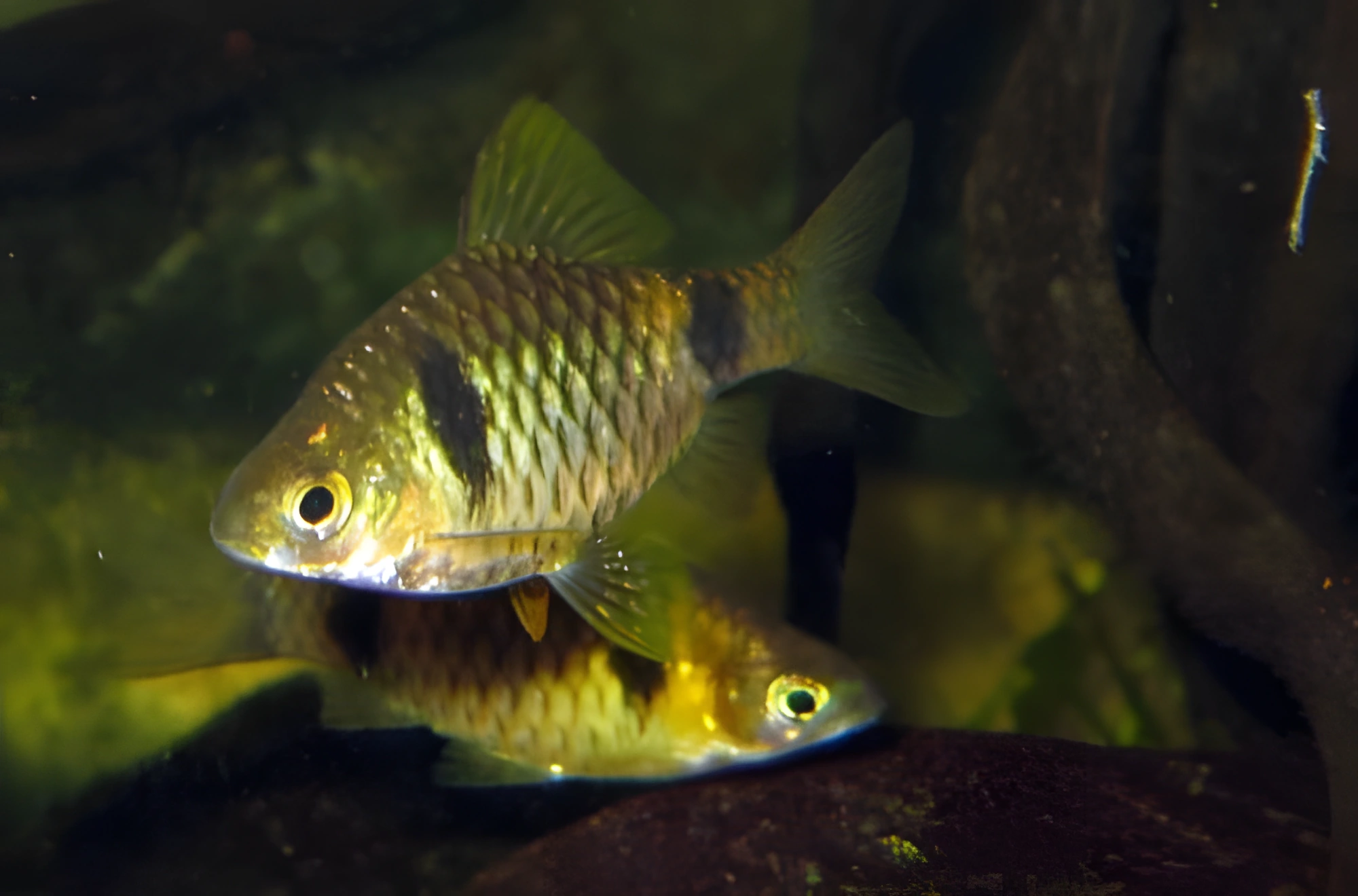
Adults of this fish rarely exceed 5 cm. Notably, males, while significantly smaller than females, are distinguished by brighter coloration. There are two main color forms: one with a red hue, the other with a yellow, but both are predominantly silvery. The red-finned form is rarer and therefore more highly valued. A distinctive feature of their coloration is two dark elongated spots: one located immediately behind the gill cover, and the other closer to the base of the tail.
Habitat
This species is endemic to the island of Sri Lanka, where it predominantly inhabits two river systems. Its typical habitats are characterized by moderate current and a sand-gravel substrate. The red-finned form is found in the Kelani River, while the yellow-finned variant is common in the Kalu River. Currently, it has been observed that brightly colored fish are less common in the wild, which may indicate significant changes in the population structure due to active harvesting for the aquarium trade. Negative impacts on their numbers are also caused by the reduction of the island's forests and the pollution of water sources due to human activity.
Behavior and Compatibility
This species is exclusively peaceful and schooling, which implies keeping them in a group of at least 6–10 individuals. Such a number will not only make the fish less timid but also contribute to the development of brighter colors in their coloration. The latter is especially noticeable in males, who, in the presence of potential rivals, will use the intensity of their coloration as a way to attract the attention of females. Cuming's Barb is well compatible with most fish species of similar temperament and size; however, it is not recommended to keep them with large or aggressive fish.
Care and Maintenance
A school of Cuming's Barbs, consisting of several individuals, will thrive in an aquarium of 60 liters or more. The tank's decor does not have strict requirements, but certain elements can give it a more natural look. For example, using a dark substrate in combination with driftwood and creating areas with dense vegetation contributes to this. Floating plants will also be appropriate. Water parameters should have slightly acidic pH values and low concentrations of dissolved calcium and magnesium salts (low dGH value). More detailed information on pH and dGH values, as well as methods for their regulation, can be found in the section "Water Hydrochemical Composition." The minimum equipment set includes a filtration system, lighting, an aerator, and a heater. In this case, the filter performs two functions: it not only purifies the water but also creates a gentle internal current (not too strong), which your fish will appreciate. Aquarium maintenance involves weekly replacement of 15–20% of the water volume with fresh water of similar parameters. Cleaning the substrate of organic waste is done as needed.
Diet
These fish are completely undemanding when it comes to food and readily accept all types of feed: dry, frozen, and live. An important condition is that the food must be of high quality (avoid cheap options) and must contain vegetable components. A varied diet contributes to the manifestation of richer coloration in the fish. It is recommended to feed them 2–3 times a day, giving them as much food as they can eat in 5 minutes. Any uneaten leftovers should be removed from the aquarium.
Breeding and Reproduction
The presence of two subspecies, red and yellow, indicates a preference for breeding offspring only within one color form to avoid hybridization. This is an ideal approach, which, unfortunately, is rarely followed in amateur aquaristics, leading to constant mixing and a shift in the primary coloration to a more silvery hue. Breeding these fish at home is quite simple; they are capable of spawning in a community tank throughout the year. However, due to the lack of parental instincts and a tendency to eat their own eggs, the survival rate of fry in such conditions will be extremely low. Survival chances increase if the young are promptly caught and transferred, for example, to a three-liter jar, or if spawning is organized in a separate tank. Additional information on stimulating spawning and breeding egg-laying species is available in the section "Breeding Aquarium Fish."
Diseases
The main cause of all aquarium fish diseases is the mismatch of keeping conditions to the specific needs of the species or a significant deterioration in water quality, nutrition, and other factors. Fish do not get sick without an apparent reason; their health deterioration is almost always caused by external circumstances. Only a few selective species, not found in the wild, may have hereditary diseases, but Cuming's Barb is not among them. If problems arise, first check the water parameters and food quality, and only then proceed with medicinal treatment. Details on symptoms and treatment methods are presented in the section "Diseases of Aquarium Fish."
How to choose
When choosing Cuming's Barbs, prioritize individuals with clean fins free of damage, white film, or ulcers. A healthy fish should be active, mobile, and display typical schooling behavior for the species. Avoid purchasing fish with sunken bellies, signs of emaciation, or atypical behavior, such as lethargic hovering at the surface or bottom of the aquarium.
- inspect the scales for spots, hemorrhages, and parasites
- check the integrity of the fins, as splitting can indicate infections
- ensure there are no signs of stress, such as overly pale coloration or convulsive movements
- prefer individuals from aquariums where the water appears clear and clean, without a strong odor
Frequently asked questions
The essentials: size, tank volume, water parameters and care
How big does Cuming's Barb get?
An adult reaches 5 cm in length. Plan the tank around the maximum size: the fish quickly outgrows a cramped setup.
What size aquarium does Cuming's Barb need?
The minimum recommended volume is 60 L. A smaller tank speeds up nitrate build-up and raises stress levels.
What water parameters does Cuming's Barb need?
Temperature 20–27 °C, pH 5.5–7, hardness 1–12 dGH. Stability matters more than exact values: sudden swings are harder on the fish than a small deviation from the ideal.
How long does Cuming's Barb live?
Around 5 years when kept properly. Lifespan depends directly on tank volume, water quality and a varied diet.
Is Cuming's Barb aggressive?
Temperament: peaceful, active/mobile. Keep this in mind when choosing tank mates.
How many Cuming's Barb should be kept together?
Recommended setup: schooling (usually from 5–6 individuals and more). Ignoring this is a common cause of stress and disease.
What does Cuming's Barb eat?
Diet type: any (universal). Feed small portions that are finished within a couple of minutes — overfeeding does more harm than underfeeding.
What is the scientific name of Cuming's Barb?
The scientific name of the species is Pethia cumingii, family Cyprinids (Cyprinidae). It also appears in the literature as: Barbus cumingii, Barbus cummungi, Puntius cumingi.