Temperature22 – 26 °C
Natural range
- Democratic Republic of the Congo area
CyprinidsConservation status: Least concern LC
Other scientific names: Barbus congicus
Clypeobarbus congicus, known as the Congo Barb, is a member of the Cyprinidae family. This fish is quite rare in home aquariums, as it is not intentionally supplied. Occasionally, as part of wholesale purchases from commercial farms, fish of this species may accidentally end up in pet stores along with other related species.
- Required aquarium volume
- 80 L
- Size in aquarium
- 5 – 6 cm
- Temperature
- 22 – 26 °C
- Temperament
- Peaceful (regular)
Parameters
Water pHSlightly acidic (6) – Neutral (7)
Water dHVery soft (2) – Medium hardness (10)
Water salinityno salt (freshwater)
Size in aquarium5 – 6 cm
Lifespan7 years
TemperamentPeaceful (regular)
Toward small fishnot a predator
Required aquarium volume80 L
Lightingdimmed
Substrateany, but dark
Water flowweak
FeedingSmall / appropriate size / pieces
CareGroup (8–10 individuals)
Description
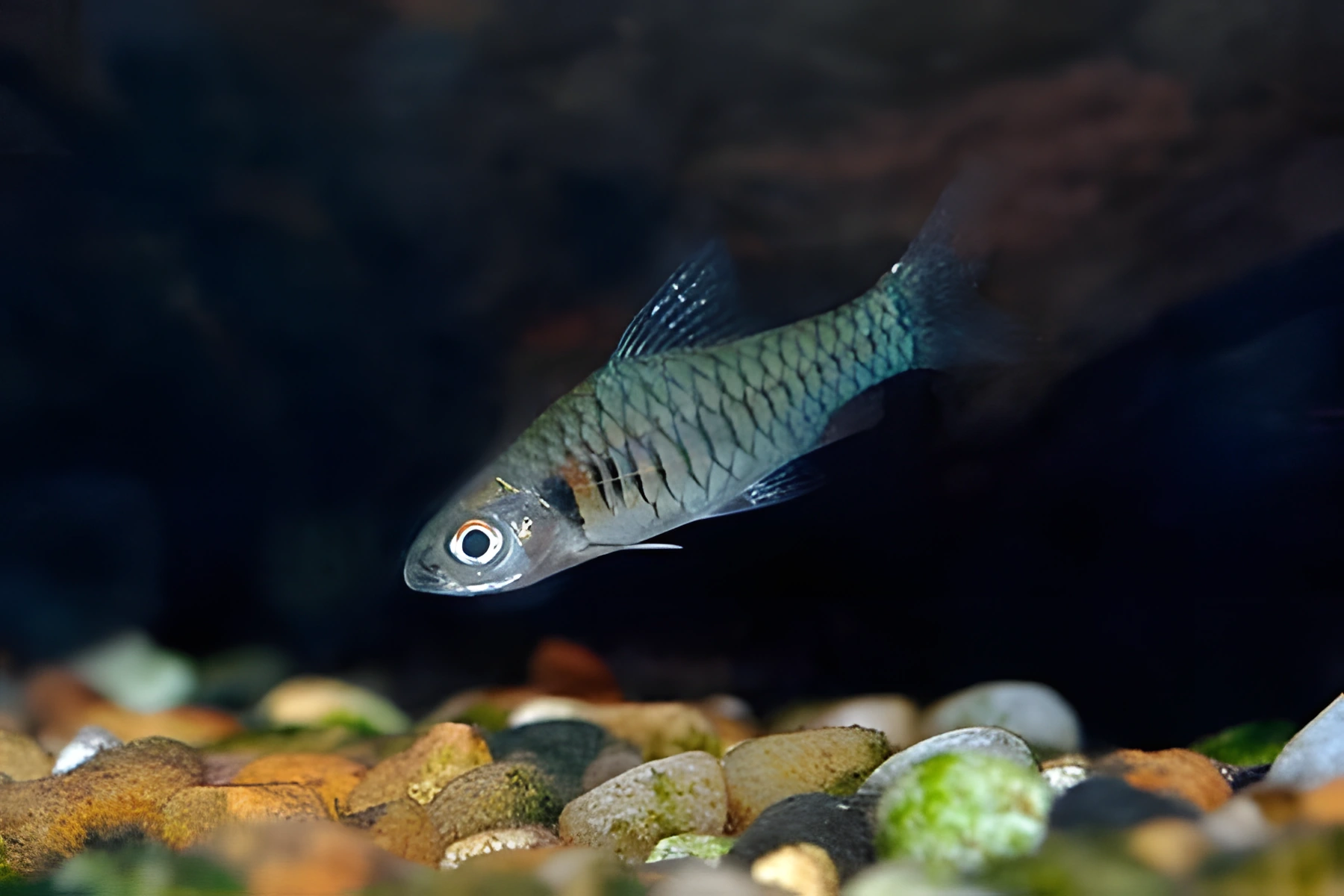
Adults typically reach 5–6 cm in length. The fish's coloration can be perceived as gray or silver, often depending on the intensity of the lighting. Their body is adorned with a characteristic dark outline on the scales. The fins of these barbs are translucent. Sexual dimorphism is weakly expressed, and distinguishing males from females is quite difficult.
Habitat
The species name indicates its origin is linked to the African continent, specifically the Congo River basin, which flows through the equatorial zone amidst dense tropical forests. These fish prefer to inhabit small tributaries and streams where the bottom is covered with fallen vegetation, branches, and tree trunks.
Behavior and Compatibility
These fish are peaceful, active, and schooling, coexisting well with non-aggressive species of comparable size. Excellent tankmates include dwarf cichlids, small catfish, and various characins. Within a school of Congo Barbs, a hierarchy is observed, where the alpha male dominates other males. Weaker individuals need to have places to hide, so their presence in the aquarium is crucial. In case of a lack of hiding spots or insufficient aquarium volume, there is a risk of death for the weakest males. To ensure comfortable existence, it is recommended to keep a school of at least 8–10 individuals.
Care and Maintenance
For keeping a small group of barbs, an aquarium of at least 80 liters is recommended. For decoration, it is preferable to use a dark substrate, dense thickets of live plants, including floating species, as well as various snags and other shelters. Lighting should be subdued. For additional environmental enrichment, dry fallen leaves can be added — more detailed information on this can be found in the article "Which tree leaves can be used in an aquarium." The key to successful keeping is maintaining stable water conditions with suitable parameters. In addition to an efficient filtration system, it is necessary to regularly remove organic waste from the aquarium, perform partial water changes with fresh water, and monitor pH, GH, and oxidation levels. Do not forget about equipment maintenance.
Diet
The Congo Barb has no special dietary requirements: they readily accept most available foods of appropriate size, whether dry, live, or frozen options. These fish can subsist entirely on dry foods, which significantly simplifies their feeding process. If you are looking for high-quality dry food, pay attention to our product — Aqvium flakes for aquarium fish, which has already become a bestseller on Ozon with a high rating of 4.9. It is suitable for most aquarium inhabitants. The raw materials for the food are produced according to new European standards (EU 2018/848) and are enriched with important vitamins such as A, C, D3, E, as well as Omega 3-6. You can purchase it on Ozon.
Breeding and Reproduction
Due to the rare occurrence of this species in amateur aquaristics, reliable information about successful breeding cases is currently unavailable. Nevertheless, it is assumed that the breeding process will be similar to that of other barb species.
Diseases
In a stable aquarium ecosystem where keeping conditions meet the needs of the species, diseases are rarely observed. However, deterioration of environmental quality, contact with infected fish, or injuries can provoke illnesses. If such situations could not be avoided, detailed information on symptoms and treatment methods can be found in the section "Diseases of Aquarium Fish." Data source: FishBase.
How to choose
When purchasing Congo Barbs, it is important to consider that this species is rare in aquaristics, so other fish may often be offered under its name. When inspecting individuals in the store, pay attention to the following signs: fish activity, absence of visible fin damage, clean scales, and clear eyes. Healthy fish should show natural curiosity and actively move around the aquarium, rather than hiding in corners or at the bottom. It is important to ensure that the fish show interest in food and do not exhibit signs of emaciation or unnatural behavior, such as swaying in place or apathy. Since this species is prone to intraspecific aggression, avoid buying single individuals — it is recommended to acquire a group of 8–10 fish to reduce stress and the risk of injury.
Frequently asked questions
The essentials: size, tank volume, water parameters and care
How big does Congo Barb get?
An adult reaches 5–6 cm in length. Plan the tank around the maximum size: the fish quickly outgrows a cramped setup.
What size aquarium does Congo Barb need?
The minimum recommended volume is 80 L. A smaller tank speeds up nitrate build-up and raises stress levels.
What water parameters does Congo Barb need?
Temperature 22–26 °C, pH 6–7, hardness 2–10 dGH. Stability matters more than exact values: sudden swings are harder on the fish than a small deviation from the ideal.
How long does Congo Barb live?
Around 7 years when kept properly. Lifespan depends directly on tank volume, water quality and a varied diet.
Is Congo Barb aggressive?
Temperament: peaceful (regular). Keep this in mind when choosing tank mates.
How many Congo Barb should be kept together?
Recommended setup: group (8–10 individuals). Ignoring this is a common cause of stress and disease.
What does Congo Barb eat?
Diet type: small / appropriate size / pieces. Feed small portions that are finished within a couple of minutes — overfeeding does more harm than underfeeding.
What is the scientific name of Congo Barb?
The scientific name of the species is Clypeobarbus congicus, family Cyprinids (Cyprinidae). It also appears in the literature as: Barbus congicus.