Temperature21 – 26 °C
Natural range
- Benin area
- Nigeria area
- Cameroon area
- Equatorial Guinea area
CyprinidsConservation status: Vulnerable VU
Other scientific names: Barbus lorenzi, Raddabarbus camerunensis
A member of the Cyprinidae family, known as Barboides gracilis or the gracile barb, stands out for its modest size. Thanks to this quality, this fish is perfectly suited for keeping in nano-aquariums. With optimal keeping conditions and a proper diet, it will not cause any trouble. It is also compatible with other species of similar size.
- Required aquarium volume
- 20 L
- Size in aquarium
- 2 cm
- Temperature
- 21 – 26 °C
- Temperament
- Peaceful (regular)
Parameters
Water pHSlightly acidic (6) – Neutral (7)
Water dHVery soft (0) – Soft (6)
Water salinityno salt (freshwater)
Size in aquarium2 cm
Lifespan2 years
TemperamentPeaceful (regular)
Toward small fishnot a predator
Required aquarium volume20 L
Lightingdimmed
Substrateany (no restrictions)
Water flowweak
FeedingSmall / appropriate size / pieces
CareLarge group (10+ individuals)
Description
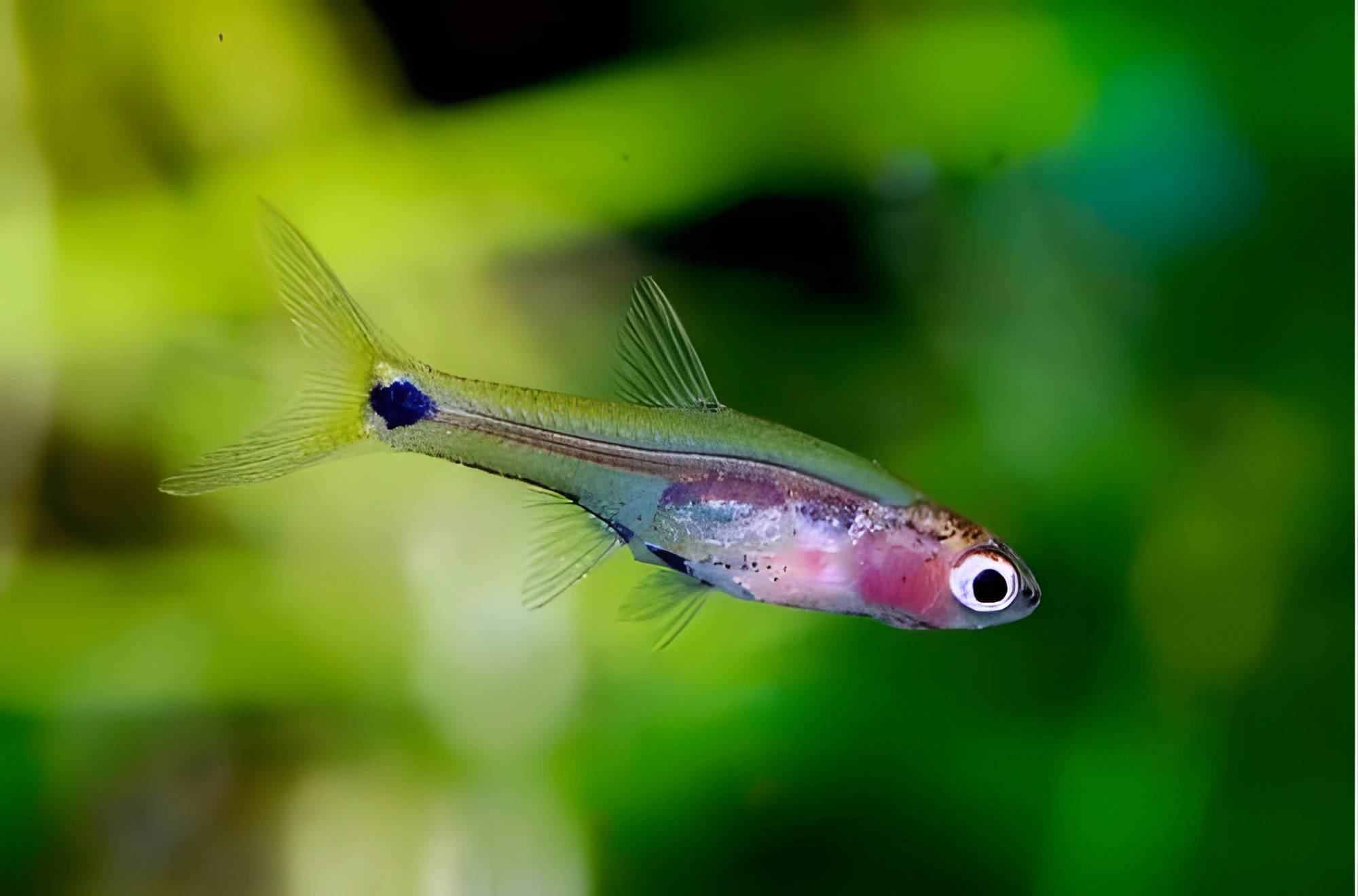
Adults barely reach 2 cm in length. A distinctive feature is their translucent body, which acquires pinkish tones closer to the head and the front part of the torso. A noticeable dark spot is located at the base of the caudal fin. Sexual dimorphism is weakly expressed, making sex determination difficult.
Habitat
The natural habitats of this species extend across West and Central Africa, covering the territory from Benin through Nigeria and Cameroon to Equatorial Guinea. Barboides gracilis inhabits small streams and rivers, which are usually under a dense canopy of tropical forest. The water in these bodies, although clear and clean, acquires a brownish tint. This is due to the high content of tannins formed by the decomposition of fallen leaves, branches, and other organic materials that abundantly cover the bottom.
Behavior and Compatibility
This peaceful schooling fish, due to its extremely small size, has a limited circle of possible tank mates; these should be species comparable in size and temperament. It is important to maintain a group size of at least 20–30 individuals. This will provide the fish with a sense of security and allow them to display their full beauty. In the presence of competitors, males will more actively show their best coloration and stay in good condition.
Care and Maintenance
Given the miniature size of adult fish, an aquarium of 20 liters or more will be suitable for their comfortable long-term keeping. For decor, dense thickets of aquatic plants, dark substrate, and several snags or other decorative shelters are preferred. Lighting should be subdued. Adding dried leaves will help give the water a characteristic brown “tea” tint, mimicking the natural habitat of this barb species. More detailed information can be found in the article “What tree leaves can be used in an aquarium.” For successful keeping, the following points are important, though not difficult to implement: maintaining high water quality with adequate hydrochemical parameters and reducing the level of organic waste. This is achieved through regular aquarium cleaning and weekly partial water changes. Installing an efficient filtration system can also solve many problems. Since Barboides gracilis does not tolerate strong currents well, when choosing a filter, it is worth preferring models that do not create excessive water movement.
Diet
In some cases, the fish show selectivity in feeding. Barboides gracilis may only accept foods they have become accustomed to before acquisition. Therefore, when buying fish, it is recommended to check with the seller about their current diet. Sometimes, finding the necessary types of food in your region can be difficult.
Breeding and Reproduction
Successful breeding of this barb species in amateur aquariums has not yet been recorded. The main reason lies in their miniature size. Although spawning is possible under favorable conditions, raising the already tiny fry is associated with extreme difficulties. Due to the absence of parental instincts, fry often become food for adult fish. Those who manage to escape this fate face difficulties in finding suitable food, the size of which must be microscopic.
Diseases
In a balanced aquarium ecosystem, where all species-specific conditions are met, diseases rarely occur. Most often, diseases are provoked by deteriorating environmental parameters, contact with already sick fish, or physical injuries. If, despite all measures, the fish shows clear signs of illness, appropriate medicinal treatment will be required. A detailed description of symptoms and treatment methods is available in the “Diseases of aquarium fish” section.
How to choose
When purchasing, special care should be taken, as recently imported individuals are often in an emaciated state and adapt poorly to new conditions. A healthy fish should be active, without visible damage, ulcers, plaque, or signs of emaciation. Avoid individuals that stay separate from the school, appear apathetic, or have an unnaturally swollen abdomen, unless this is related to the spawning condition of females.
Before purchasing, be sure to ask the seller what the fish are currently eating. The species can be picky about its diet and often refuses dry foods it hasn't been accustomed to beforehand. It is recommended to purchase only those individuals that have already confidently started accepting the food offered in the store, as transitioning to a new type of food can be difficult.
Frequently asked questions
The essentials: size, tank volume, water parameters and care
How big does Barboides gracilis get?
An adult reaches 2 cm in length. Plan the tank around the maximum size: the fish quickly outgrows a cramped setup.
What size aquarium does Barboides gracilis need?
The minimum recommended volume is 20 L. A smaller tank speeds up nitrate build-up and raises stress levels.
What water parameters does Barboides gracilis need?
Temperature 21–26 °C, pH 6–7, hardness 0–6 dGH. Stability matters more than exact values: sudden swings are harder on the fish than a small deviation from the ideal.
How long does Barboides gracilis live?
Around 2 years when kept properly. Lifespan depends directly on tank volume, water quality and a varied diet.
Is Barboides gracilis aggressive?
Temperament: peaceful (regular). Keep this in mind when choosing tank mates.
How many Barboides gracilis should be kept together?
Recommended setup: large group (10+ individuals). Ignoring this is a common cause of stress and disease.
What does Barboides gracilis eat?
Diet type: small / appropriate size / pieces. Feed small portions that are finished within a couple of minutes — overfeeding does more harm than underfeeding.
What is the scientific name of Barboides gracilis?
The scientific name of the species is Barboides gracilis, family Cyprinids (Cyprinidae). It also appears in the literature as: Barbus lorenzi, Raddabarbus camerunensis.