Temperature15 – 25 °C
Natural range
- Kerala area
- Karnataka area
CyprinidsConservation status: Endangered EN
Other scientific names: Barbus denisonii, Crossocheilus denisonii, Dawkinsia denisonii, Labeo denisonii, Puntius denisoni
The scientific name Sahyadria denisonii is assigned to the Denison Barb, a member of the Cyprinidae family. This fish was named in 1865 in honor of William Thomas Denison, who served as governor of colonial India from 1861 to 1866. Interestingly, the word “Sahyadria” is a local, widely used name for the mountain ranges of the Western Ghats, where this species was first discovered.
- Required aquarium volume
- 200 L
- Size in aquarium
- 9 – 11 cm
- Temperature
- 15 – 25 °C
- Temperament
- Peaceful (regular)
Parameters
Water pHNeutral (6.5) – Slightly alkaline (7.8)
Water dHSoft (5) – Very hard (26)
Water salinityno salt (freshwater)
Size in aquarium9 – 11 cm
Lifespan6 years
TemperamentPeaceful (regular)
Toward small fishnot a predator
Required aquarium volume200 L
Lightingdimmed or moderate
Substraterocky (rock formations, boulders, etc.)
Water flowmoderate
FeedingSinking (any)
CareGroup (8–10 individuals)
Description
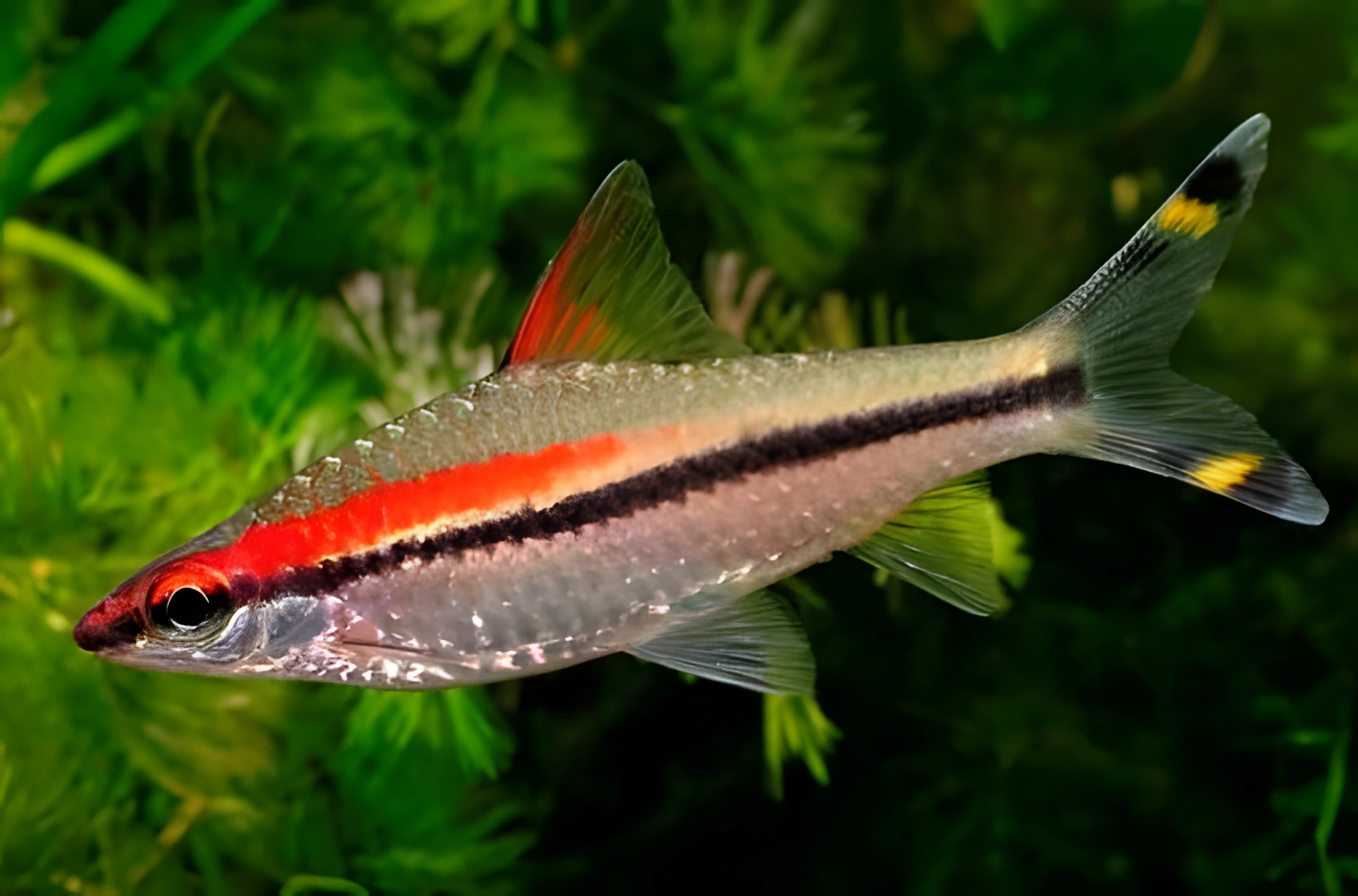
Adults can reach a length of up to 11 cm. The fish's body is slender and slightly elongated. The coloration is predominantly silvery. A distinct black horizontal stripe runs along the body, from head to tail. Above this stripe, in the anterior part of the body, there is a characteristic bright red streak. The dorsal fin is also reddish. The caudal fin is translucent and has two black and yellow markings. Sexual dimorphism is weakly expressed, making it quite difficult to determine the sex of the fish.
Habitat
This species is endemic to southern India, where it can be found in the states of Kerala and Karnataka, traversed by the Western Ghats mountain range. They inhabit the headwaters of rivers and water bodies formed by these rivers, which originate high in the mountains. Their natural habitat includes small lakes or backwaters with rocky shores and lush aquatic vegetation. The water in these areas is highly mineralized and significantly different in composition from lowland rivers. Due to intensive fishing in their natural habitat, populations of the species are endangered, which has led to restrictions on the export of wild fish in India.
Behavior and Compatibility
This fish is peaceful and active. It prefers to be in a group of at least 6–10 individuals; if there are fewer, the fish may become overly timid. It coexists well with other non-aggressive species that can thrive in similar conditions.
Care and Maintenance
For a small group of these fish, aquariums with a volume of 200 liters or more will be optimal. The aquascape can be arbitrary, the main thing is to provide enough swimming space. For example, about half of the tank can be left free of plants and decor elements. When keeping Denison Barbs, water quality and its hydrochemical composition are extremely important. These fish need very clean water with high hardness, so regular aquarium maintenance procedures are mandatory: removal of organic waste (food remains, excrement), constant monitoring of pH, dGH, and oxidizability parameters, as well as weekly water changes of 30–50% of the volume with fresh water. It is recommended to include an aerator with several diffusers in the equipment set to increase the level of dissolved oxygen. This is especially important in aquariums with a large number of live plants, as they release oxygen during the day but, conversely, consume it at night.
Diet
Regarding diet, the Denison Barb is unpretentious. A balanced diet is considered to include both protein and plant components. It is recommended to use foods that sink to the bottom. It is noted that foods rich in carotenoids, such as astaxanthin, can enhance the red pigmentation of the fish. The presence of such substances is usually indicated on the product packaging.
Breeding and Reproduction
For commercial purposes, Denison Barbs are mass-bred on fish farms in Southeast Asia and Eastern Europe using hormonal methods. Cases of natural reproduction in home aquariums are quite rare, so at present, there is no reliable data on the specific conditions required for spawning this species.
Diseases
In a balanced aquarium ecosystem that meets the needs of a particular species, diseases rarely occur. The development of diseases is usually associated with a deterioration in habitat quality, contact with sick fish, or injuries. If such problems could not be avoided, more detailed information on symptoms and treatment methods can be found in the “Aquarium Fish Diseases” section.
How to choose
When choosing Denison Barbs, preference should be given to individuals with active behavior and a bright, clear stripe pattern on their bodies. A healthy fish should display a pronounced red line along its body and yellow-black markings on its caudal fin. Avoid specimens with damaged scales, film, frayed fins, or signs of emaciation, manifested by a deeply concave abdomen.
Given the schooling nature of the species, it is recommended to acquire a group of 6 or more individuals, as solitary keeping causes severe stress in fish and can lead to loss of coloration or aggressive behavior. When purchasing, it is important to consider that transport stress often leads to temporary fading of coloration, but in suitable aquarium conditions, the brightness should quickly recover. Quarantine of new individuals before placing them in the main aquarium is a mandatory measure to prevent the introduction of infections.
Frequently asked questions
The essentials: size, tank volume, water parameters and care
How big does Denison Barb get?
An adult reaches 9–11 cm in length. Plan the tank around the maximum size: the fish quickly outgrows a cramped setup.
What size aquarium does Denison Barb need?
The minimum recommended volume is 200 L. A smaller tank speeds up nitrate build-up and raises stress levels.
What water parameters does Denison Barb need?
Temperature 15–25 °C, pH 6.5–7.8, hardness 5–26 dGH. Stability matters more than exact values: sudden swings are harder on the fish than a small deviation from the ideal.
How long does Denison Barb live?
Around 6 years when kept properly. Lifespan depends directly on tank volume, water quality and a varied diet.
Is Denison Barb aggressive?
Temperament: peaceful (regular). Keep this in mind when choosing tank mates.
How many Denison Barb should be kept together?
Recommended setup: group (8–10 individuals). Ignoring this is a common cause of stress and disease.
What does Denison Barb eat?
Diet type: sinking (any). Feed small portions that are finished within a couple of minutes — overfeeding does more harm than underfeeding.
What is the scientific name of Denison Barb?
The scientific name of the species is Sahyadria denisonii, family Cyprinids (Cyprinidae). It also appears in the literature as: Barbus denisonii, Crossocheilus denisonii, Dawkinsia denisonii.