Temperature18 – 30 °C
Natural range
- West Africa area
GoldfishConservation status: Least concern LC
Other scientific names: Pantodon buchholtzi
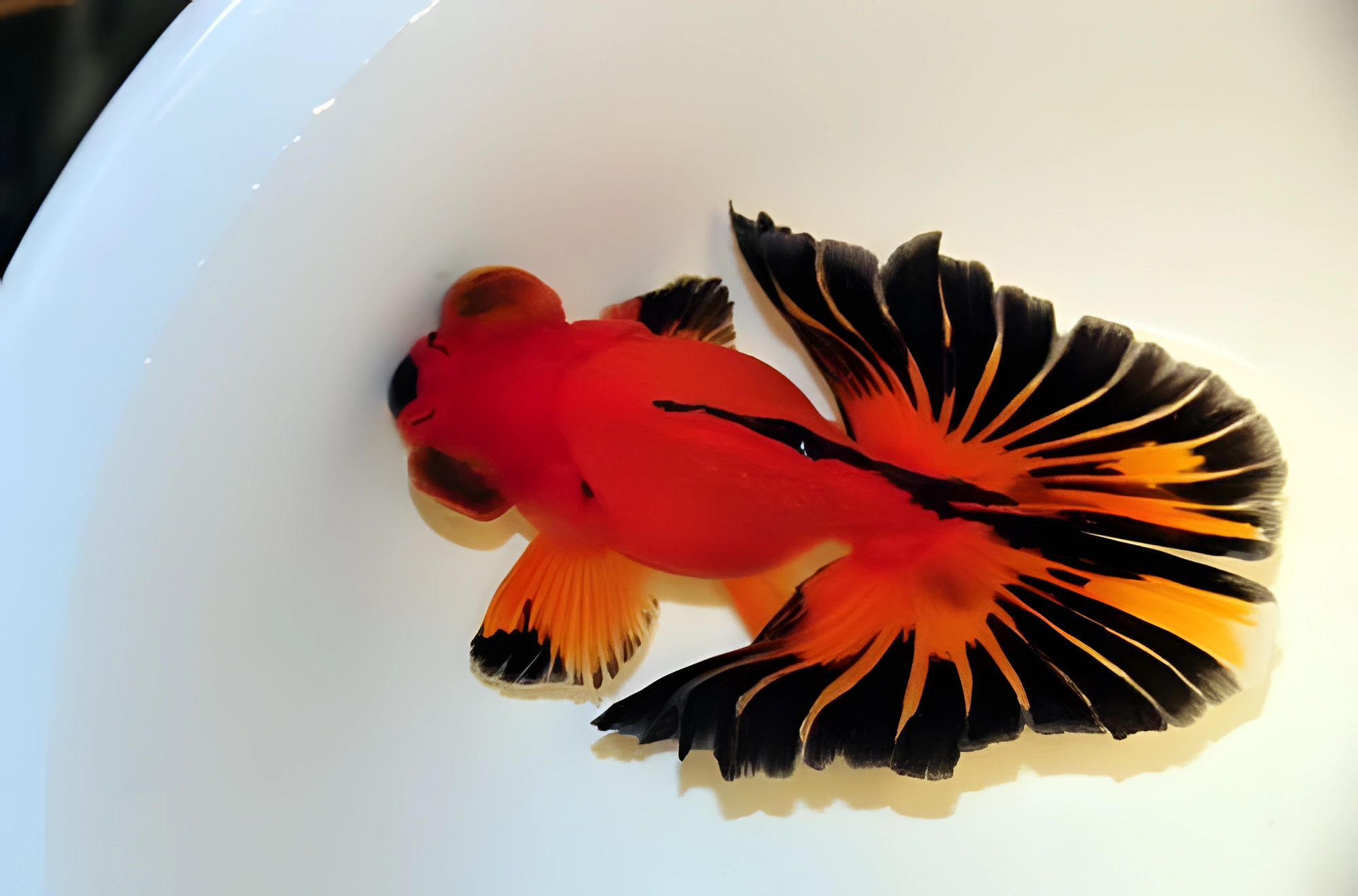
This relatively young goldfish breed only became widespread in the 1980s. It originated in China, although nowadays its main supplies come from Japan. This breed is the result of further selective breeding of the Telescope goldfish, inheriting many common features from it, such as the characteristic protruding eyes on the sides of the head.
- Required aquarium volume
- 100 L
- Size in aquarium
- 10 cm
- Temperature
- 18 – 30 °C
- Temperament
- Semi-peaceful (dangerous to smaller ones)
Parameters
Water pHSlightly acidic (6) – Slightly alkaline (8)
Water dHVery soft (2) – Medium hardness (10)
Water salinityno salt (freshwater)
Size in aquarium10 cm
Lifespan15 years
TemperamentSemi-peaceful (dangerous to smaller ones)
Toward small fishnot a predator
Required aquarium volume100 L
Lightingmoderate (regular)
Substrateany (no restrictions)
Water flowvery weak
FeedingAny (universal)
CareBoth solitary and in group (flexible)
Description
The Pantodon buchholzi has an unusual appearance, reminiscent of prehistoric fish. Its body is laterally compressed, the back is flattened, and the mouth is superior and very wide, lined with small teeth. The pectoral fins are highly developed and resemble wings, allowing the fish to leap above the water surface. Its coloration is cryptic: chocolate-brown with a marbled pattern of spots and streaks. In an aquarium, these fish reach a size of about 10–12 cm. Sexual dimorphism is evident in the structure of the anal fin: in males, it has a deep notch, while in females, the fin edge is almost straight or slightly convex.
Habitat
The species inhabits tropical waters of West Africa, including the Niger and Congo river basins. In nature, it lives in stagnant or slow-moving waters: swamps, overgrown ponds, and river backwaters with abundant floating and overhanging vegetation. It prefers areas with soft, slightly acidic water, rich in humic substances. The fish is predominantly crepuscular, hunting near the water surface.
Behavior and Compatibility
The African Butterflyfish is a specialized predator, spending most of its time near the surface awaiting prey. Intraspecific behavior can be territorial, so in small aquariums, it is recommended to keep a single specimen or a pair. It is compatible with peaceful fish that inhabit the middle and lower water layers and are not perceived as food. It should not be kept with active or aggressive species capable of nipping fins, as the Pantodon has a slow reaction time and vulnerable long fin rays.
Care and Maintenance
For keeping, an aquarium with a large surface area and a volume of 80–100 liters or more is necessary. It is critically important to have a tight-fitting lid, as the fish is capable of high jumps. An air gap should be left between the water surface and the lid. Lighting should be subdued, which can be achieved by using floating plants. Water parameters: temperature 23–30 °C, pH 6.0–7.5, hardness 5–15 dGH. Weak filtration is required, avoiding strong currents.
Diet
The Pantodon is an obligate predator, feeding exclusively from the water surface. Its diet should primarily consist of live or frozen insects, such as crickets, fruit flies, and mosquito larvae. In aquarium conditions, it can be accustomed to high-quality floating pellets for carnivorous fish, but dry foods should not be the sole source of nutrition. Feeding should be done 1–2 times a day in small portions.
Breeding and Reproduction
Breeding presents some difficulty. Spawning is stimulated by lowering the water level for several weeks, followed by raising it and using soft, acidic water. The eggs are pelagic and float to the surface. After spawning, the parents must be removed, as they are prone to eating their offspring. Fry require very fine live food and stable water parameters, making their rearing a laborious process.
Diseases
The species is sensitive to sudden changes in hydrochemical water parameters and environmental quality. Under poor keeping conditions, bacterial infections and fungal fin lesions may develop. Prevention includes maintaining cleanliness, regular water changes, and eliminating stress factors. It is important to monitor for injuries that may occur from jumping in aquariums without a lid.
How to choose
When purchasing, select active specimens with intact fins and no visible skin damage. It is important to ensure that the fish shows interest in food offered at the water surface. Avoid specimens with signs of emaciation or unnatural behavior (constant presence at the bottom). It is recommended to clarify in advance whether the fish is accustomed to non-live foods.
Frequently asked questions
The essentials: size, tank volume, water parameters and care
How big does Butterfly get?
An adult reaches 10 cm in length. Plan the tank around the maximum size: the fish quickly outgrows a cramped setup.
What size aquarium does Butterfly need?
The minimum recommended volume is 100 L. A smaller tank speeds up nitrate build-up and raises stress levels.
What water parameters does Butterfly need?
Temperature 18–30 °C, pH 6–8, hardness 2–10 dGH. Stability matters more than exact values: sudden swings are harder on the fish than a small deviation from the ideal.
How long does Butterfly live?
Around 15 years when kept properly. Lifespan depends directly on tank volume, water quality and a varied diet.
Is Butterfly aggressive?
Temperament: semi-peaceful (dangerous to smaller ones). Keep this in mind when choosing tank mates.
How many Butterfly should be kept together?
Recommended setup: both solitary and in group (flexible). Ignoring this is a common cause of stress and disease.
What does Butterfly eat?
Diet type: any (universal). Feed small portions that are finished within a couple of minutes — overfeeding does more harm than underfeeding.
What is the scientific name of Butterfly?
The scientific name of the species is Pantodon buchholzi, family Pantodontidae. It also appears in the literature as: Pantodon buchholtzi.