Temperature25 – 29 °C
Natural range
- Lake Malawi area
- Kande Island area
Cichlids
Other scientific names: Aulonocara maylandi
Aulonocara Orchid Red (Red) is also known as Aulonocara Strawberry and Aulonocara Dragon. These names are calques from the English commercial names Aulonocara Dragon Blood and Aulonocara Strawberry.
- Required aquarium volume
- 200 L
- Size in aquarium
- 12 – 13 cm
- Temperature
- 25 – 29 °C
- Temperament
- Semi-peaceful (including aggression during spawning / intraspecific conflicts)
Parameters
Water pHSlightly alkaline (7.6) – Alkaline (9)
Water dHMedium hardness (10) – Very hard (25)
Water salinityno salt (freshwater)
Size in aquarium12 – 13 cm
Lifespan8 years
TemperamentSemi-peaceful (including aggression during spawning / intraspecific conflicts)
Toward small fishnot a predator
Required aquarium volume200 L
Lightingmoderate (regular)
Substratesandy (regular, light)
Water flowweak
FeedingMixed diet (meat + plant-based)
CareHarem (1 male and several females)
Description
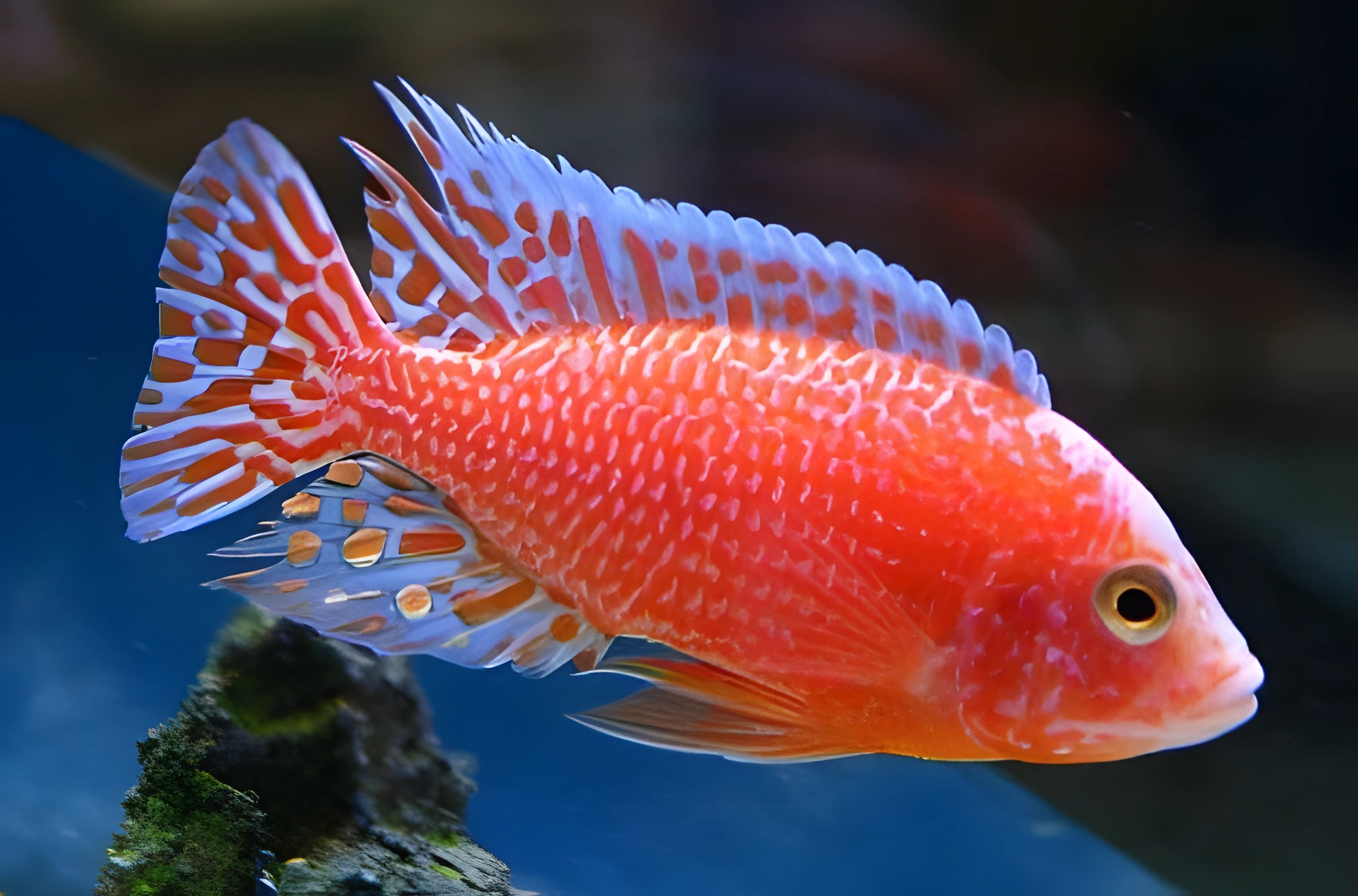
This hybrid is distinguished by its bright body coloration with a predominance of pink, red, or orange hues, as well as bluish mottled fins. Such external features are characteristic exclusively of sexually mature males. Adult females are smaller than males and have an inconspicuous gray coloration. Fish of this species possess the same morphological features as other representatives of the genus: they have a high body, a large head, a dorsal fin that extends along the entire length of the back, and pointed pelvic fins. Adult individuals grow up to 12–13 cm in length. During the first 10–13 months of life, sexual dimorphism is weakly expressed, and fish of both sexes look identical, predominantly in silvery tones.
Habitat
The species is endemic to Lake Malawi in East Africa and is found exclusively in the coastal waters of Kande Island. The fish inhabit the transitional zone, where rocky bottom areas give way to sandy shoals, usually at a depth of about 8 meters. In nature, they prefer areas with clear water and rocky shelters, where males occupy and defend their territories, and females gather in small groups to forage in the sand.
Behavior and Compatibility
Like all Malawian cichlids, Aulonocara Dragon is characterized by a temperamental nature, but is less aggressive than representatives of the Mbuna group. In large aquariums, these fish successfully coexist with their conspecifics, as well as with other Aulonocara species and representatives of the Utaka group. In limited spaces (in aquariums up to 200 liters), it is recommended to keep a group consisting of one male and several females. In conditions of space deficit, males tend to show aggression, competing for territory and females, which can lead to fierce clashes.
Care and Maintenance
For a group consisting of 4–6 fish, the optimal aquarium volume should be at least 200 liters. A sandy or gravel substrate is preferred for decoration. Hollow shelters, such as caves and grottoes, should be arranged from piles of stones and boulders. Plants are not an obligatory element of the decor. However, if desired, unpretentious species capable of growing in an alkaline environment can be planted. Since Aulonocara Strawberry can dig in the substrate, it is important to choose plants with a developed and strong root system or plant them in individual pots. Aquatic mosses and ferns attached to the surface of stones will be a good alternative. For successful and long-term keeping, maintaining a stable hydrochemical composition of the water with high pH and dGH values plays a key role. Aquarium care is determined by its inhabitants and the installed equipment. Nevertheless, weekly partial water changes and regular removal of organic waste (excrement, food remnants) are considered mandatory procedures.
Diet
This omnivorous species feeds both in the water column and at the bottom. Most common dry sinking foods, such as flakes and granules, are well accepted by them, as are live or frozen artemia, bloodworms, and daphnia. It is recommended to use special foods created by many manufacturers for this group of cichlids. It is worth noting that a lack of complete nutrition is one of the main reasons for the deterioration of fish coloration.
Breeding and Reproduction
In aquarium conditions, the breeding season for these fish is not pronounced, and spawning can occur at any time of the year. The male always initiates courtship. He first selects a suitable place on the bottom for the future clutch, after which he actively invites females. Sometimes the male's attention can be excessive, bordering on harassment. If the female is not yet ready, she tries to hide in shelters, so the presence of caves and grottoes is extremely important. During spawning, the female lays several dozen eggs. After fertilization, they end up in her mouth, where they remain until the fry appear. The incubation period lasts up to 3–4 weeks.
Diseases
The well-being of fish in the aquarium directly depends on the quality of the habitat. When kept in suitable conditions, without attacks from conspecifics, and with balanced nutrition, the likelihood of diseases is minimal. Thus, at the first signs of illness, one should carefully analyze possible errors in the keeping conditions. Detailed information on symptoms and treatment methods can be found in the section “Diseases of Aquarium Fish”.
How to choose
When choosing individuals, attention should be paid to their activity and the cleanliness of their skin: there should be no ulcers, plaque, fin damage, or unnatural spots on the body. A healthy fish should show curiosity, have clear eyes, and actively react to movement near the aquarium. Avoid buying fish that stay at the water surface, breathe heavily, or look emaciated, as this may be a sign of chronic stress or hidden diseases.
Frequently asked questions
The essentials: size, tank volume, water parameters and care
How big does Aulonocara Orchid get?
An adult reaches 12–13 cm in length. Plan the tank around the maximum size: the fish quickly outgrows a cramped setup.
What size aquarium does Aulonocara Orchid need?
The minimum recommended volume is 200 L. A smaller tank speeds up nitrate build-up and raises stress levels.
What water parameters does Aulonocara Orchid need?
Temperature 25–29 °C, pH 7.6–9, hardness 10–25 dGH. Stability matters more than exact values: sudden swings are harder on the fish than a small deviation from the ideal.
How long does Aulonocara Orchid live?
Around 8 years when kept properly. Lifespan depends directly on tank volume, water quality and a varied diet.
Is Aulonocara Orchid aggressive?
Temperament: semi-peaceful (including aggression during spawning / intraspecific conflicts). Keep this in mind when choosing tank mates.
How many Aulonocara Orchid should be kept together?
Recommended setup: harem (1 male and several females). Ignoring this is a common cause of stress and disease.
What does Aulonocara Orchid eat?
Diet type: mixed diet (meat + plant-based). Feed small portions that are finished within a couple of minutes — overfeeding does more harm than underfeeding.
What is the scientific name of Aulonocara Orchid?
The scientific name of the species is Aulonocara kandeense, family Cichlids (Cichlidae). It also appears in the literature as: Aulonocara maylandi.