Temperature25 – 29 °C
Natural range
- Lake Malawi area
- Kande Island area
CichlidsConservation status: Critically endangered CR
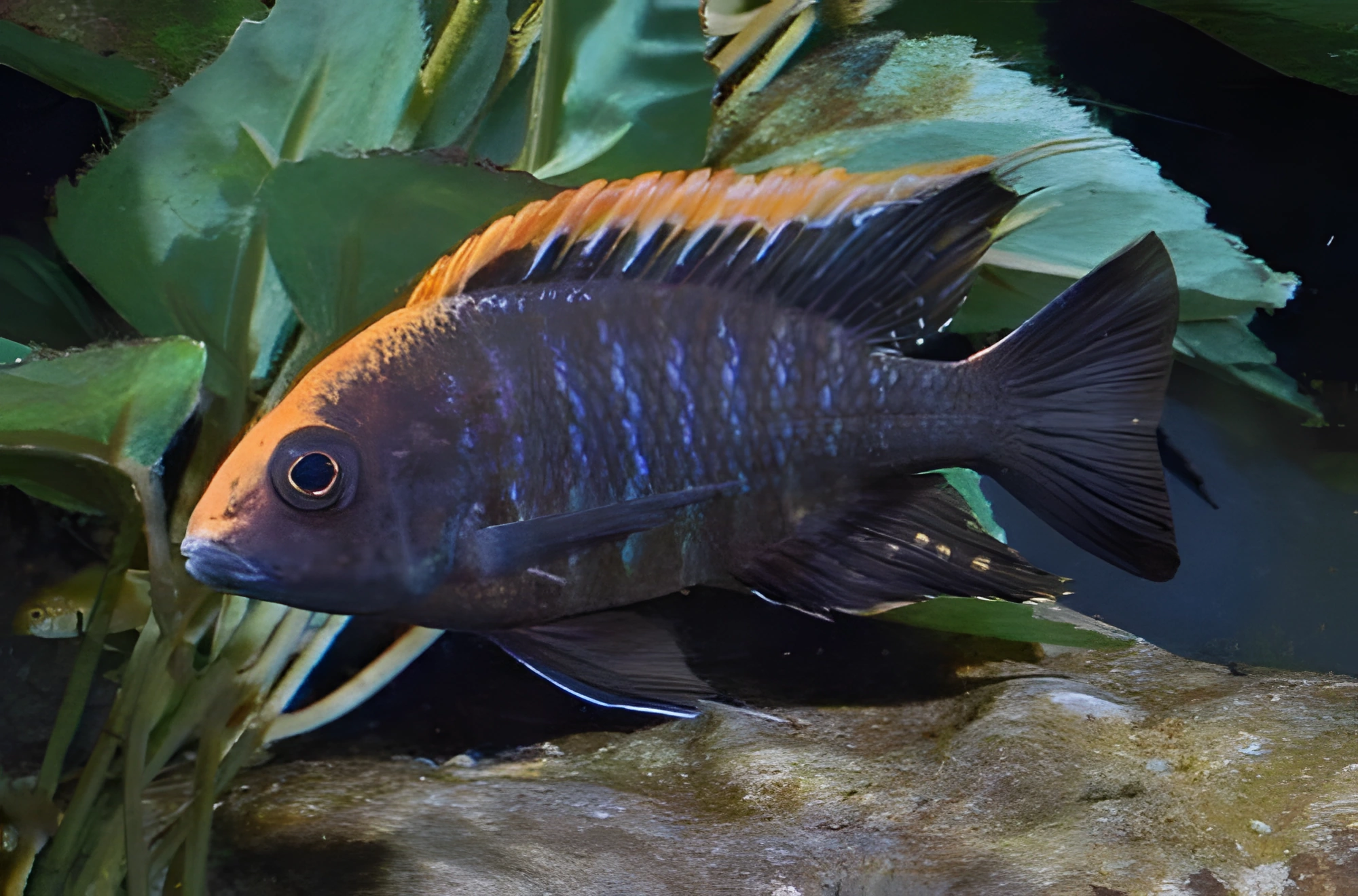
Aulonocara maylandi, known as Mayland's Aulonocara, is a representative of the Cichlidae family, typical of Malawian cichlids. This species is relatively easy to keep and breed, demonstrating good compatibility with many other species that can adapt to similar living conditions.
- Required aquarium volume
- 100 L
- Size in aquarium
- 8 – 10 cm
- Temperature
- 25 – 29 °C
- Temperament
- Semi-peaceful (including aggression during spawning / intraspecific conflicts)
Parameters
Water pHNeutral (7.4) – Alkaline (9)
Water dHMedium hardness (10) – Very hard (25)
Water salinityno salt (freshwater)
Size in aquarium8 – 10 cm
Lifespan8 years
TemperamentSemi-peaceful (including aggression during spawning / intraspecific conflicts)
Toward small fishnot a predator
Required aquarium volume100 L
Lightingmoderate (regular)
Substratesandy (regular, light)
Water flowweak
FeedingHigh protein (predominantly meat)
CareHarem (1 male and several females)
Description
Adults reach a size of 8–10 cm in length. As noted, Aulonocara maylandi is divided into two subspecies. Fish living near Kande Island are distinguished by a rich dark coloration with a noticeable white stripe running from the head to the beginning of the dorsal fin; males and females of this subspecies are practically identical. The second subspecies, inhabiting the southwestern part of the lake, has a similar coloration, but their stripe is intensely yellow and extends along the entire edge of the fin. Such bright coloration is characteristic of males, while females appear more modest, their bodies predominantly gray-brown, and the pattern consists of alternating light and dark stripes.
Habitat
This species originates from Lake Malawi, located in eastern Africa. Currently, two color forms are known: one inhabits the southeastern part of the lake, and the other is found near the small island of Kande on the western coast. These fish prefer to live in the coastal zone, choosing areas with sandy bottoms interspersed with rocky formations.
Behavior and Compatibility
Males compete with each other for territory and the attention of females, so in small aquariums, a harem-type keeping model is desirable: one male and several females. These fish are compatible with other non-territorial species of comparable size, preferably from Lake Malawi or Lake Tanganyika. Overly active tank mates, such as Mbuna cichlids, should be avoided.
Care and Maintenance
For a group of 3-4 fish, the optimal aquarium volume starts from 100 liters. The decor should preferably include rock formations and fine-grained sandy substrate. It is important that the substrate does not contain large or abrasive particles that could get stuck in or damage the fish's mouth during its characteristic feeding method. Rooted plants are generally not recommended, as the fish can quickly uproot them. A key task in caring for Aulonocara maylandi is maintaining stable water parameters, including suitable hydrochemical indicators and temperature. Essential aquarium maintenance procedures include: regular weekly water changes of 30–50% of the volume, removal of organic waste, monitoring equipment operation, and monitoring key water parameters (pH, dGH). It is equally important to regularly test the water for dangerous concentrations of nitrogen cycle products (ammonia, nitrites, nitrates). An effective filtration system plays a significant role in maintaining biological balance. When choosing a filter, it should be able to handle heavy pollution, especially if water intake occurs in the bottom layer. This is due to the fish's feeding habits: when they sift sand, a cloud of suspended matter is formed, which inevitably enters the filtration system.
Diet
Their diet consists mainly of phyto- and zooplankton, which they obtain by sifting sand with their mouths in search of food on the bottom of the reservoir. When kept in an aquarium, sinking foods balanced in plant and protein components should be offered. The diet can include dry flakes, granules, as well as frozen daphnia, artemia, and chopped bloodworms.
Breeding and Reproduction
The breeding strategy of Malawian cichlids, including Aulonocara maylandi, differs significantly from most freshwater fish. After fertilization, the female carries the eggs in her mouth throughout the incubation period. The hatched fry continue to hide in her mouth when danger arises until they are large enough to be independent. This evolutionary mechanism for protecting offspring arose in a highly competitive environment where other methods proved ineffective. Under favorable conditions, spawning occurs regularly. When the breeding period arrives, males actively pursue females, which is part of the courtship that can appear quite aggressive. It is desirable to keep a group so that there are several females per male. In a one-on-one situation, the female may suffer from excessive attention. It is also worth remembering that with several males and limited space, clashes, sometimes fierce, between them are inevitable. Fish lay several dozen eggs. Fry appear within four weeks and grow quickly, reaching breeding capability by 4 months.
Diseases
The main cause of diseases often lies in the keeping conditions: if they go beyond acceptable limits, immunity decreases, making the fish vulnerable to various infections inevitably present in the environment. At the first suspicion of illness, it is important first of all to check the water parameters and ensure there are no dangerous concentrations of nitrogen cycle products. Often, restoring normal, suitable conditions promotes recovery. However, in some cases, medication may be required. Detailed information on symptoms and treatment methods is presented in the "Aquarium Fish Diseases" section.
How to choose
When choosing individuals, preference should be given to active fish with clean fins, no visible damage, sores, or spots on the body. It is important to ensure that the fish's belly does not appear excessively sunken, and the eyes remain clear and transparent. It is recommended to observe the behavior of a potential pet in the general aquarium: a healthy fish shows curiosity, does not constantly hide in corners, and does not show signs of exhaustion or unnatural swimming. Due to the high popularity of the species, hybrids or individuals obtained through selective breeding are often found on the market, so it is advisable to purchase fish from trusted breeders who can confirm the purity of the line.
Frequently asked questions
The essentials: size, tank volume, water parameters and care
How big does Aulonocara maylandi get?
An adult reaches 8–10 cm in length. Plan the tank around the maximum size: the fish quickly outgrows a cramped setup.
What size aquarium does Aulonocara maylandi need?
The minimum recommended volume is 100 L. A smaller tank speeds up nitrate build-up and raises stress levels.
What water parameters does Aulonocara maylandi need?
Temperature 25–29 °C, pH 7.4–9, hardness 10–25 dGH. Stability matters more than exact values: sudden swings are harder on the fish than a small deviation from the ideal.
How long does Aulonocara maylandi live?
Around 8 years when kept properly. Lifespan depends directly on tank volume, water quality and a varied diet.
Is Aulonocara maylandi aggressive?
Temperament: semi-peaceful (including aggression during spawning / intraspecific conflicts). Keep this in mind when choosing tank mates.
How many Aulonocara maylandi should be kept together?
Recommended setup: harem (1 male and several females). Ignoring this is a common cause of stress and disease.
What does Aulonocara maylandi eat?
Diet type: high protein (predominantly meat). Feed small portions that are finished within a couple of minutes — overfeeding does more harm than underfeeding.
What is the scientific name of Aulonocara maylandi?
The scientific name of the species is Aulonocara maylandi, family Cichlids (Cichlidae).