Temperature20 – 25 °C
Natural range
- Ceará area
- Northeastern Brazil area
CatfishConservation status: Least concern LC
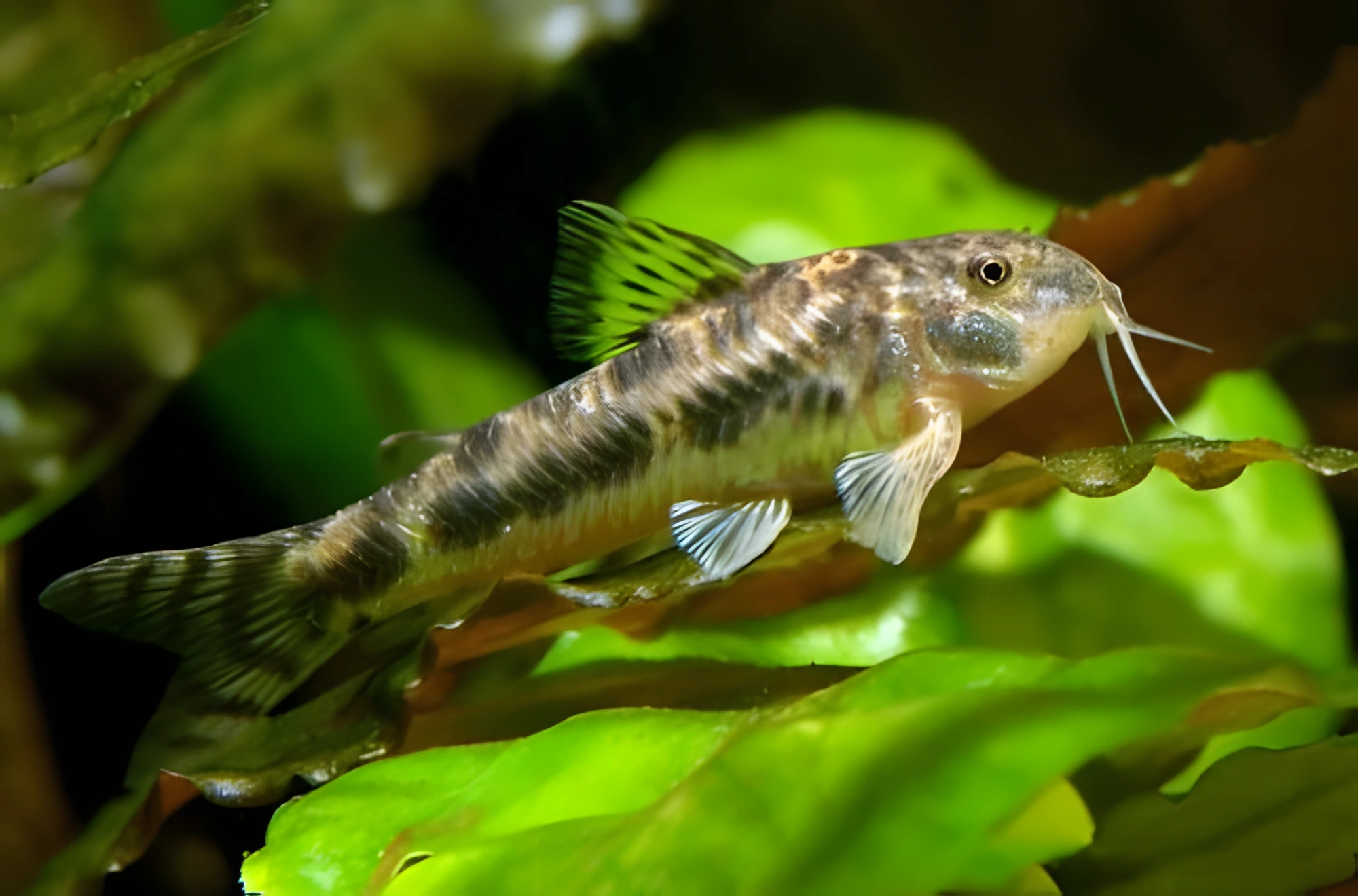
The spotted Aspidoras, also known as Aspidoras spilotus, belongs to the Callichthyidae family, or Armored Catfishes. This catfish is an excellent choice for aquarists, especially beginners, as it is undemanding to keep and easy to breed. It also gets along well with most freshwater fish. Its coloration may not be the brightest, which is perhaps the only thing that could be considered its "shortcoming."
- Required aquarium volume
- 80 L
- Size in aquarium
- 4 cm
- Temperature
- 20 – 25 °C
- Temperament
- Peaceful (regular)
Parameters
Water pHSlightly acidic (6) – Neutral (7.5)
Water dHVery soft (2) – Hard (12)
Water salinityno salt (freshwater)
Size in aquarium4 cm
Lifespan5 years
TemperamentPeaceful (regular)
Toward small fishnot a predator
Required aquarium volume80 L
Lightingany
Substratefine sand
Water flowmoderate or strong
FeedingHigh protein (predominantly meat)
CareSmall group (3–4 individuals)
Description
Adults grow to approximately 4 cm in length. These catfishes are close relatives of Corydoras and bear a noticeable resemblance to them. Their bodies are covered with strong plates, which are modified scales, resembling knight's armor. This feature is reflected in the genus's scientific name: the word Aspidoras comes from the Ancient Greek ἀσπίς (aspis) – "shield" and δορά (dora) – "skin." On their heads, near the mouth, there are three pairs of sensitive barbels that help the catfish find food on the bottom. Their coloration is usually gray with dark pigment spots. Females are generally larger and appear more massive than males, who look more slender in comparison.
Habitat
This species originates from the northeastern part of Brazil, located in South America. It can be found in numerous river systems of the coastal zone of Ceará state. Its typical habitat is shallow streams flowing through tropical forests, where the bottom is covered with snags and plant debris. The terrain here is hilly, so the current is often quite fast.
Behavior and Compatibility
This catfish is distinguished by its peaceful and calm temperament; it feels most comfortable in a group of at least 4–5 individuals. It is well compatible with many other species, and thanks to its natural "armor," it can even coexist with some more aggressive fish of similar or slightly larger size.
Care and Maintenance
For a group of 4–5 spotted Aspidoras, aquariums of 60–80 liters will be required. Keeping this species is not difficult even for beginners, as it is undemanding in terms of decor and can comfortably exist even in an aquarium with minimal decorations. However, if there are large fish among its tankmates, it is advisable to provide sufficient hiding places for the catfish, where it can find refuge in case of danger. As with any fish living in flowing water in natural conditions, it is critically important to avoid the accumulation of organic waste (e.g., leftover food and excrement), which can disrupt the biological balance in the aquarium. Maintaining a stable aquatic environment is ensured by regular aquarium maintenance and the use of necessary equipment.
Diet
Being an omnivorous inhabitant, this species readily accepts a variety of foods in a home aquarium, preferably sinking ones. Although the catfish may rise to the surface for food, the structure of its mouth is not adapted for full feeding in such a position, as it is a bottom-dwelling fish.
Breeding and Reproduction
In their natural environment, the spawning of these fish coincides with the rainy season, when abundant rainfall changes their habitat, stimulating them to reproduce. The Aspidoras sp. available for sale have been bred in artificial conditions for many generations and have already adapted to reproduce under somewhat different external conditions. Nevertheless, it has been observed that, given a suitable habitat and balanced diet rich in trace elements, a gradual decrease in water temperature by several degrees followed by its maintenance is an excellent stimulus for spawning. The eggs attach to various surfaces, such as plant leaves, stones, or driftwood, preferring areas with the strongest current, for example, near filters. Parental instincts are not developed in them, and there is no care for the offspring. To protect the eggs and fry from being eaten, it is recommended to transfer them to a separate tank.
Diseases
Most health problems in fish often arise from unsuitable keeping conditions. Maintaining a stable and comfortable habitat is a key factor for successful keeping. If symptoms of illness appear, the first step is to check the water quality. If deviations are found, it is important to take immediate measures to eliminate them. If the symptoms do not disappear or worsen, medicinal treatment may be required. More detailed information on symptoms and treatment methods can be found in the "Diseases of Aquarium Fish" section.
How to choose
When selecting specimens, attention should be paid to their activity and the integrity of their skin. Healthy catfish should be mobile, actively exploring the aquarium bottom in search of food, and not show signs of apathy or constant presence at the water's surface. It is important to ensure there are no damaged barbels, as these are key sensory organs, and also to check the cleanliness of the fins and the absence of whitish plaque or ulcers on the body, which may indicate bacterial or fungal infections. Avoid purchasing fish with severely sunken bellies or signs of emaciation, which often indicate prolonged stress or the presence of internal parasites.
Frequently asked questions
The essentials: size, tank volume, water parameters and care
How big does Spotted Aspidoras get?
An adult reaches 4 cm in length. Plan the tank around the maximum size: the fish quickly outgrows a cramped setup.
What size aquarium does Spotted Aspidoras need?
The minimum recommended volume is 80 L. A smaller tank speeds up nitrate build-up and raises stress levels.
What water parameters does Spotted Aspidoras need?
Temperature 20–25 °C, pH 6–7.5, hardness 2–12 dGH. Stability matters more than exact values: sudden swings are harder on the fish than a small deviation from the ideal.
How long does Spotted Aspidoras live?
Around 5 years when kept properly. Lifespan depends directly on tank volume, water quality and a varied diet.
Is Spotted Aspidoras aggressive?
Temperament: peaceful (regular). Keep this in mind when choosing tank mates.
How many Spotted Aspidoras should be kept together?
Recommended setup: small group (3–4 individuals). Ignoring this is a common cause of stress and disease.
What does Spotted Aspidoras eat?
Diet type: high protein (predominantly meat). Feed small portions that are finished within a couple of minutes — overfeeding does more harm than underfeeding.
What is the scientific name of Spotted Aspidoras?
The scientific name of the species is Aspidoras spilotus, family Armored Catfish (Callichthyidae).