Temperature24 – 28 °C
Natural range
- Loreto Region
- Peru area
CichlidsConservation status: Data deficient DD
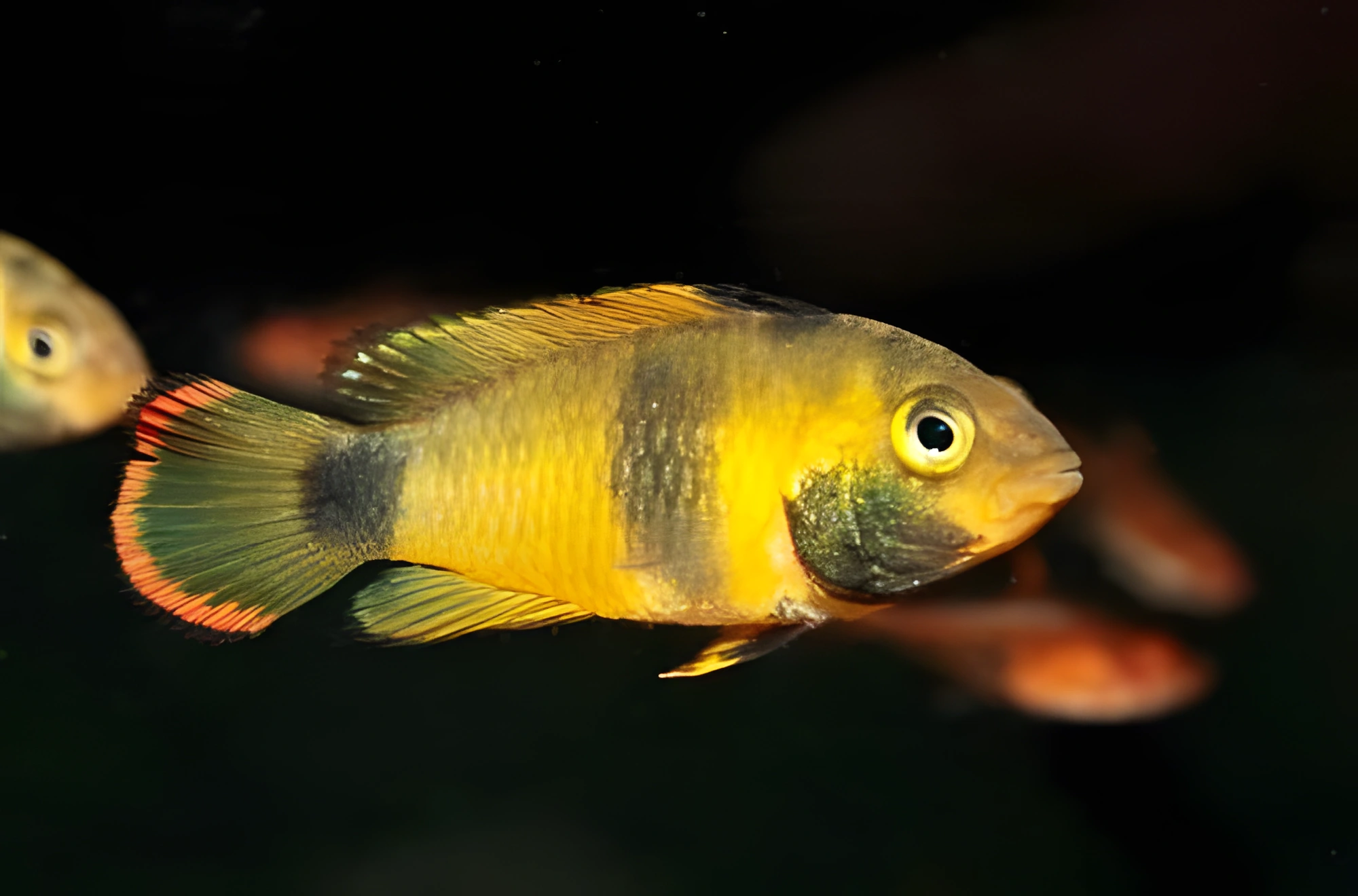
The Panda Apistogramma, or Panda Cichlid (scientific name Apistogramma nijsseni), belongs to the Cichlidae family. It is a beautiful and generally peaceful fish. However, keeping it in an aquarium can present some difficulties for the aquarist, as it requires live foods and rather precise adherence to water hydrochemical parameters within a narrow range.
- Required aquarium volume
- 60 L
- Size in aquarium
- 7 – 8 cm
- Temperature
- 24 – 28 °C
- Temperament
- Semi-peaceful (including aggression during spawning / intraspecific conflicts)
Parameters
Water pHSlightly acidic (5) – Neutral (6.5)
Water dHVery soft (1) – Soft (5)
Water salinityno salt (freshwater)
Size in aquarium7 – 8 cm
Lifespan3 years
TemperamentSemi-peaceful (including aggression during spawning / intraspecific conflicts)
Toward small fishnot a predator
Required aquarium volume60 L
Lightingdimmed
Substratesandy (regular, light)
Water flowweak
FeedingMeat / protein (live, frozen, fresh)
CareHarem (1 male and several females)
Description
Adult Panda Apistogrammas reach approximately 7–8 cm in length. A distinguishing feature of males is their larger size and brighter coloration compared to females. Their coloration is dominated by yellow and black hues with a slight bluish sheen. The fins are yellow, and the caudal fin is rounded, which is atypical for most cichlids, and edged with an orange stripe.
Habitat
Its natural habitat is in South America, in limited areas of the Ucayali and Yavari river basins, located in modern-day Peru. The Panda Apistogramma predominantly inhabits small tributaries and streams. The water in these bodies of water has a dark brown tint due to the high content of dissolved tannins, which are formed by decaying vegetation. Dense canopies of tropical trees create a thick cover, preventing light from penetrating to the water surface; the riverbeds are strewn with fallen trees, branches, and a thick layer of decomposing leaves.
Behavior and Compatibility
Most of the fish offered for sale have been bred in artificial aquarium conditions for many generations, which has affected their behavior. They show less aggression in defending their territory compared to their wild counterparts. These fish get along well with other species of similar size and temperament. However, during the spawning period, smaller tankmates may be attacked.
Care and Maintenance
The optimal aquarium volume for several Apistogramma nijsseni starts from 60 liters. When setting up the tank, it is preferable to use a sandy substrate, as well as a large number of shelters created from snags or other decorative elements. It is also important to provide thickets of shade-loving plants and clusters of floating vegetation on the surface. Lighting should be subdued. The water composition requires slightly acidic pH values and low carbonate hardness. To recreate the characteristic brownish tint of the water, reminiscent of their natural environment, beech, oak, Indian almond leaves, or special essences are often added. The leaves must first be dried, soaked, and then placed in the aquarium. As they decompose, the water will be enriched with tannins and acquire a tea-like color. To maintain high water quality, a powerful filtration system with effective biological purification will need to be installed. Since filters are the main source of internal current, they should be positioned to minimize water movement, as otherwise, the fish may experience discomfort.
Diet
This species is carnivorous, feeding on small aquatic insects, their larvae, and benthic invertebrates. In aquarium conditions, it is also highly desirable to offer live or frozen foods such as Artemia, Daphnia, bloodworms, and mosquito larvae. Before purchasing the fish, it is recommended to inquire about what type of food they were fed previously. If the fish are accustomed to dry sinking foods, for example, flakes or pellets, this will significantly facilitate their subsequent care.
Breeding and Reproduction
Under favorable conditions, such as suitable hydrochemical composition and water temperature, the likelihood of fry appearing is quite high, especially if live foods are present in the diet. At the beginning of the breeding period, the male may show attention to several females simultaneously, and each of them is capable of producing offspring. In this case, it is important to provide a sufficient number of shelters corresponding to the number of females, and these shelters should be located at some distance from each other. During spawning, the female lays eggs in a secure shelter and remains next to the clutch, guarding it. After the fry hatch, she continues to care for them, protecting them from outsiders. The male also participates in protecting the offspring, but sometimes he becomes overly aggressive, and then he has to be temporarily moved to a separate aquarium.
Diseases
The main cause of most diseases in Leaf Fish is unsuitable keeping conditions and poor-quality nutrition. If initial symptoms are observed, it is first necessary to check water parameters and the concentration of dangerous substances such as ammonia, nitrites, and nitrates. If the indicators deviate from the norm, they should be brought back into order, and only then should treatment begin. More detailed information on symptoms and treatment methods can be found in the "Aquarium Fish Diseases" section.
How to choose
When purchasing, choose active fish with bright, clear coloration and clean fins. Avoid individuals with sunken bellies, signs of emaciation, scale damage, or film on the body. It is important to assess their behavior: healthy Apistogramma are curious and do not constantly hide in the corners of the aquarium. Ask the seller what type of food the fish are accustomed to — this will facilitate their adaptation to new conditions. If possible, observe feeding in the store to ensure the individuals have a normal appetite.
Frequently asked questions
The essentials: size, tank volume, water parameters and care
How big does Panda Apistogramma get?
An adult reaches 7–8 cm in length. Plan the tank around the maximum size: the fish quickly outgrows a cramped setup.
What size aquarium does Panda Apistogramma need?
The minimum recommended volume is 60 L. A smaller tank speeds up nitrate build-up and raises stress levels.
What water parameters does Panda Apistogramma need?
Temperature 24–28 °C, pH 5–6.5, hardness 1–5 dGH. Stability matters more than exact values: sudden swings are harder on the fish than a small deviation from the ideal.
How long does Panda Apistogramma live?
Around 3 years when kept properly. Lifespan depends directly on tank volume, water quality and a varied diet.
Is Panda Apistogramma aggressive?
Temperament: semi-peaceful (including aggression during spawning / intraspecific conflicts). Keep this in mind when choosing tank mates.
How many Panda Apistogramma should be kept together?
Recommended setup: harem (1 male and several females). Ignoring this is a common cause of stress and disease.
What does Panda Apistogramma eat?
Diet type: meat / protein (live, frozen, fresh). Feed small portions that are finished within a couple of minutes — overfeeding does more harm than underfeeding.
What is the scientific name of Panda Apistogramma?
The scientific name of the species is Apistogramma nijsseni, family Cichlids (Cichlidae).