Temperature22 – 29 °C
Natural range
- Solimões River basin
- Amazon basin
- Brazil area
- Peru area
CichlidsConservation status: Least concern LC
Other scientific names: Apistogramma klausewitzi, Apistogramma kleei, Apistogramma pertense, Apistogramma sweglesi
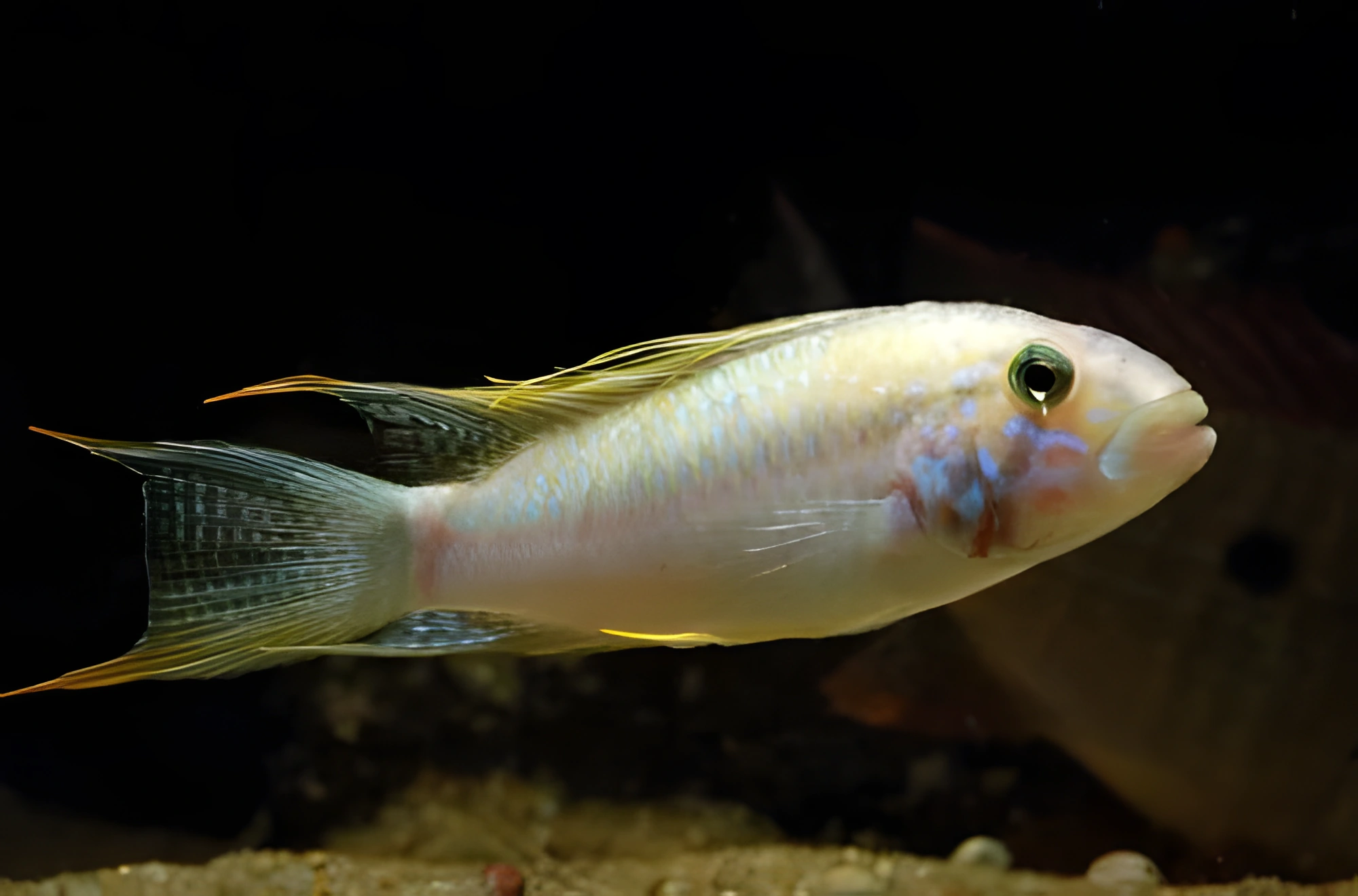
Apistogramma bitaeniata, scientifically known as Kelleri Apistogramma, belongs to the Cichlidae family. Until 2008, when the fish first appeared for sale, it was known as Apistogramma sp. Kelleri, without a definitively established species status. It is sometimes also called Leticia Apistogramma, which can be considered a synonymous name used by exporters. This species is quite easy to keep and gets along well with other non-aggressive fish. A distinctive feature is its unusual behavior during spawning and subsequent fry care, which is uncharacteristic of most American cichlids of this genus.
- Required aquarium volume
- 50 L
- Size in aquarium
- 6 – 8 cm
- Temperature
- 22 – 29 °C
- Temperament
- Aggressive / incompatible / unfriendly
Parameters
Water pHAcidic (4) – Slightly acidic (6)
Water dHVery soft (0) – Soft (5)
Water salinityno salt (freshwater)
Size in aquarium6 – 8 cm
Lifespan4 years
TemperamentAggressive / incompatible / unfriendly
Toward small fishnot a predator
Required aquarium volume50 L
Lightingdimmed
Substratesandy (regular, light)
Water flowweak or moderate
FeedingAny (universal)
CareMixed (solitary / pair / group)
Description
Adult males can reach about 8 cm in length, distinguished by elongated and pointed fins, and their coloration is most often silvery with a blue sheen. During the spawning period, males may develop red pigmentation on their heads. Females are smaller, growing up to 6 cm, with shorter fins and predominantly pale yellow coloration. A distinguishing feature of females is a black diagonal stripe running across the head.
Habitat
The natural habitat of Apistogramma kelleri is the Solimões region in South America, part of the Amazon, bordering Colombia, Peru, and Brazil. These fish inhabit small rivers and streams hidden under the dense canopy of the tropical forest. They are usually found in shallow forest streams up to 1 meter deep, where the water is clear, the bottom is covered with white sand, and a thick layer of fallen leaves lies on top. Aquatic plants are typically absent in such biotopes.
Behavior and Compatibility
Unlike many other Apistogramma species, this species is relatively calm towards its conspecifics. In small aquariums, it is preferable to keep them individually. However, in larger aquariums, a group of these fish can peacefully coexist with representatives of other species.
Care and Maintenance
For one or two fish, an acceptable aquarium volume starts from 50 L. These fish do not have strict requirements for decor, but they will look more harmonious in conditions that mimic their natural environment. Sand substrate and several snags can be used as the main decorative elements. Lighting should be subdued, and the presence of aquatic plants is not mandatory. If breeding is planned, it is important to provide several shelters. These can be decorative grottoes and caves, as well as ordinary ceramic pots turned on their side, or sections of PVC pipes. Dried leaves spread on the bottom of the aquarium can serve as an additional decorative element; they not only decorate but also enrich the water with tannins, which is characteristic of natural bodies of water. More detailed information can be found in the article "Which tree leaves can be used in an aquarium." Long-term and successful keeping of Apistogramma kelleri largely depends on maintaining stable water parameters. It is necessary to avoid sharp fluctuations in temperature, hydrochemical parameters (pH and dGH), as well as the accumulation of dangerous concentrations of nitrogen cycle products (ammonia, nitrites, nitrates). For this, the aquarium should be equipped with the necessary equipment and undergo regular maintenance. Maintenance includes at least weekly partial water changes with fresh water and timely removal of organic residues, such as uneaten food and excrement.
Diet
This species is carnivorous. In their natural environment, their diet consists of small invertebrates. In a home aquarium, the fish successfully adapt to dry foods such as flakes and pellets. However, for complete nutrition, it is recommended to include live or frozen brine shrimp, daphnia, and bloodworms in their diet.
Breeding and Reproduction
Under suitable conditions, breeding and the appearance of fry are quite likely even in a hobbyist's aquarium. Apistogramma kelleri stands out among its genus because the female carries fertilized eggs in her mouth throughout the incubation period. However, this strategy of offspring protection does not always manifest. Sometimes the fish lay their eggs in a pit they dig in the substrate. In this case, both parents can participate in the care of the eggs and fry. It has been observed that with weak current in the aquarium, the female takes care, and with strong current, the male does.
Diseases
The main cause of diseases often lies in the keeping conditions: if they go beyond acceptable limits, immunity decreases, making the fish vulnerable to various infections inevitably present in the environment. At the first suspicion of illness, it is important first of all to check the water parameters and ensure there are no dangerous concentrations of nitrogen cycle products. Often, restoring normal, suitable conditions promotes recovery. However, in some cases, medication may be required. Detailed information on symptoms and treatment methods is presented in the "Aquarium Fish Diseases" section.
How to choose
When choosing individuals, attention should be paid to their activity and the cleanliness of their skin. A healthy fish should show curiosity, swim in the water column, and actively react to external stimuli. Avoid specimens with signs of emaciation, sunken bellies, damaged fins, or the presence of white film on the body. In the store, fish should be kept in clean water without visible debris, and their behavior should not be sluggish or apathetic.
It is recommended to clarify the fish's current diet with the seller to ensure a smooth transition to familiar foods at home. Since the species is sensitive to sudden changes in environmental parameters, it is advisable to prepare the aquarium in advance with appropriate acidity and hardness indicators. When purchasing a group of individuals, it is worth considering their territorial nature and providing shelters in the aquarium in advance to reduce stress during adaptation.
Frequently asked questions
The essentials: size, tank volume, water parameters and care
How big does Kelleri Apistogramma get?
An adult reaches 6–8 cm in length. Plan the tank around the maximum size: the fish quickly outgrows a cramped setup.
What size aquarium does Kelleri Apistogramma need?
The minimum recommended volume is 50 L. A smaller tank speeds up nitrate build-up and raises stress levels.
What water parameters does Kelleri Apistogramma need?
Temperature 22–29 °C, pH 4–6, hardness 0–5 dGH. Stability matters more than exact values: sudden swings are harder on the fish than a small deviation from the ideal.
How long does Kelleri Apistogramma live?
Around 4 years when kept properly. Lifespan depends directly on tank volume, water quality and a varied diet.
Is Kelleri Apistogramma aggressive?
Temperament: aggressive / incompatible / unfriendly. Keep this in mind when choosing tank mates.
How many Kelleri Apistogramma should be kept together?
Recommended setup: mixed (solitary / pair / group). Ignoring this is a common cause of stress and disease.
What does Kelleri Apistogramma eat?
Diet type: any (universal). Feed small portions that are finished within a couple of minutes — overfeeding does more harm than underfeeding.
What is the scientific name of Kelleri Apistogramma?
The scientific name of the species is Apistogramma bitaeniata, family Cichlids (Cichlidae). It also appears in the literature as: Apistogramma klausewitzi, Apistogramma kleei, Apistogramma pertense.