Temperature23 – 29 °C
Natural range
- Southwestern Venezuela area
- Venezuela area
CichlidsConservation status: Least concern LC
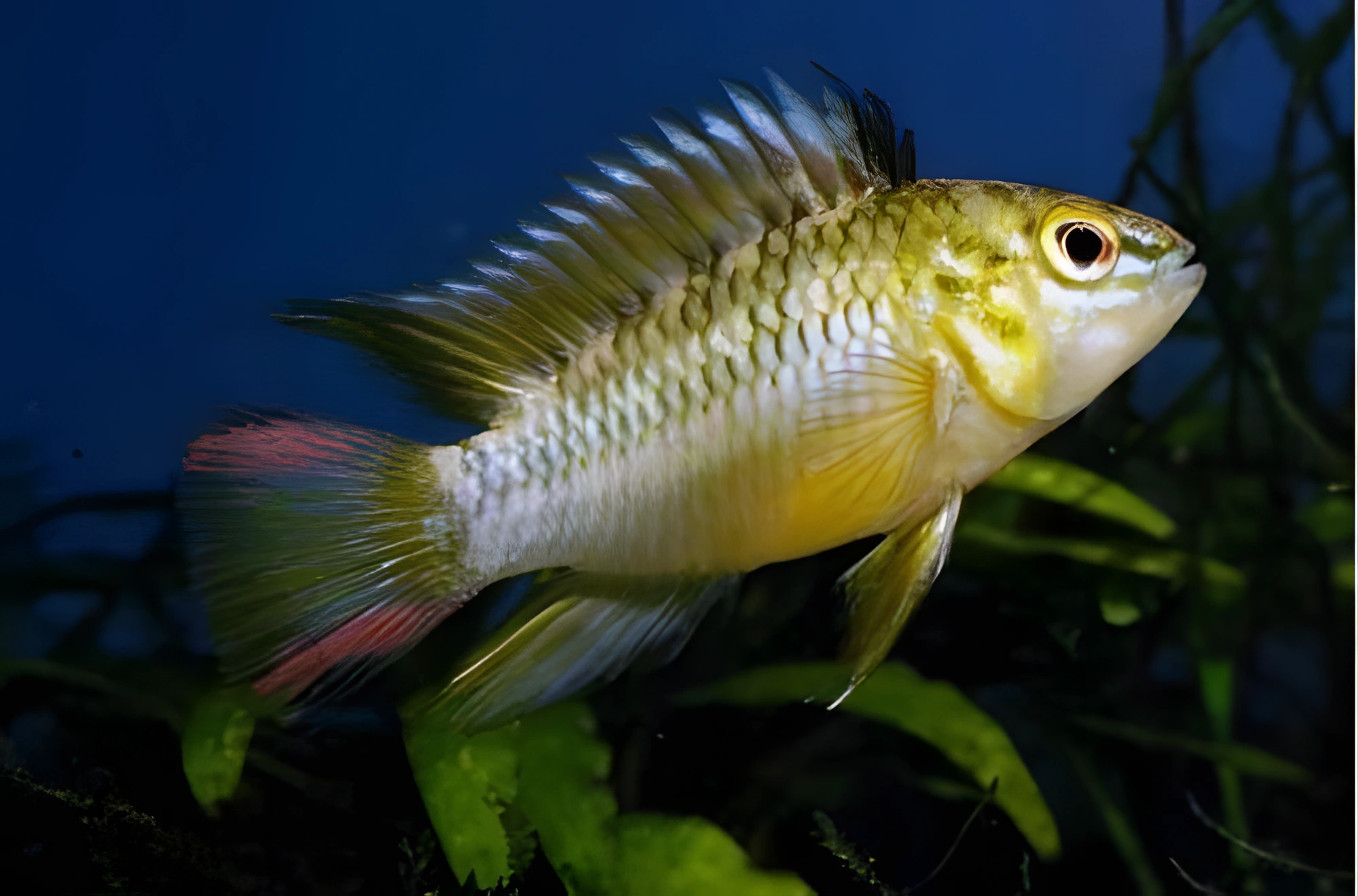
Apistogramma hoignei, known as Hongslo's Dwarf Cichlid, belongs to the Cichlidae family. This is an energetic fish, especially the males, which are distinguished by their bright coloration. Experienced aquarists usually find their keeping and breeding quite simple. They coexist well with other inhabitants if the aquarium conditions are similar.
- Required aquarium volume
- 40 L
- Size in aquarium
- 5 – 6 cm
- Temperature
- 23 – 29 °C
- Temperament
- Semi-peaceful (including aggression during spawning / intraspecific conflicts)
Parameters
Water pHSlightly acidic (5) – Neutral (7)
Water dHVery soft (0) – Medium hardness (10)
Water salinityno salt (freshwater)
Size in aquarium5 – 6 cm
Lifespan4 years
TemperamentSemi-peaceful (including aggression during spawning / intraspecific conflicts)
Toward small fishnot a predator
Required aquarium volume40 L
Lightingdimmed
Substratesandy (regular, light)
Water flowweak
FeedingHigh protein (predominantly meat)
CareHarem (1 male and several females)
Description
Adults of this fish reach a length of 5–6 cm. Body coloration can vary depending on the specific region of origin and the degree of genetic mixing; hybrid offspring from different varieties of the same species are often found in aquariums. Males are usually larger and have a bright yellow coloration. During spawning, the upper and lower edges of their caudal fin acquire red hues, and the dorsal fin is adorned with a blue edge. Young or subdominant males do not possess these fin coloration features. However, symmetrical black streaks and a dark diagonal stripe crossing the head are present on their bodies. Females are smaller, have a gray coloration with a brownish pattern throughout the body, and their fins and tail are translucent.
Habitat
Its natural habitat is in South America, specifically in southwestern Venezuela, in the Apure River basin, which is a left tributary of the Orinoco. These fish prefer small streams and rivers flowing through tropical forests. Such places are usually characterized by a riverbed abundant with snags (trunks, branches, roots) and fallen leaves. Decomposing plant remains release tannins into the water, giving it a characteristic brownish tint.
Behavior and Compatibility
This is a peaceful and calm fish, but during spawning, males can show aggression towards their kin. In small aquariums, it is recommended to keep a group of one male and several females. They get along well with other species of comparable size.
Care and Maintenance
For a pair of these fish, an aquarium of 40 L is sufficient; if the number of individuals increases, the volume of the tank should also increase accordingly. Hongslo's Dwarf Cichlids have been bred in artificial environments for many generations, so they are not very demanding regarding decor, which can be chosen by the aquarist at their discretion. If breeding is planned, it is important to provide shelters. These can be ceramic pots turned on their side, PVC pipes with a diameter of 5–6 cm, or other hollow objects. Despite their unpretentiousness, these cichlids look much more harmonious in an aquarium that mimics their natural environment. If there is an opportunity and desire, it is recommended to use a sandy substrate, several snags, and live or artificial plants. Lighting should be subdued. Dried tree leaves can serve as an additional decoration, which not only give the aquarium a natural look but also release tannins upon decomposition, which is characteristic of natural bodies of water. More detailed information can be found in the article “Which tree leaves can be added to an aquarium.” For successful and long-term keeping, it is extremely important to maintain stable water parameters within acceptable hydrochemical values and avoid the accumulation of dangerous concentrations of nitrogen cycle products, such as nitrites, nitrates, and ammonia. Aquarium maintenance includes standard procedures, the number of which may vary depending on the equipment used. Typically, this involves weekly water changes of 10–15% of the volume with fresh water, quality control, regular removal of organic waste, and preventive equipment maintenance.
Diet
In nature, their diet consists mainly of small invertebrates, which they find among fallen leaves and snags at the bottom. In aquarium conditions, they readily accept dry sinking foods, such as flakes or granules, if they are rich in protein. To enrich their diet, frozen or live artemia, daphnia, and bloodworms can be used.
Breeding and Reproduction
Under favorable conditions, breeding becomes quite simple. During the breeding season, the male begins to actively court the female. When the female is ready to spawn, she lays eggs in pre-prepared shelters. The male is capable of fertilizing the eggs of several females, but he does not participate further in caring for the offspring. After spawning, it is recommended to temporarily place him in a separate tank due to possible aggression. Unlike males, females stay near the clutch throughout the incubation period and for some time after, until the fry grow up.
Diseases
The main cause of diseases often lies in the keeping conditions: if they go beyond acceptable limits, immunity decreases, making the fish vulnerable to various infections inevitably present in the environment. At the first suspicion of illness, it is important first of all to check the water parameters and ensure there are no dangerous concentrations of nitrogen cycle products. Often, restoring normal, suitable conditions promotes recovery. However, in some cases, medication may be required. Detailed information on symptoms and treatment methods is presented in the "Aquarium Fish Diseases" section.
How to choose
When choosing Apistogrammas, it is important to pay attention to the fish's activity and appearance. Healthy individuals should show curiosity, have clean, tightly pressed fins without signs of erosion or white coating, and clear eyes without cloudiness. Avoid specimens with sunken bellies, which may indicate emaciation or the presence of internal parasites, as well as fish that constantly hide or appear apathetic in the community tank. It is advisable to inquire at the store how long the fish have been imported, as adaptation to new conditions can be stressful for this species.
Frequently asked questions
The essentials: size, tank volume, water parameters and care
How big does Hongslo's Dwarf Cichlid get?
An adult reaches 5–6 cm in length. Plan the tank around the maximum size: the fish quickly outgrows a cramped setup.
What size aquarium does Hongslo's Dwarf Cichlid need?
The minimum recommended volume is 40 L. A smaller tank speeds up nitrate build-up and raises stress levels.
What water parameters does Hongslo's Dwarf Cichlid need?
Temperature 23–29 °C, pH 5–7, hardness 0–10 dGH. Stability matters more than exact values: sudden swings are harder on the fish than a small deviation from the ideal.
How long does Hongslo's Dwarf Cichlid live?
Around 4 years when kept properly. Lifespan depends directly on tank volume, water quality and a varied diet.
Is Hongslo's Dwarf Cichlid aggressive?
Temperament: semi-peaceful (including aggression during spawning / intraspecific conflicts). Keep this in mind when choosing tank mates.
How many Hongslo's Dwarf Cichlid should be kept together?
Recommended setup: harem (1 male and several females). Ignoring this is a common cause of stress and disease.
What does Hongslo's Dwarf Cichlid eat?
Diet type: high protein (predominantly meat). Feed small portions that are finished within a couple of minutes — overfeeding does more harm than underfeeding.
What is the scientific name of Hongslo's Dwarf Cichlid?
The scientific name of the species is Apistogramma hoignei, family Cichlids (Cichlidae).