Temperature16 – 22 °C
Natural range
- Mekong River Basin
- Annamite Range area
- Vietnam area
- Laos area
LoachesConservation status: Least concern LC
Other scientific names: Parhomaloptera normani
The fish named Annamia normani (scientific name Annamia normani) belongs to the Balitoridae family, known as River Loaches. It was named after the Annam region, now central Vietnam, and in memory of the British ichthyologist John Norman (1898-1944), who first described this species. Annamia normani is not frequently encountered in the aquarium trade; its primary distribution is in Asia. Specimens available for commercial sale often appear emaciated, as they do not always receive adequate nutrition or are kept in suboptimal conditions. Many fish, unfortunately, do not survive transportation to Europe.
- Required aquarium volume
- 100 L
- Size in aquarium
- 8 – 10 cm
- Temperature
- 16 – 22 °C
- Temperament
- Peaceful (regular)
Parameters
Water pHSlightly acidic (6) – Neutral (7.5)
Water dHVery soft (1) – Medium hardness (10)
Water salinityno salt (freshwater)
Size in aquarium8 – 10 cm
Lifespan8 years
TemperamentPeaceful (regular)
Toward small fishnot a predator
Required aquarium volume100 L
Lightingbright
Substraterocky (rock formations, boulders, etc.)
Water flowmoderate or strong
FeedingMeat / protein (live, frozen, fresh)
CareMedium group (6–8 individuals)
Description
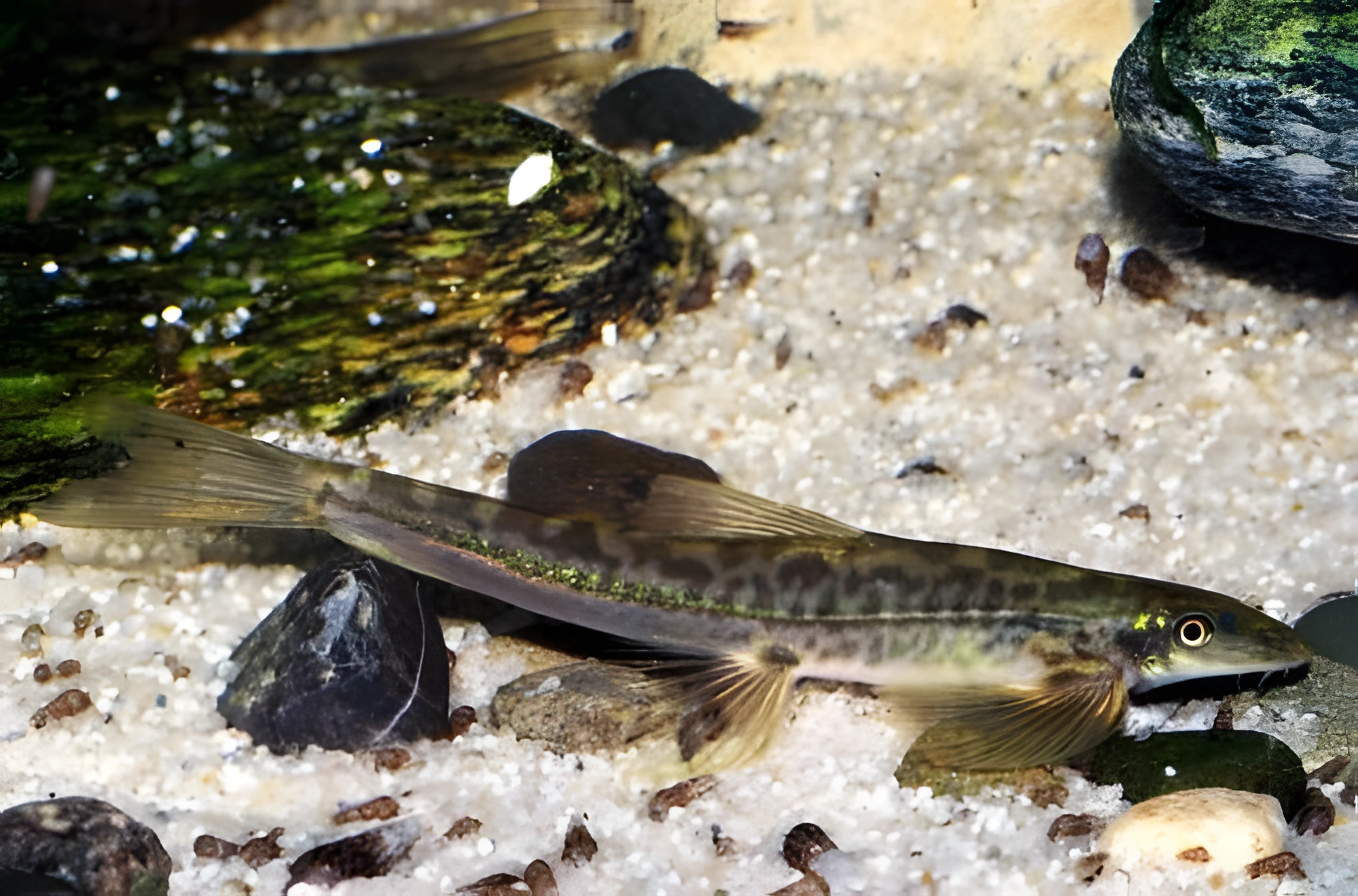
Adults of this fish typically reach a length of 8 to 10 cm. Sexual dimorphism is weakly expressed: females are generally slightly larger than males. The body of Annamia normani is elongated and noticeably flattened dorsally. Its fins are broad, resembling fans. The coloration is predominantly gray, adorned with an ornament of various irregular shapes.
Habitat
The natural habitat of this species is in Southeast Asia. It can be found in the Mekong River basin, in the territories of Vietnam, Laos, and Cambodia. Annamia normani also inhabits streams and small rivers flowing down the slopes of the Annamite Range, which do not have direct communication with the Mekong. The typical biotope is a shallow stream with a fast current and exceptionally clear water. The riverbed often abounds with rapids and areas of calmer water, and the substrate consists predominantly of stones. Aquatic vegetation is usually concentrated along the banks.
Behavior and Compatibility
Annamia normani is a calm and peaceful fish, capable of harmoniously coexisting with many species of tropical fish. However, due to its specific requirements for keeping conditions, the choice of suitable tank mates is significantly limited. It is recommended to keep these fish in groups of at least 6–8 individuals; with fewer, Annamia normani may become excessively timid and shy.
Care and Maintenance
For a group of 6–8 Annamia normani, an aquarium of at least 100 liters will be required. It is extremely important to create conditions that are as close as possible to their natural habitat. This includes crystal clear, oxygen-rich water with active current, a stony substrate with smooth boulders, and the possibility of adding driftwood. Only a small number of aquatic plants thrive in such an environment, so preference should be given to unpretentious and hardy species such as Anubias, Bolbitis heudelotii, or Java fern; artificial alternatives are acceptable. An effective filtration system plays a key role. A powerful filter not only maintains high water quality and optimal dissolved oxygen levels but also creates the necessary internal current. If necessary, an additional system can be designed and installed to simulate water movement. Aquarium care includes regular removal of algae from the walls and organic waste from the substrate. Weekly water changes of 30–50% of the volume with fresh water and periodic equipment maintenance are also mandatory.
Diet
The fish's diet should be based on live or frozen foods, such as bloodworms, daphnia, and brine shrimp, with the obligatory inclusion of plant additives, for example, spirulina flakes. Dry foods – flakes, granules, tablets – are recommended for limited use, primarily to provide the fish with essential trace elements and vitamins.
Breeding and Reproduction
To date, there are no documented cases of successful breeding of Annamia normani in home aquariums. Fry intended for the aquarium trade are typically caught directly from the wild.
Diseases
Non-ornamental fish species that have retained a close resemblance to their wild relatives usually exhibit high endurance, strong immunity, and resistance to various diseases. The occurrence of health problems most often indicates unsuitable keeping conditions. Therefore, before proceeding with treatment, it is strongly recommended to check the water quality and parameters. Only after all indicators have been brought back to normal should treatment begin, if it is still necessary. Detailed information on diseases, their symptoms, and therapy methods can be found in the “Aquarium Fish Diseases” section.
How to choose
When purchasing, special caution should be exercised, as fish often arrive for sale in a state of severe emaciation that is difficult to correct. Avoid individuals with sunken bellies, signs of lethargy, or a lack of interest in their surroundings. A healthy fish should actively move along the bottom and display natural exploratory activity for the species.
- inspect the body for damage, sores, or visible parasites;
- ensure that the fish do not appear excessively thin, which is a common problem for this species;
- check for signs of stress, such as constantly staying in the corners of the aquarium or attempting to hide when a person approaches.
Frequently asked questions
The essentials: size, tank volume, water parameters and care
How big does Annamia normani get?
An adult reaches 8–10 cm in length. Plan the tank around the maximum size: the fish quickly outgrows a cramped setup.
What size aquarium does Annamia normani need?
The minimum recommended volume is 100 L. A smaller tank speeds up nitrate build-up and raises stress levels.
What water parameters does Annamia normani need?
Temperature 16–22 °C, pH 6–7.5, hardness 1–10 dGH. Stability matters more than exact values: sudden swings are harder on the fish than a small deviation from the ideal.
How long does Annamia normani live?
Around 8 years when kept properly. Lifespan depends directly on tank volume, water quality and a varied diet.
Is Annamia normani aggressive?
Temperament: peaceful (regular). Keep this in mind when choosing tank mates.
How many Annamia normani should be kept together?
Recommended setup: medium group (6–8 individuals). Ignoring this is a common cause of stress and disease.
What does Annamia normani eat?
Diet type: meat / protein (live, frozen, fresh). Feed small portions that are finished within a couple of minutes — overfeeding does more harm than underfeeding.
What is the scientific name of Annamia normani?
The scientific name of the species is Annamia normani, family River Loaches (Balitoridae). It also appears in the literature as: Parhomaloptera normani.