Temperature23 – 28 °C
Natural range
- Tocantins State
- Brazil area
CatfishConservation status: Near threatened NT
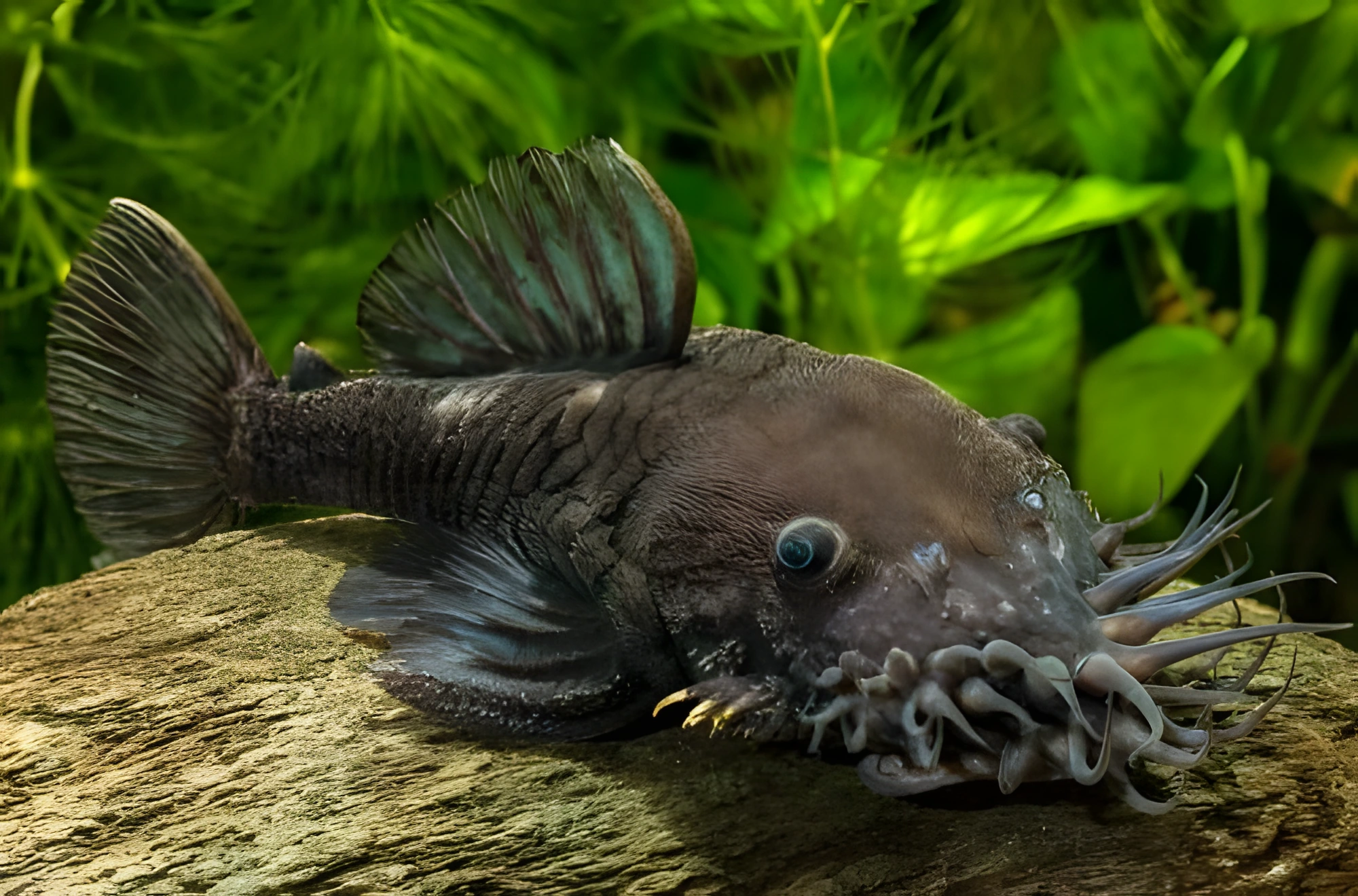
Ancistrus ranunculus, or the Jellyfish Bristlenose Pleco, belongs to the Loricariidae family — the armored catfish. Its scientific name is Ancistrus ranunculus. The unusual appearance of this catfish can evoke mixed reactions from aquarists: some may find it extremely intriguing, while others might be unimpressed. This species is not considered easy to keep, so beginners in aquaristics should probably consider other, less demanding related species.
- Required aquarium volume
- 70 L
- Size in aquarium
- 10 – 11 cm
- Temperature
- 23 – 28 °C
- Temperament
- Peaceful (regular)
Parameters
Water pHSlightly acidic (6) – Neutral (7)
Water dHVery soft (1) – Medium hardness (10)
Water salinityno salt (freshwater)
Size in aquarium10 – 11 cm
Lifespan7 years
TemperamentPeaceful (regular)
Toward small fishnot a predator
Required aquarium volume70 L
Lightingany
Substraterocky (rock formations, boulders, etc.)
Water flowmoderate or strong
FeedingSinking (any)
CareBoth solitary and in group (flexible)
Description
Adults reach sizes of 10 to 13 cm in length. A distinctive feature of the fish is its somewhat flattened body, harmoniously complemented by a massive head. The catfish's body is covered with rigid plates, forming a kind of "armor" studded with sharp spines. The pelvic fins have thickened first rays, transformed into spines. The fish's coloration is uniform, black. Sexual dimorphism is weakly expressed, and differences between male and female are practically imperceptible. A special characteristic of the species is the presence of numerous long outgrowths around the mouth, which resemble tentacles. This feature gave the catfish one of its names — Jellyfish Bristlenose Pleco. These "tentacles" are actually barbels, which perform the important function of detecting food in fast-flowing water.
Habitat
Its homeland is South America, specifically the Tocantins River basin, located in the Brazilian state of the same name. These catfish prefer to inhabit shallow, fast-flowing rivers and streams, finding refuge among rocky substrates.
Behavior and Compatibility
This is a peaceful and calm fish that often prefers to spend time remaining in one place, for example, in its shelter. It coexists well with other non-aggressive species of comparable size. However, Jellyfish Bristlenose Plecos tend to show some territoriality, so it is important to provide each catfish with its own secluded hiding spot.
Care and Maintenance
For comfortable keeping of a group of 3–4 fish, an aquarium of at least 70 L is required. These catfish demonstrate high adaptability to various conditions. Their habitat can be designed to resemble a mountain riverbed with a gravel or sand bottom, large boulders, and rounded rock formations, or it can imitate the bottom of a swampy body of water with abundant aquatic flora. The creation of natural or decorative shelters is recommended. It is important to ensure moderate water movement, which should be considered when selecting vegetation, as not all plant species are adapted to currents. Successful long-term keeping largely depends on maintaining stable water parameters within acceptable temperature and hydrochemical limits. For this, regular aquarium maintenance (partial water changes, waste removal) and equipping it with all necessary equipment, the main part of which is a powerful filtration system, are essential. The latter, as a rule, also provides the necessary internal water movement.
Diet
Unlike most Ancistrus, this species prefers protein-rich food. The diet should include frozen brine shrimp, bloodworms, small pieces of shrimp meat, mussels, and similar products, as well as specialized dry foods developed on their basis.
Breeding and Reproduction
For novice aquarists, breeding these fish usually presents significant difficulty. The lack of pronounced differences between the sexes significantly complicates determining the number of males and females, which adds to the problems. To increase the likelihood of forming at least one pair, it is often recommended to acquire at least five individuals. The stimulus for successful spawning is the creation of optimal conditions: a diet rich in proteins, vitamins, and trace elements; slightly acidic, soft water with a temperature between 26–28°C; and a high content of dissolved oxygen in the water. During the mating period, males occupy the most attractive shelters, such as caves or grottoes, and actively attract females. Skirmishes between males are not uncommon, especially if there are insufficient habitats or few females. A female ready to spawn responds to courtship by swimming to her chosen mate and laying several dozen eggs, after which she leaves the spawning site. The male takes on all care for the future offspring: he guards the eggs from any potential threats, including other relatives. The male's care lasts until the fry begin to swim freely, which usually occurs approximately one week after spawning.
Diseases
Most often, diseases are caused by unsuitable keeping conditions. Maintaining a stable environment in the aquarium is a key factor for successful keeping. If any symptoms of illness appear, the first step is to check the water quality. If deviations are found, measures should be taken immediately to correct them. If symptoms persist or even worsen, medicinal treatment will be required. Detailed information on the symptoms of various diseases and their treatment methods can be found in the “Aquarium Fish Diseases” section.
How to choose
When choosing a Jellyfish Bristlenose Pleco, carefully inspect the fish for any skin or fin damage, as any wounds can lead to the development of secondary bacterial infections. A healthy individual should show natural activity at night or be in a shelter, have clear eyes without cloudiness, and fins pressed close to the body. Avoid specimens with sunken bellies or unnaturally bloated abdomens, which may indicate the presence of internal parasites or digestive problems. It is recommended to purchase fish from aquariums with good filtration and clean water, as the species is sensitive to habitat quality. When purchasing a group for breeding, keep in mind that sexual dimorphism in young individuals is weakly expressed, so it is preferable to take at least 5 individuals to form a pair.
Frequently asked questions
The essentials: size, tank volume, water parameters and care
How big does Jellyfish Bristlenose Pleco get?
An adult reaches 10–11 cm in length. Plan the tank around the maximum size: the fish quickly outgrows a cramped setup.
What size aquarium does Jellyfish Bristlenose Pleco need?
The minimum recommended volume is 70 L. A smaller tank speeds up nitrate build-up and raises stress levels.
What water parameters does Jellyfish Bristlenose Pleco need?
Temperature 23–28 °C, pH 6–7, hardness 1–10 dGH. Stability matters more than exact values: sudden swings are harder on the fish than a small deviation from the ideal.
How long does Jellyfish Bristlenose Pleco live?
Around 7 years when kept properly. Lifespan depends directly on tank volume, water quality and a varied diet.
Is Jellyfish Bristlenose Pleco aggressive?
Temperament: peaceful (regular). Keep this in mind when choosing tank mates.
How many Jellyfish Bristlenose Pleco should be kept together?
Recommended setup: both solitary and in group (flexible). Ignoring this is a common cause of stress and disease.
What does Jellyfish Bristlenose Pleco eat?
Diet type: sinking (any). Feed small portions that are finished within a couple of minutes — overfeeding does more harm than underfeeding.
What is the scientific name of Jellyfish Bristlenose Pleco?
The scientific name of the species is Ancistrus ranunculus, family Armored Catfishes (Loricariidae).