Temperature26 – 30 °C
Natural range
- Rio Negro area
- Amazonas area
CatfishConservation status: Least concern LC
Other scientific names: Hypostoma punctatum, Xenocara dolichoptera
The Common Bristlenose Pleco, scientifically known as Ancistrus dolichopterus, is a member of the Loricariidae family, also known as armored catfish. This attractive, medium-sized catfish is very popular due to its unpretentiousness and good compatibility with many other aquatic inhabitants. These qualities make it an excellent choice for beginners in aquaristics.
- Required aquarium volume
- 200 L
- Size in aquarium
- 18 – 20 cm
- Temperature
- 26 – 30 °C
- Temperament
- Semi-peaceful (including aggression during spawning / intraspecific conflicts)
Parameters
Water pHSlightly acidic (5) – Neutral (7)
Water dHVery soft (1) – Medium hardness (10)
Water salinityno salt (freshwater)
Size in aquarium18 – 20 cm
Lifespan10 years
TemperamentSemi-peaceful (including aggression during spawning / intraspecific conflicts)
Toward small fishnot a predator
Required aquarium volume200 L
Lightingdimmed
Substrateany (no restrictions)
Water flowweak or moderate
FeedingSinking (any)
CareSolitary + other species (large / compatible)
Description
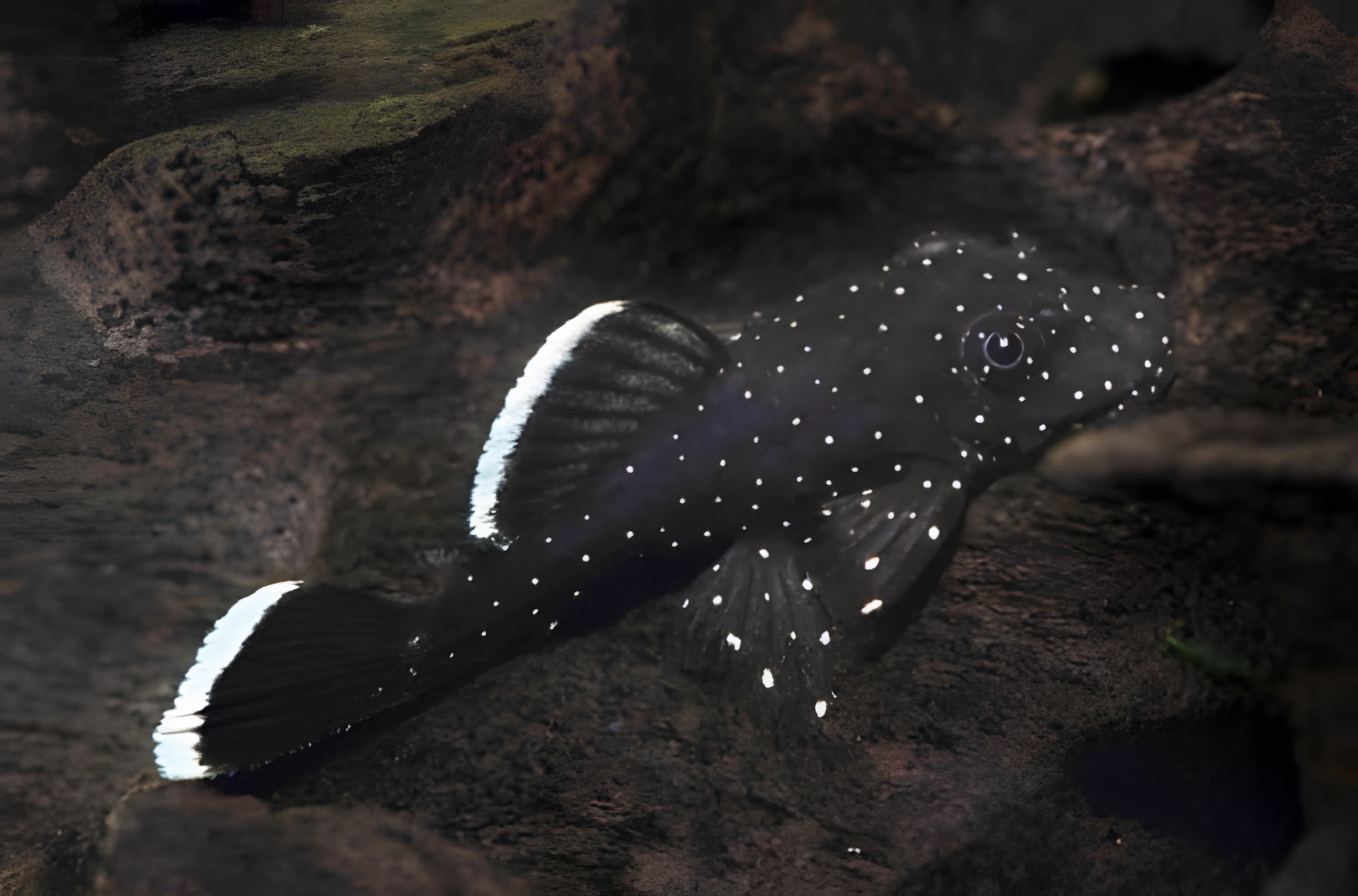
Adult Common Bristlenose Plecos typically reach a length of 18 to 20 centimeters. The fish's body is flattened, and its fins are large and well-developed. The coloration is characterized by a black background with bright white spots, while the dorsal and caudal fins have a noticeable light edging. With age, the white spots become less pronounced, and the fin edging gradually disappears. Sexual dimorphism in this species is weakly expressed; males and females have almost no noticeable external differences.
Habitat
Initially, this species originated from South America. For a long time, it was believed that its habitat covered vast territories of the Amazon River basin, as well as the river systems of Suriname and Guyana. However, modern scientific research has shown that Ancistrus dolichopterus is endemic and found exclusively in the lower and middle reaches of the Rio Negro, located in the Brazilian state of Amazonas. Fish found in other regions and having similarities actually turned out to be closely related species. The natural habitat of these catfish consists of streams and rivers, whose water acquires a brown tint due to the high content of tannins, which are formed during the decomposition of abundant plant organic matter.
Behavior and Compatibility
This species is distinguished by a peaceful and calm disposition, often preferring to spend time motionless in shelters. However, it may show intolerance towards other members of its own species and towards fish inhabiting the bottom zone of the aquarium.
Care and Maintenance
The optimal aquarium volume for keeping one adult specimen starts from 200 liters. In the aquarium design, it is desirable to reproduce conditions that closely resemble the natural habitat: a sandy substrate at the bottom, slow water flow, and intricate shelters made of driftwood, roots, and tree branches. Dim lighting will be best. If you plan to use live plants, choose shade-loving species that can attach to driftwood, as any vegetation rooted in the substrate is likely to be uprooted. A layer of fallen leaves from certain trees can serve as an addition to the decor, which will not only add decorative appeal but also help form a water chemistry close to the natural habitat conditions of Common Bristlenose Plecos. During decomposition, the leaves will release tannins, which give the water a brownish tint and help reduce pH and dGH levels. More detailed information can be found in the article "Which tree leaves can be used in an aquarium." Like most species inhabiting pristine natural waters, these fish are sensitive to the accumulation of organic waste and require impeccable water quality. This requires regular aquarium maintenance and the installation of an effective filtration system, as well as other appropriate equipment.
Diet
This species is omnivorous. To maintain a complete diet in the aquarium, it is recommended to offer a variety of foods, including dry foods (such as flakes and pellets) in combination with frozen products (e.g., Artemia, Daphnia, bloodworms). Plant-based supplements are also important: spirulina flakes or pieces of vegetables and fruits can be used, which the catfish will happily "graze" on. The key condition is that the foods must be sinking.
Breeding and Reproduction
Breeding Ancistrus does not require owner intervention if suitable conditions are provided. To stimulate spawning, it is recommended to use a separate aquarium of at least 50 liters with hollow tubes, stones, or driftwood that serve as shelters. Spawning is stimulated by performing a partial water change with fresh water and lowering the temperature by several degrees. The female lays her eggs in the shelter prepared by the male, after which the male takes on all responsibilities for guarding and caring for the clutch, actively fanning them with his fins and chasing away any neighbors, including the female.
The incubation period lasts from 4 to 7 days, depending on the water temperature. After the larvae hatch, the male continues to guard the offspring until they begin to swim independently. Once the fry leave the shelter, the male should be removed. The initial food for the fry is infusoria, crushed vegetable tablets, and specialized dry foods. With regular feeding and daily partial water changes, the juveniles grow quickly, reaching sexual maturity by 10 months.
Diseases
Most health problems in fish often arise from unsuitable keeping conditions. Maintaining a stable and comfortable habitat is a key factor for successful keeping. If symptoms of illness appear, the first step is to check the water quality. If deviations are found, it is important to take immediate measures to eliminate them. If the symptoms do not disappear or worsen, medicinal treatment may be required. More detailed information on symptoms and treatment methods can be found in the "Diseases of Aquarium Fish" section.
How to choose
When choosing an Ancistrus, you should assess the overall condition of the fish: the body should be clean, without white spots, cottony growths, ulcers, or fin damage. A healthy specimen actively moves across surfaces, scraping algae, and has a plump appearance without signs of emaciation or an unnaturally bloated belly. Avoid specimens that constantly lie motionless on the bottom, breathe heavily, or show signs of apathy.
It is recommended to purchase fish raised locally, as they adapt more easily to the water parameters in a home aquarium. When buying from a pet store, pay attention to the conditions in neighboring aquariums: the presence of sick fish in the filtration system increases the risk of hidden infections. After acquiring new specimens, a quarantine period of 2–3 weeks is mandatory to rule out disease transmission.
Frequently asked questions
The essentials: size, tank volume, water parameters and care
How big does Common Bristlenose Pleco get?
An adult reaches 18–20 cm in length. Plan the tank around the maximum size: the fish quickly outgrows a cramped setup.
What size aquarium does Common Bristlenose Pleco need?
The minimum recommended volume is 200 L. A smaller tank speeds up nitrate build-up and raises stress levels.
What water parameters does Common Bristlenose Pleco need?
Temperature 26–30 °C, pH 5–7, hardness 1–10 dGH. Stability matters more than exact values: sudden swings are harder on the fish than a small deviation from the ideal.
How long does Common Bristlenose Pleco live?
Around 10 years when kept properly. Lifespan depends directly on tank volume, water quality and a varied diet.
Is Common Bristlenose Pleco aggressive?
Temperament: semi-peaceful (including aggression during spawning / intraspecific conflicts). Keep this in mind when choosing tank mates.
How many Common Bristlenose Pleco should be kept together?
Recommended setup: solitary + other species (large / compatible). Ignoring this is a common cause of stress and disease.
What does Common Bristlenose Pleco eat?
Diet type: sinking (any). Feed small portions that are finished within a couple of minutes — overfeeding does more harm than underfeeding.
What is the scientific name of Common Bristlenose Pleco?
The scientific name of the species is Ancistrus dolichopterus, family Armored Catfishes (Loricariidae). It also appears in the literature as: Hypostoma punctatum, Xenocara dolichoptera.