Temperature23 – 28 °C
Natural range
- Mato Grosso area
- Brazil area
CatfishConservation status: Least concern LC
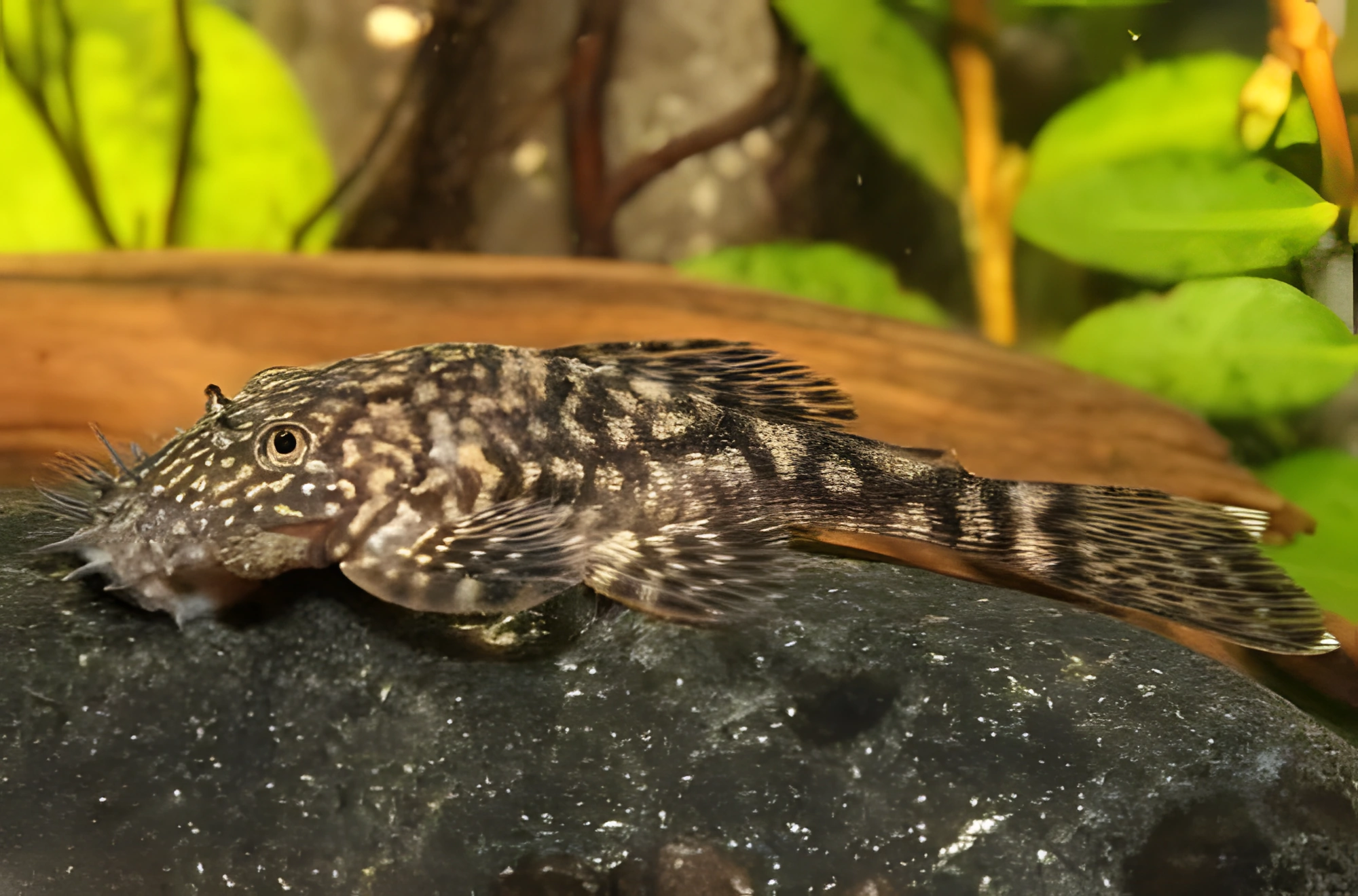
Ancistrus Claro, scientifically named Ancistrus claro, belongs to the family Loricariidae, also known as Armored Catfish. Its name originates from the Claro River, a small tributary of the Cuiabá River in the Brazilian state of Mato Grosso, where this species was first discovered. Its ease of care and unpretentiousness make this catfish an excellent choice for beginner aquarists, and its ability to coexist well with many other fish species adds to its appeal.
- Required aquarium volume
- 50 L
- Size in aquarium
- 7 cm
- Temperature
- 23 – 28 °C
- Temperament
- Peaceful (regular)
Parameters
Water pHSlightly acidic (6) – Neutral (7.5)
Water dHVery soft (2) – Hard (15)
Water salinityno salt (freshwater)
Size in aquarium7 cm
Lifespan8 years
TemperamentPeaceful (regular)
Toward small fishnot a predator
Required aquarium volume50 L
Lightingdimmed
Substraterocky (rock formations, boulders, etc.)
Water flowmoderate or strong
FeedingSinking (any)
CareSolitary + other species (large / compatible)
Description
Adults can reach up to 7 cm in length. The fish's body is flattened and covered with hard plates, resembling chainmail, which gave the entire family its name. The body surface is rough, with numerous small spines. The first rays of the fins are significantly thickened, forming sharp spines. The head has several dozen fleshy tentacles, designed for foraging. The coloration is usually gray with a brown pattern. Sexual dimorphism is weakly expressed, and it can be difficult to visually distinguish males from females.
Habitat
This species inhabits South America, primarily the Cuiabá River basin, located in the Brazilian state of Mato Grosso. These catfish prefer the upper reaches of rivers and streams with fast or moderate currents, where the bottom is formed by boulders and snags.
Behavior and Compatibility
These fish are peaceful and calm. Unlike most catfish, they exhibit relatively high activity. Although they are territorial, with sufficient aquarium volume (e.g., over 100 liters) and plenty of hiding places, they coexist perfectly with other non-aggressive fish. Nevertheless, it is preferable to choose tank mates that inhabit the middle or upper water column.
Care and Maintenance
For comfortable keeping of a single Ancistrus Claro catfish, an aquarium of at least 50 liters is required. For decoration, it is recommended to recreate a mountain riverbed, using sand and stones of various sizes, fine gravel, and boulders as substrate. Additional shelters can be created from snags, hollow ceramic tubes, or overturned pots, as well as various decorative elements. These elements are important for providing secluded spots where the fish can find refuge. The presence of aquatic plants is not mandatory. Keeping Ancistrus Claro is not difficult even for beginner aquarists. To maintain favorable conditions, it is necessary to regularly clean the aquarium, weekly replace 30–40% of the water volume with fresh water, and promptly remove organic waste such as feces and leftover food. In addition to other equipment, the installation of a powerful filtration system plays a key role, as it not only cleans the water but also creates the necessary internal current.
Diet
This species is omnivorous. Its diet can include various dry foods, such as flakes and pellets, as well as frozen foods, for example, Artemia, Daphnia, and bloodworms. In addition, vegetable components should be added to the diet: spirulina flakes or chopped pieces of vegetables and fruits. It is important that all offered foods are sinking, as catfish do not rise to the water surface to feed.
Breeding and Reproduction
Breeding this species does not cause particular difficulties. During the breeding season, the male and female form a temporary pair for spawning. Egg-laying occurs in one of the shelters. After spawning, the female leaves the clutch site, and the male remains to protect it. During this period, he may show some aggression, driving away anyone he considers potentially dangerous to the eggs. Since determining sex, especially for hobbyists, is quite difficult, successful breeding is only possible by acquiring a group of 4–5 or more catfish, which increases the likelihood of having individuals of both sexes.
Diseases
Most health problems in fish often arise from unsuitable keeping conditions. Maintaining a stable and comfortable habitat is a key factor for successful keeping. If symptoms of illness appear, the first step is to check the water quality. If deviations are found, it is important to take immediate measures to eliminate them. If the symptoms do not disappear or worsen, medicinal treatment may be required. More detailed information on symptoms and treatment methods can be found in the "Diseases of Aquarium Fish" section.
How to choose
When purchasing, choose active individuals with clean bodies, free of visible damage, ulcers, film, or bruising on the fins. A healthy Ancistrus should have a rounded belly, not a sunken one, which often indicates emaciation or internal diseases. Inspect the eyes — they should be clear, without cloudiness. In the store, fish often hide, so ask an employee to carefully lift decorations to assess the catfish's mobility and reaction to movement. Avoid specimens that appear apathetic, constantly lie on their side, or breathe heavily at the water surface, as this may indicate poor keeping conditions or infections.
Frequently asked questions
The essentials: size, tank volume, water parameters and care
How big does Ancistrus Claro get?
An adult reaches 7 cm in length. Plan the tank around the maximum size: the fish quickly outgrows a cramped setup.
What size aquarium does Ancistrus Claro need?
The minimum recommended volume is 50 L. A smaller tank speeds up nitrate build-up and raises stress levels.
What water parameters does Ancistrus Claro need?
Temperature 23–28 °C, pH 6–7.5, hardness 2–15 dGH. Stability matters more than exact values: sudden swings are harder on the fish than a small deviation from the ideal.
How long does Ancistrus Claro live?
Around 8 years when kept properly. Lifespan depends directly on tank volume, water quality and a varied diet.
Is Ancistrus Claro aggressive?
Temperament: peaceful (regular). Keep this in mind when choosing tank mates.
How many Ancistrus Claro should be kept together?
Recommended setup: solitary + other species (large / compatible). Ignoring this is a common cause of stress and disease.
What does Ancistrus Claro eat?
Diet type: sinking (any). Feed small portions that are finished within a couple of minutes — overfeeding does more harm than underfeeding.
What is the scientific name of Ancistrus Claro?
The scientific name of the species is Ancistrus claro, family Armored Catfishes (Loricariidae).