Temperature22 – 26 °C
Natural range
- Democratic Republic of the Congo area
- Kinshasa area
CharacinsConservation status: Endangered EN
Other scientific names: Hemigrammopetersius nigropterus
The Red Alestopetersius, also known by the scientific designations Alestopetersius nigropterus or Alestopetersius ansorgii, belongs to the African tetra family (Alestidae). To date, this species has not yet received a definitive scientific classification, which explains the existence of multiple names for the same fish. Nevertheless, this does not hinder its active export and wide distribution in trade. These fish are relatively easy to care for, do not require a large aquarium environment, and get along well with other inhabitants.
- Required aquarium volume
- 100 L
- Size in aquarium
- 5 – 6 cm
- Temperature
- 22 – 26 °C
- Temperament
- Peaceful (regular)
Parameters
Water pHSlightly acidic (5) – Neutral (7)
Water dHVery soft (1) – Medium hardness (10)
Water salinityno salt (freshwater)
Size in aquarium5 – 6 cm
Lifespan5 years
TemperamentPeaceful (regular)
Toward small fishnot a predator
Required aquarium volume100 L
Lightingdimmed or moderate
Substrateany (no restrictions)
Water flowmoderate
FeedingAny (universal)
CareGroup (8–10 individuals)
Description
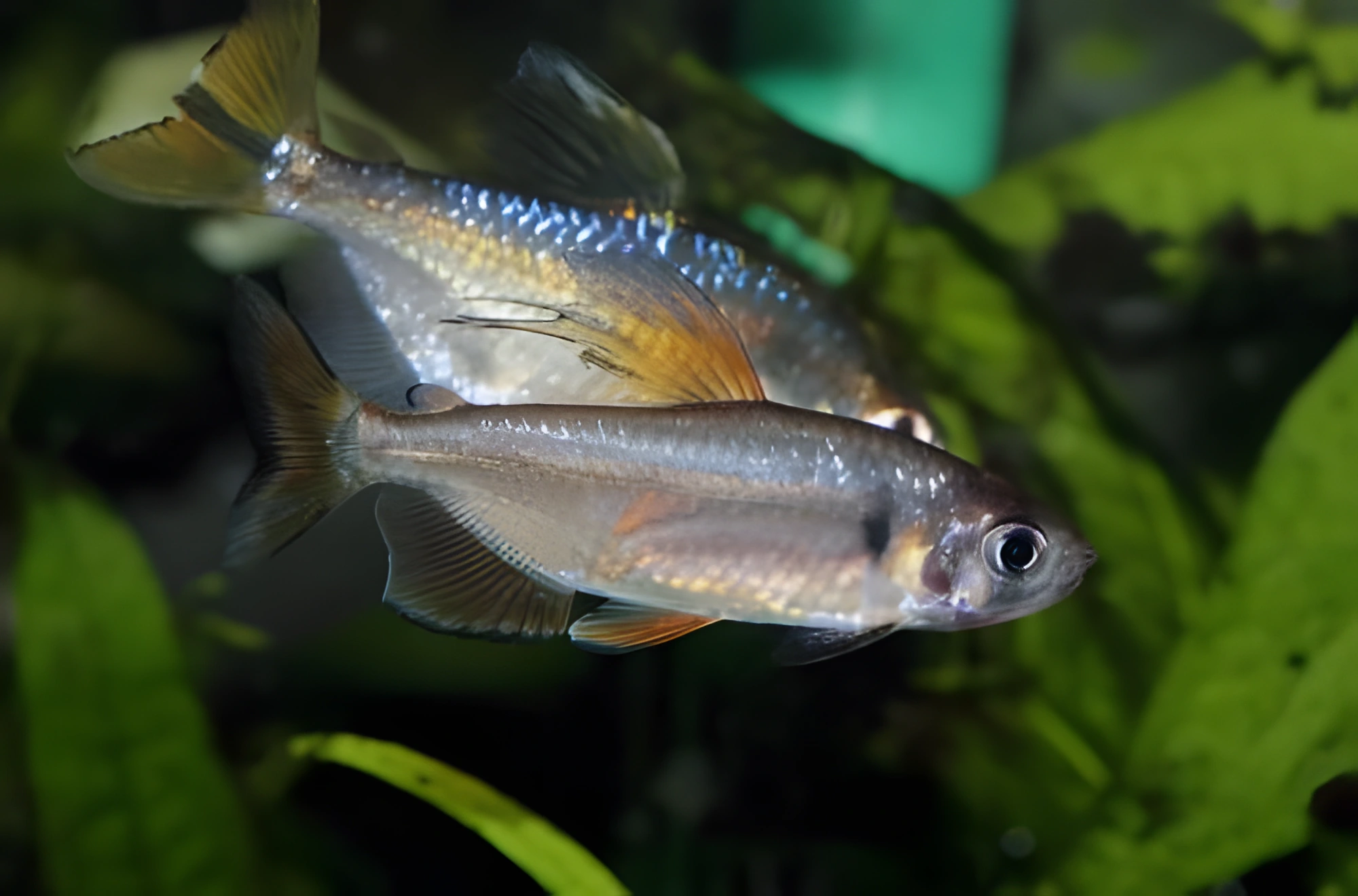
Adults of this species reach a length of 5 to 6 cm. Males are distinguished by a slightly larger size and an elongated dorsal fin. Their body has a reddish hue, and the tips and edges of their fins are colored in dark tones. Females, in turn, are smaller, and their coloration is predominantly silvery.
Habitat
The natural habitats of Alestopetersius are located in the central part of the African continent. Reliable data on the exact distribution of this species in nature are absent, but it is assumed that the range covers the Congo River basin. Wild specimens are primarily sold from Kinshasa, the capital of the Democratic Republic of Congo.
Behavior and Compatibility
These peaceful, schooling fish prefer to live in groups of at least 8–10 individuals. They are quite timid, so it is undesirable to house them with overly active neighbors. Ideal companions would be other non-predatory species that inhabit similar natural conditions. These include some cyprinids, African river cichlids, and loaches, as well as other peaceful fish.
Care and Maintenance
For comfortable keeping of a group of 8–10 individuals, an aquarium of at least 100 liters is recommended. The choice of decorative elements is not critical, but the fish will look most attractive in an environment that mimics their natural habitat — a river with moderate current, a substrate of sand and stones of various sizes, and several large boulders. Driftwood and aquatic plants can be used in the decor, but it is crucial not to overdo it, leaving enough free swimming space. Red Alestopetersius are sensitive to water quality, especially newly acquired specimens. During maintenance, sudden fluctuations in temperature values and hydrochemical parameters such as pH and dGH should be avoided, maintaining them within the optimal range.
Diet
Fish of this group do not show special dietary requirements. They readily accept a variety of foods specifically designed for aquarium inhabitants. The daily diet can be based on dry products such as flakes and granules, with the obligatory inclusion of live or frozen supplements, for example, Artemia, Daphnia, or bloodworms.
Breeding and Reproduction
The Red Alestopetersius is an egg-laying fish. The breeding process corresponds to the standard type for members of the Alestidae family. During spawning, the female can lay from 150 to 250 eggs. Successful breeding requires strict adherence to water parameters characteristic of the natural habitat, including a soft and slightly acidic environment.
Diseases
Specific diseases that affect only this particular fish species have not been identified. When kept in suitable conditions, including high water quality, a balanced diet, and peaceful tank mates, health issues usually do not arise. The most common cause of illness is a deterioration of living conditions, which weakens the immune system and makes the fish susceptible to infections that are always present in their environment. Upon noticing initial signs of sickness (such as lethargy, emaciation, refusal to eat, or clamped fins), it is crucial to immediately check the basic water parameters. Often, restoring acceptable living conditions will lead to self-recovery, but if the fish is too weak or has suffered visible damage, medicinal treatment may be required. For more details on symptoms and treatment methods, consult the section “Diseases of Aquarium Fish.”
How to choose
When selecting individuals in a store, pay attention to their activity and the integrity of their fins, as this species is sensitive to water quality and transportation conditions. Avoid purchasing fish that show signs of apathy, emaciation, or have body damage. It is recommended to acquire a group of 8–10 individuals, as schooling behavior is critically important for reducing stress in these fish.
Frequently asked questions
The essentials: size, tank volume, water parameters and care
How big does Red Alestopetersius get?
An adult reaches 5–6 cm in length. Plan the tank around the maximum size: the fish quickly outgrows a cramped setup.
What size aquarium does Red Alestopetersius need?
The minimum recommended volume is 100 L. A smaller tank speeds up nitrate build-up and raises stress levels.
What water parameters does Red Alestopetersius need?
Temperature 22–26 °C, pH 5–7, hardness 1–10 dGH. Stability matters more than exact values: sudden swings are harder on the fish than a small deviation from the ideal.
How long does Red Alestopetersius live?
Around 5 years when kept properly. Lifespan depends directly on tank volume, water quality and a varied diet.
Is Red Alestopetersius aggressive?
Temperament: peaceful (regular). Keep this in mind when choosing tank mates.
How many Red Alestopetersius should be kept together?
Recommended setup: group (8–10 individuals). Ignoring this is a common cause of stress and disease.
What does Red Alestopetersius eat?
Diet type: any (universal). Feed small portions that are finished within a couple of minutes — overfeeding does more harm than underfeeding.
What is the scientific name of Red Alestopetersius?
The scientific name of the species is Alestopetersius nigropterus, family African Tetras (Alestidae). It also appears in the literature as: Hemigrammopetersius nigropterus.