Temperature21 – 28 °C
Natural range
- Brazil area
CichlidsConservation status: Least concern LC
Other scientific names: Acara curviceps, Aequidens curviceps, Parvacara curviceps
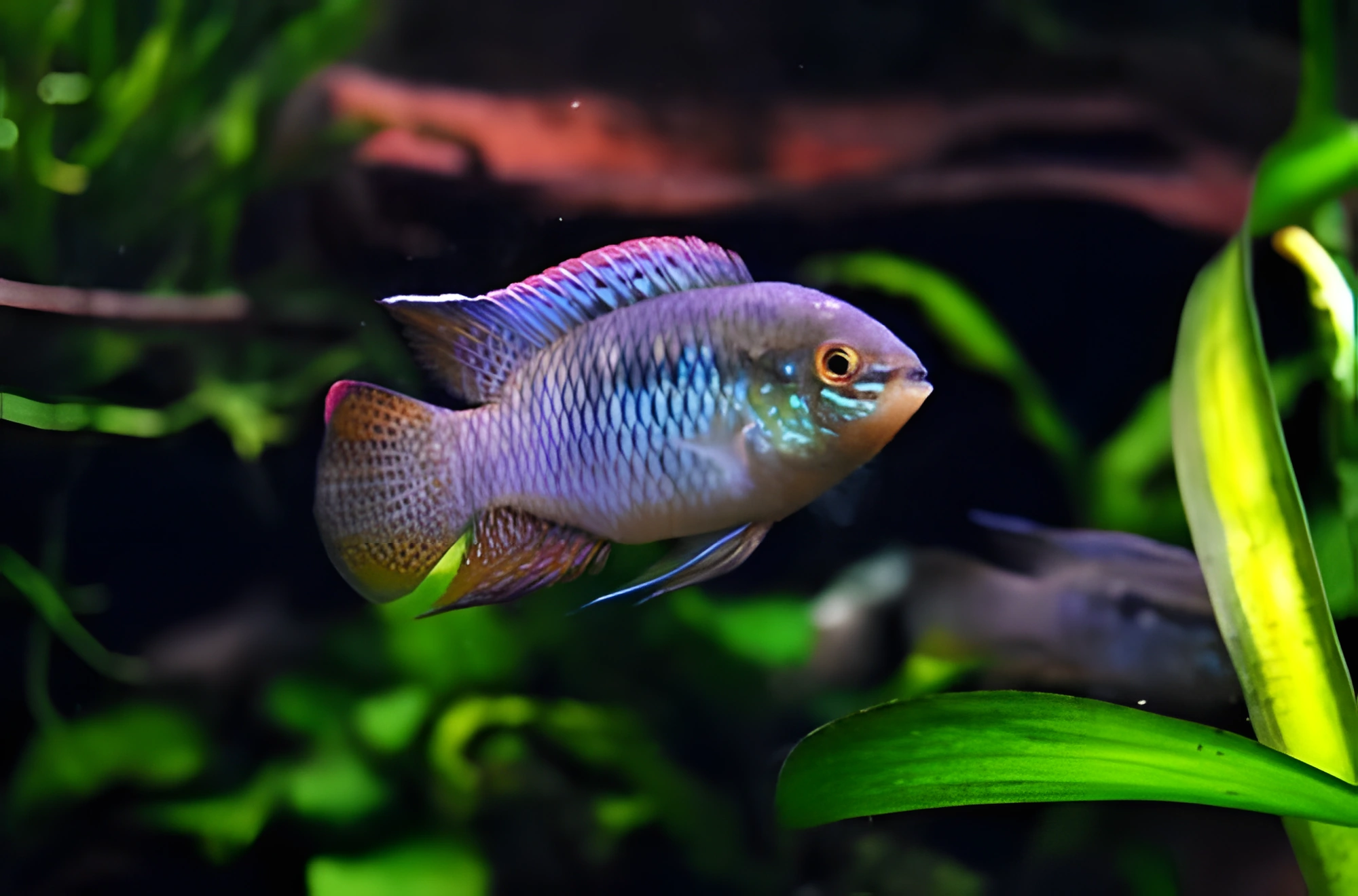
The Curviceps Acara, scientifically named Laetacara curviceps, belongs to the Cichlidae family. It is a peaceful and brightly colored fish, capable of becoming a beautiful adornment for many tropical aquariums. Its keeping and breeding are not difficult, and compatibility with other species usually presents no problem. This fish is quite suitable for novice aquarists.
- Required aquarium volume
- 80 L
- Size in aquarium
- 9 cm
- Temperature
- 21 – 28 °C
- Temperament
- Peaceful (regular)
Parameters
Water pHAcidic (4) – Neutral (7.5)
Water dHVery soft (2) – Hard (15)
Water salinityno salt (freshwater)
Size in aquarium9 cm
Lifespan8 years
TemperamentPeaceful (regular)
Toward small fishnot a predator
Required aquarium volume80 L
Lightingany
Substratesandy (regular, light)
Water flowweak or moderate
FeedingAny (universal)
CareMixed (solitary / pair / group)
Description
Adult Curviceps Acara can reach up to 9 cm in length. Males are usually larger than females and have more intense coloration. The coloration and body pattern of these fish can vary greatly from generation to generation. This phenomenon is explained by the fact that individuals from different geographical populations, differing in appearance, were kept together in aquarium conditions. Their cross-breeding led to the emergence of hybrid offspring, which became widespread among aquarists. Thus, the color palette of these fish ranges from yellow-white to purple hues.
Habitat
Its homeland is the South American continent, specifically the lower Amazon region, in modern-day Brazil. In natural conditions, the Curviceps Acara inhabits numerous tributaries that flow into the main channel of the Amazon. The typical habitat of these fish is small rivers and streams flowing under the canopy of the tropical forest. These bodies of water are characterized by an abundance of aquatic vegetation, and fallen trees and their fragments are often found in their channels.
Behavior and Compatibility
This calm and peaceful fish is well compatible with many other non-aggressive species of comparable size. Excellent tank mates can be characins and other fish native to South America.
Care and Maintenance
For a small group of Curviceps Acara, an aquarium of at least 80 liters will be optimal. When setting it up, it is important to provide enough hiding places. These can be natural snags, as well as various decorative elements, including ordinary ceramic pots or PVC pipes. Lighting should be subdued, so shade-loving plant species should be chosen for landscaping. Soft water parameters are required: low pH and low carbonate hardness. The current in the aquarium should not be strong, so care should be taken when choosing the filter model, which is the main cause of water movement, and its placement. The successful keeping of these fish largely depends on regular aquarium maintenance, which includes cleaning filters, removing organic waste, and weekly water changes of 15–20% of the volume with fresh water.
Diet
Regarding its diet, this fish is quite undemanding. It readily accepts all common types of food: dry, frozen, and live, such as brine shrimp or bloodworms. If breeding is planned, live foods will be preferable.
Breeding and Reproduction
Under favorable conditions, Acara will readily breed in a home aquarium. These fish form pairs, which often remain stable for a long time. When the breeding season begins, the female lays eggs on a leaf surface or a stone. The male and female jointly guard the clutch. Parental care does not cease even after the fry appear. However, despite their protection, the survival rate of fry in a community tank will be low, so for targeted breeding, it is recommended to use a separate spawning aquarium.
Diseases
The main cause of most diseases in Leaf Fish is unsuitable keeping conditions and poor-quality nutrition. If initial symptoms are observed, it is first necessary to check water parameters and the concentration of dangerous substances such as ammonia, nitrites, and nitrates. If the indicators deviate from the norm, they should be brought back into order, and only then should treatment begin. More detailed information on symptoms and treatment methods can be found in the "Aquarium Fish Diseases" section.
How to choose
When choosing individuals, attention should be paid to clean skin, absence of fin damage, ulcers, or white film. A healthy fish should be active, have clear eyes, and display natural coloration without signs of emaciation. Avoid purchasing fish that appear sluggish, stay near the water surface, or have an unnaturally bloated belly.
- Assess the group's behavior in the tank: healthy fish show curiosity and interact with each other.
- Ask the seller about the keeping conditions and diet, as a sudden change in water parameters or food type can cause stress.
- Check if there are any signs of disease in the tank mates of the fish being sold, as the risk of infection transfer is high with shared filtration systems.
Frequently asked questions
The essentials: size, tank volume, water parameters and care
How big does Curviceps Acara get?
An adult reaches 9 cm in length. Plan the tank around the maximum size: the fish quickly outgrows a cramped setup.
What size aquarium does Curviceps Acara need?
The minimum recommended volume is 80 L. A smaller tank speeds up nitrate build-up and raises stress levels.
What water parameters does Curviceps Acara need?
Temperature 21–28 °C, pH 4–7.5, hardness 2–15 dGH. Stability matters more than exact values: sudden swings are harder on the fish than a small deviation from the ideal.
How long does Curviceps Acara live?
Around 8 years when kept properly. Lifespan depends directly on tank volume, water quality and a varied diet.
Is Curviceps Acara aggressive?
Temperament: peaceful (regular). Keep this in mind when choosing tank mates.
How many Curviceps Acara should be kept together?
Recommended setup: mixed (solitary / pair / group). Ignoring this is a common cause of stress and disease.
What does Curviceps Acara eat?
Diet type: any (universal). Feed small portions that are finished within a couple of minutes — overfeeding does more harm than underfeeding.
What is the scientific name of Curviceps Acara?
The scientific name of the species is Laetacara curviceps, family Cichlids (Cichlidae). It also appears in the literature as: Acara curviceps, Aequidens curviceps, Parvacara curviceps.