Temperature20 – 24 °C
Natural range
- Borneo area
- Peninsular Malaysia area
LoachesConservation status: Least concern LC
Other scientific names: Aperioptus molobrion
The Dwarf Horseface Loach, known scientifically as Acanthopsoides molobrion, belongs to the family Cobitidae (Loaches). This fish is a close relative of the widely popular Horseface Loach among aquarists. Both species belong to the genus Acantopsis and share common habitats in the wild.
- Required aquarium volume
- 60 L
- Size in aquarium
- 5 cm
- Temperature
- 20 – 24 °C
- Temperament
- Peaceful (regular)
Parameters
Water pHSlightly acidic (5.5) – Neutral (7)
Water dHVery soft (1) – Medium hardness (10)
Water salinityno salt (freshwater)
Size in aquarium5 cm
Lifespan4 years
TemperamentPeaceful (regular)
Toward small fishnot a predator
Required aquarium volume60 L
Lightingdimmed
Substratesoft sandy (including silted)
Water flowmoderate
FeedingSinking (meat / protein)
CareSmall group (5–6 individuals)
Description
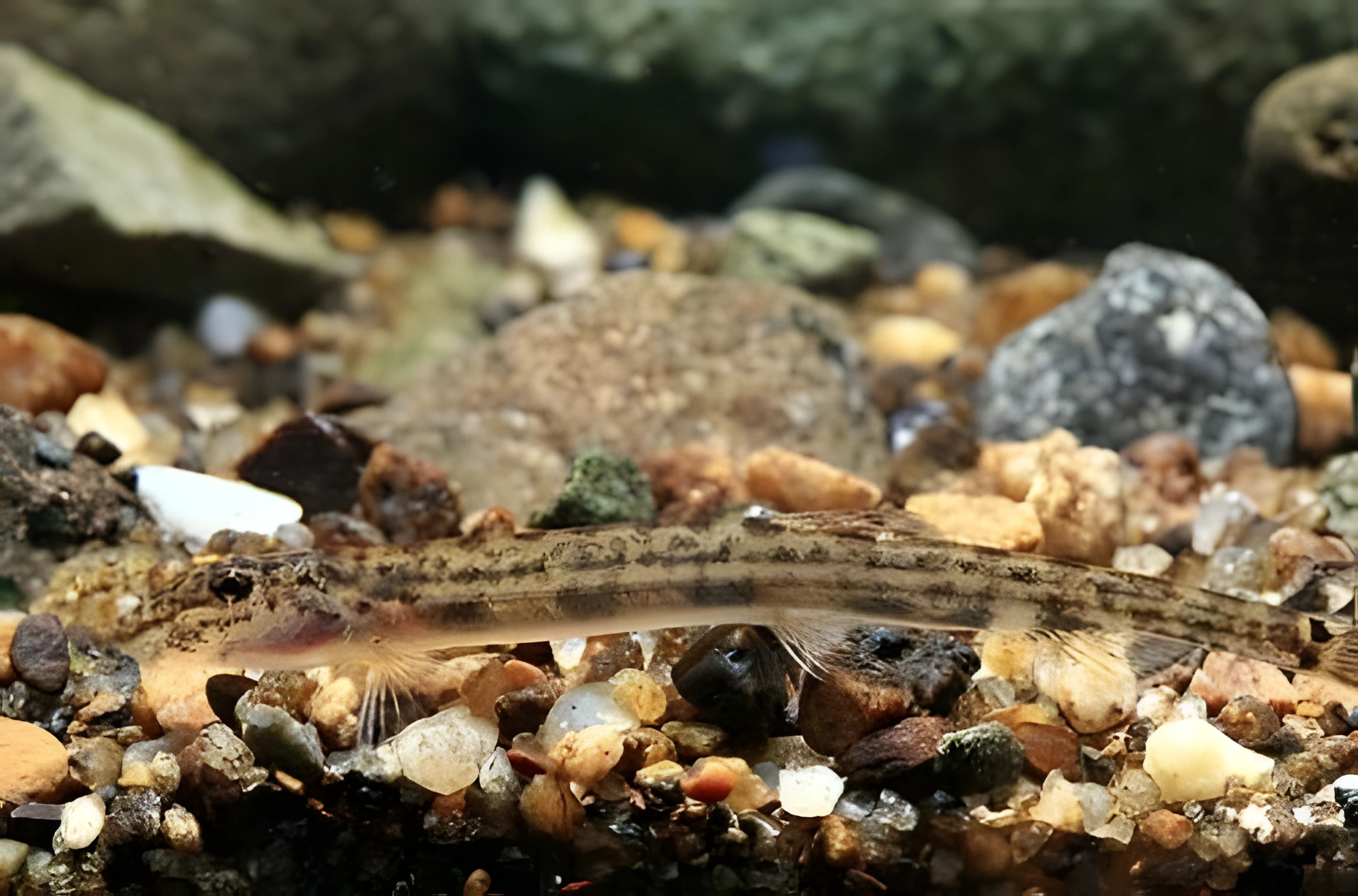
The fish's slender, elongated body reaches about 5 cm in length. Its head, as the name suggests, resembles a horse's shape: an elongated, large mouth, with eyes positioned high on the crown. Its coloration is a light yellow hue with a pattern of dark speckles, providing ideal camouflage on sandy substrate. Sexual dimorphism is weakly expressed, but females usually appear larger and more robust than males.
Habitat
Its origin is linked to Southeast Asia, where it is found in the river systems of Borneo (Kalimantan) and peninsular Malaysia. These fish prefer flowing sections of rivers with clean and clear water, and their habitat consists of sandy or fine gravel substrate.
Behavior and Compatibility
The Dwarf Horseface Loach coexists peacefully with members of its own species and with many other aquarium inhabitants. When choosing tank mates, it is recommended to prioritize fish that primarily inhabit the upper and middle water layers to minimize competition for bottom space. Accordingly, keeping them with any territorial species should be avoided.
Care and Maintenance
The optimal aquarium volume for a group of 5–6 individuals starts from 60 liters. When setting up the aquarium, the main focus is on the lower tier, where soft substrate is the key decorative element. It is desirable to provide various shelters, both natural (e.g., driftwood) and artificial. Although live aquatic plants are not a mandatory condition, floating surface plants will serve as an excellent source of shade, as Acanthopsoides molobrion prefers subdued lighting. For long-term keeping, it is necessary to maintain high water quality, avoiding pollution, and to control pH and dGH values within the acceptable range. This requires regular aquarium maintenance, which includes partial water changes and removal of organic waste. Additionally, a filtration system should be installed that not only cleans the water but also does not create excessive current, as these fish tolerate strong water flow poorly.
Diet
In nature, these fish feed by sifting through the substrate with their mouths in search of small insects, their larvae, and crustaceans. In a home aquarium, their diet should be based on protein-rich foods. These can include dry sinking foods, as well as frozen or live brine shrimp, bloodworms, or daphnia. The choice of substrate plays an important role in the feeding process: sand or fine gravel must be used to prevent large food particles from getting stuck in the fish's mouth.
Breeding and Reproduction
Breeding in aquarium conditions is practically unstudied and not a widespread practice. Most specimens available for sale are wild-caught. Reliable methods for stimulating spawning and breeding cycles in captivity are absent, with the exception of isolated cases of spontaneous fry production in stable aquarium systems with suitable substrate composition.
Diseases
Maintaining fish in a suitable habitat, providing balanced nutrition, and the absence of external threats, such as aggression from tank mates, are the best defense against disease. The appearance of signs of illness may indicate problems with husbandry. As a rule, normalizing environmental parameters promotes self-healing, but if the fish's condition has significantly worsened, medication will be required. Detailed information on symptoms and treatment methods can be found in the “Diseases of aquarium fish” section.
How to choose
When selecting specimens, attention should be paid to their activity and the integrity of their skin. Healthy fish should not have visible injuries, ulcers, or signs of emaciation. Since the species is schooling, it is recommended to acquire a group of six or more individuals to reduce stress levels. It is important to note that fish in stores are often timid and may hide in the substrate, so it is worth observing their behavior during feeding.
Frequently asked questions
The essentials: size, tank volume, water parameters and care
How big does Acanthopsoides molobrion get?
An adult reaches 5 cm in length. Plan the tank around the maximum size: the fish quickly outgrows a cramped setup.
What size aquarium does Acanthopsoides molobrion need?
The minimum recommended volume is 60 L. A smaller tank speeds up nitrate build-up and raises stress levels.
What water parameters does Acanthopsoides molobrion need?
Temperature 20–24 °C, pH 5.5–7, hardness 1–10 dGH. Stability matters more than exact values: sudden swings are harder on the fish than a small deviation from the ideal.
How long does Acanthopsoides molobrion live?
Around 4 years when kept properly. Lifespan depends directly on tank volume, water quality and a varied diet.
Is Acanthopsoides molobrion aggressive?
Temperament: peaceful (regular). Keep this in mind when choosing tank mates.
How many Acanthopsoides molobrion should be kept together?
Recommended setup: small group (5–6 individuals). Ignoring this is a common cause of stress and disease.
What does Acanthopsoides molobrion eat?
Diet type: sinking (meat / protein). Feed small portions that are finished within a couple of minutes — overfeeding does more harm than underfeeding.
What is the scientific name of Acanthopsoides molobrion?
The scientific name of the species is Acanthopsoides molobrion, family Cobitidae (Loaches). It also appears in the literature as: Aperioptus molobrion.