Temperature21 – 26 °C
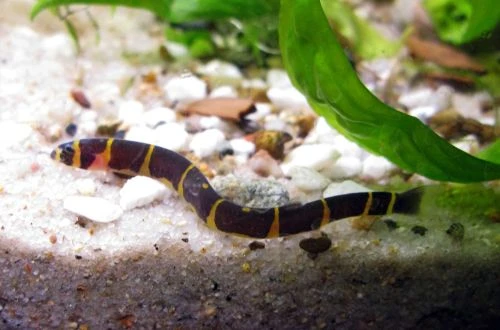
Other scientific names: Acanthophthalmus semicinctus
Pangio semicincta, known as the Half-banded Kuhli Loach, belongs to the family Cobitidae. These fish are often sold under the name Pangio kuhlii, but it is important to note that this is a completely different species, which is extremely rare in aquariums. The origins of this confusion lie in erroneous conclusions by researchers who, at one time, combined Pangio semicincta and Kuhli Loach (Pangio kuhlii) into a single species. This view dominated from 1940 to 1993 until the first refutations appeared, and the final separation of these species occurred in 2011.
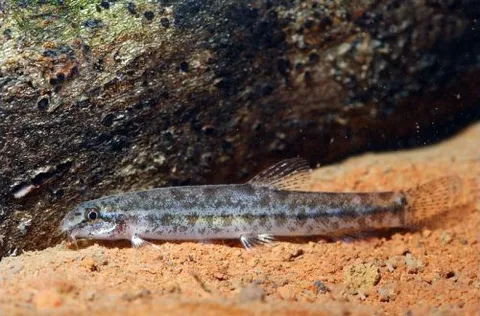
Adults of this fish reach a length of 9 to 10 cm. Its body is elongated, snake-like, with small fins and a characteristic tail. Sensitive barbels are located near the mouth, which help them find food in soft substrate. Its coloration is brown, the belly is yellow-white, and the body is encircled by bands. Distinguishing males from females is quite difficult, as sexual dimorphism is not pronounced.
The natural habitat of this species extends across Southeast Asia, including peninsular Malaysia, as well as large Sunda Islands such as Sumatra and Borneo. These fish prefer shallow bodies of water, such as oxbow lakes, swamps, and streams located in the shade of tropical forests. They thrive in areas with still water, where dense vegetation creates cozy shelters, and soft, silty substrate or fallen leaves serve as refuge.
This fish is distinguished by its peaceful and calm nature, coexisting perfectly with its conspecifics and with other species of similar size and temperament. Since they often live in large groups in nature, it is advisable to acquire at least 5–6 individuals for an aquarium.
For comfortable keeping of a small group of 4–5 fish, an aquarium of at least 50 L will be required. In the setup, it is important to use a soft sandy substrate, as the Kuhli Loach will actively sift through it. Several snags are suitable for creating shelters and small caves, near which shade-loving plants can be planted. To recreate natural conditions, it is useful to add Indian almond leaves. Lighting should be kept dim, and floating plants will help create additional shade in the aquarium. It is important to minimize internal water movement. Optimal keeping conditions are maintained by weekly partial water changes with fresh water, maintaining the same pH and dGH values, and regular removal of organic debris such as decaying leaves, food remnants, and waste products.
In their natural habitat, the diet of these fish consists of small crustaceans, various insects and their larvae, as well as plant detritus, which they find by sifting substrate particles through their mouths. When kept in a home aquarium, they should be offered sinking foods, such as dry flakes, pellets, as well as frozen bloodworms, daphnia, and artemia.
Reproduction of this species is seasonal. Changes in the hydrochemical composition of the water serve as a stimulus for spawning. It should be noted that breeding these loaches in aquarium conditions is a rather complex task. At the time of preparing this material, no reliable information on successful cases of breeding Kuhli Loach in home aquariums could be found.
Health problems in these fish arise only in the presence of injuries or keeping in unsuitable conditions, which leads to a weakening of the immune system and the subsequent occurrence of various diseases. At the first signs of illness, it is necessary first to check the water parameters for exceeding permissible values or the presence of toxic substances (such as nitrites, nitrates, ammonia). If deviations are found, all indicators should be normalized, and then treatment should begin.
When choosing a Kuhli Loach, preference should be given to individuals that show activity in the evening or under dim lighting. A healthy fish should have clean skin without visible damage, ulcers, spots, or signs of emaciation. It is important to pay attention to the integrity of the barbels, as their absence or damage often indicates poor keeping conditions in the past. — avoid buying fish with signs of lethargy that constantly lie on their side or exhibit atypical behavior during the day, unless it is related to adaptation features — check the integrity of the skin, as due to their small scales, these fish are extremely susceptible to bacterial and fungal infections — ensure there are no signs of stress, such as frequent and erratic darting around the aquarium, which may indicate water quality problems in the retail tank.
The essentials: size, tank volume, water parameters and care
An adult reaches 10 cm in length. Plan the tank around the maximum size: the fish quickly outgrows a cramped setup.
The recommended volume is 50 L. A smaller tank speeds up nitrate build-up and raises stress levels.
Temperature 21–26 °C, pH 3.5–7, hardness 1–8 dGH. Stability matters more than exact values: sudden swings are harder on the fish than a small deviation from the ideal.
Around 10 years when kept properly. Lifespan depends directly on tank volume, water quality and a varied diet.
Temperament: peaceful (regular). Keep this in mind when choosing tank mates.
Recommended setup: small group (5–6 individuals). Ignoring this is a common cause of stress and disease.
Diet type: sinking (any). Feed small portions that are finished within a couple of minutes — overfeeding does more harm than underfeeding.
The scientific name of the species is Pangio semicincta, family Cobitidae (Loaches). It also appears in the literature as: Acanthophthalmus semicinctus.
Matched by family, categories and overlapping keeping conditions
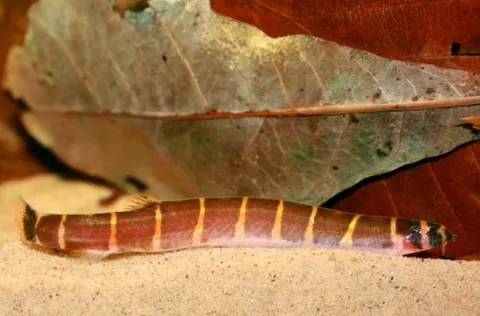
Pangio myersi
The fish known as Myers's Loach, or Pangio myersi by its scientific name, is a member of the Cobitidae family, which includes loaches. It was named in honor of Dr. George Sprague Myers of Stanford University, whose…
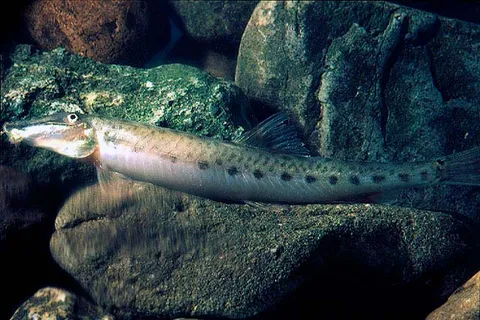
Acantopsis octoactinotos
Acantopsis octoactinotos, or the Long-nosed Loach, belongs to the family Cobitidae. This species is native to Southeast Asia, where it is found in the river systems of northern Borneo — the Indonesian part and the…
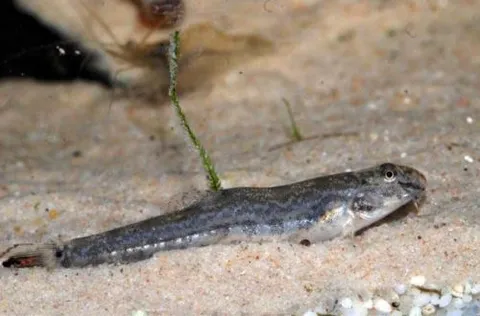
Lepidocephalichthys annandalei
The scientific name Lepidocephalichthys annandalei refers to a fish known as the Peacock Eel or Annandale's Loach, belonging to the family Cobitidae (Loaches). It owes its name to Dr. N. Annandale, who was the director…
Lepidocephalichthys hasselti
Hasselt's Loach, scientifically known as Lepidocephalichthys hasselti, belongs to the family Cobitidae. This species of aquarium fish is known for its hardiness and undemanding nature regarding keeping conditions.…