Temperature22 – 28 °C
Natural range
- Guyana area
- Suriname area
- French Guiana area
- Atlantic coastal rivers of the Guianas
CatfishConservation status: Least concern LC
Other scientific names: Callichthys asper, Cataphractus americanus, Doras blochii, Doras castaneoventris, Silurus cataphractus
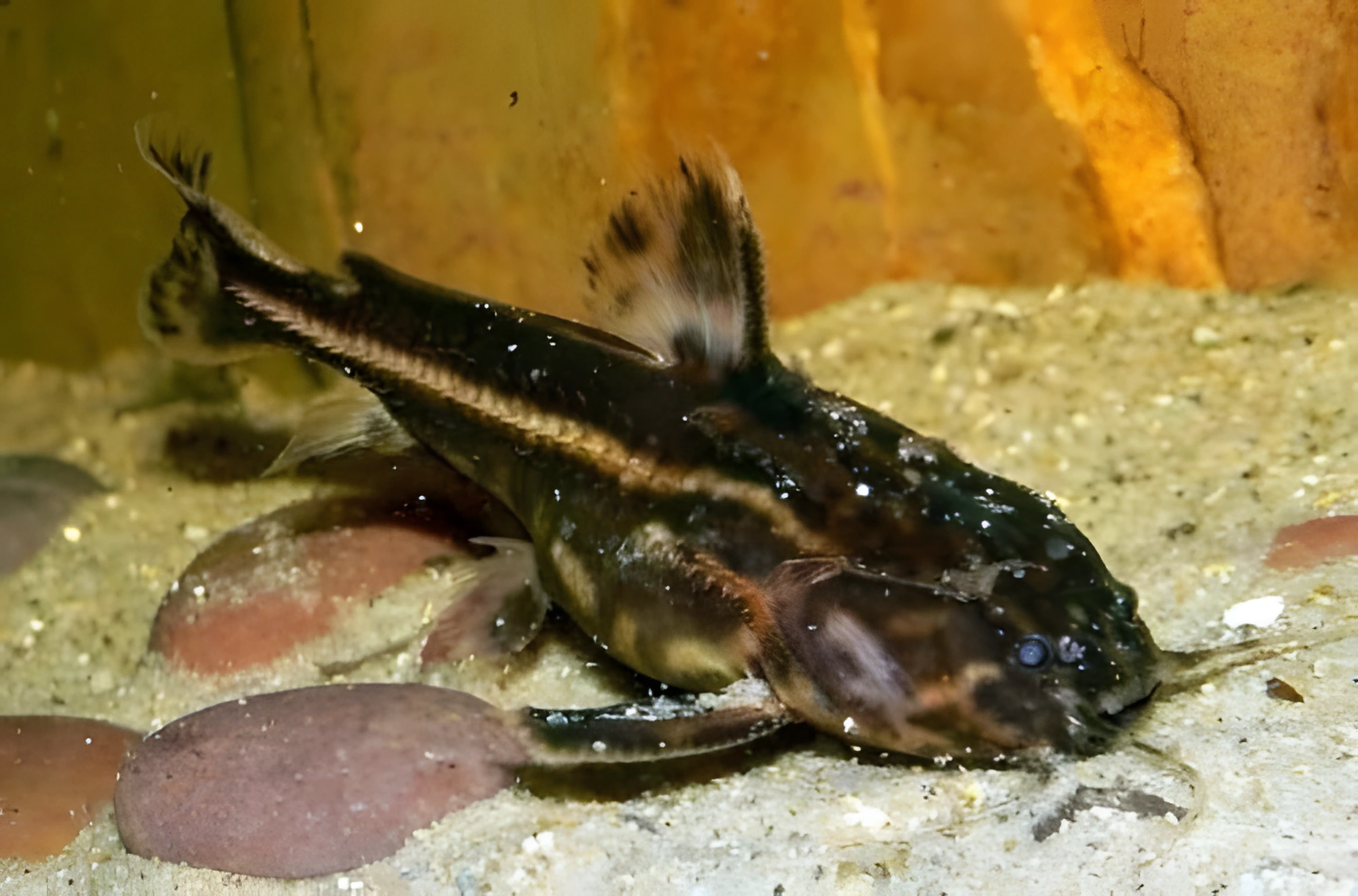
Acanthodoras cataphractus, commonly known as the Chocolate Talking Catfish or Chocolate Doradid, belongs to the family Doradidae (Thorny Catfishes). It is also called the Spiny Catfish. This fish is not frequently found in home aquariums, as it usually appears in shipments as an accidental bycatch alongside the more common Platydoras.
- Required aquarium volume
- 100 L
- Size in aquarium
- 11 cm
- Temperature
- 22 – 28 °C
- Temperament
- Peaceful (regular)
Parameters
Water pHSlightly acidic (6) – Slightly alkaline (7.6)
Water dHSoft (4) – Very hard (26)
Water salinityincreased (10–15 g/L)
Size in aquarium11 cm
Lifespan10 years
TemperamentPeaceful (regular)
Toward small fishnot a predator
Required aquarium volume100 L
Lightingdimmed
Substratesandy (regular, light)
Water flownone or stagnant (no flow)
FeedingSinking (any)
CareSmall group (3–4 individuals)
Description
Adults grow up to 11 cm. Their coloration is brown, with a barely visible light stripe running along the lateral line of the body. These fish are characterized by a massive head and a plump belly. The first rays of the pectoral and dorsal fins are sharp spines. The catfish's hard body is also covered with small thorns. Sexual dimorphism is subtle: females are generally slightly larger than males. A distinctive feature of these catfishes is their ability to produce sounds by rubbing the bony plates on their heads, which earned them the nickname "talking" catfishes.
Habitat
Its natural habitat is South America, where it inhabits numerous rivers of Guyana, Suriname, and French Guiana that flow into the Atlantic Ocean. Chocolate Talking Catfishes prefer small tributaries, streams, backwaters, as well as freshwater and brackish swamps and coastal mangrove thickets. During the day, the catfishes hide on the bottom under snags and in dense aquatic vegetation, and at night, they emerge from their shelters in search of food.
Behavior and Compatibility
These fish are characterized by a calm, non-aggressive nature and prefer to live in groups of 3–4 individuals. They are compatible with other medium to large Amazonian species. Their high degree of protection allows them to be kept even with some predatory fish.
Care and Maintenance
For a group of 3–4 Chocolate Talking Catfishes, an aquarium of at least 100 liters is recommended. The Spiny Catfish prefers subdued lighting and requires reliable shelters. Natural elements such as snags and dense plant thickets, as well as decorative items like caves and grottoes, can serve as hiding places. Sandy substrate will be an optimal choice. These fish adapt well to a wide range of hydrochemical parameters, including brackish water with a low salt concentration (up to 15 g per liter). For long-term well-being, maintaining stable water conditions is key; sudden fluctuations in pH, dGH, and temperature, as well as the accumulation of organic waste, should be avoided. Regular aquarium cleaning and properly selected equipment will ensure water purity.
Diet
This is an omnivorous species that will not miss an opportunity to eat anything that fits into its mouth, including careless small fish. In an aquarium environment, they readily accept most popular sinking foods, such as flakes and granules. Their diet can be supplemented with live or frozen brine shrimp, daphnia, and bloodworms.
Breeding and Reproduction
To date, little reliable information has been gathered about the breeding of Chocolate Talking Catfishes. It is assumed that during the breeding season, males and females form temporary pairs. Eggs are laid in a pre-dug pit, and the clutch is carefully guarded throughout the incubation period, which lasts 4–5 days. Precise information about the further care of the hatched fry is unavailable. Their reproduction has not been observed in home aquariums.
Diseases
When kept in favorable conditions, fish rarely experience health deterioration. The occurrence of diseases usually indicates problems in keeping, such as polluted water, poor quality food, or injuries. In most cases, eliminating the root cause leads to recovery. However, sometimes medication may be required. Detailed information on symptoms and treatment methods can be found in the section "Diseases of aquarium fish."
How to choose
When purchasing, select individuals with intact bony plates and fins, as any wounds on the body are prone to rapid infection. It is important to ensure there are no signs of emaciation or parasites on the skin. Due to the presence of sharp spines on the pectoral and dorsal fins, as well as thorns on the sides of the body, exercise caution during transportation: use thick bags or containers, as the fish can easily get tangled in nets and may puncture the packaging. In stores, this species is often found as bycatch with other catfishes, so carefully inspect the fish to ensure they match the species characteristics. Avoid purchasing individuals showing signs of sluggish behavior at night or with an unnaturally sunken abdomen.
Frequently asked questions
The essentials: size, tank volume, water parameters and care
How big does Chocolate Talking Catfish get?
An adult reaches 11 cm in length. Plan the tank around the maximum size: the fish quickly outgrows a cramped setup.
What size aquarium does Chocolate Talking Catfish need?
The minimum recommended volume is 100 L. A smaller tank speeds up nitrate build-up and raises stress levels.
What water parameters does Chocolate Talking Catfish need?
Temperature 22–28 °C, pH 6–7.6, hardness 4–26 dGH. Stability matters more than exact values: sudden swings are harder on the fish than a small deviation from the ideal.
How long does Chocolate Talking Catfish live?
Around 10 years when kept properly. Lifespan depends directly on tank volume, water quality and a varied diet.
Is Chocolate Talking Catfish aggressive?
Temperament: peaceful (regular). Keep this in mind when choosing tank mates.
How many Chocolate Talking Catfish should be kept together?
Recommended setup: small group (3–4 individuals). Ignoring this is a common cause of stress and disease.
What does Chocolate Talking Catfish eat?
Diet type: sinking (any). Feed small portions that are finished within a couple of minutes — overfeeding does more harm than underfeeding.
What is the scientific name of Chocolate Talking Catfish?
The scientific name of the species is Acanthodoras cataphractus, family Doradidae (Thorny Catfishes). It also appears in the literature as: Callichthys asper, Cataphractus americanus, Doras blochii.