Temperature23 – 30 °C
Natural range
- Lower Tocantins River Basin
- Pará area
- Brazil area
- Peru area
CatfishConservation status: Least concern LC
Acanthicus adonis, scientifically known as Acanthicus adonis, belongs to the family Loricariidae, also known as Armored Catfish. This species is generally not considered suitable for home aquariums due to its impressive size and the characteristic behavior of adult specimens. This catfish is exclusively suited for very large public or private aquariums.
- Required aquarium volume
- 1000 L
- Size in aquarium
- 60 cm
- Temperature
- 23 – 30 °C
- Temperament
- Semi-peaceful (including aggression during spawning / intraspecific conflicts)
Parameters
Water pHSlightly acidic (6) – Neutral (7.5)
Water dHVery soft (2) – Hard (12)
Water salinityno salt (freshwater)
Size in aquarium60 cm
Lifespan18 years
TemperamentSemi-peaceful (including aggression during spawning / intraspecific conflicts)
Toward small fishnot a predator
Required aquarium volume1000 L
Lightingdimmed
Substrateany (no restrictions)
Water flowany
FeedingAny (universal)
CareSolitary
Description
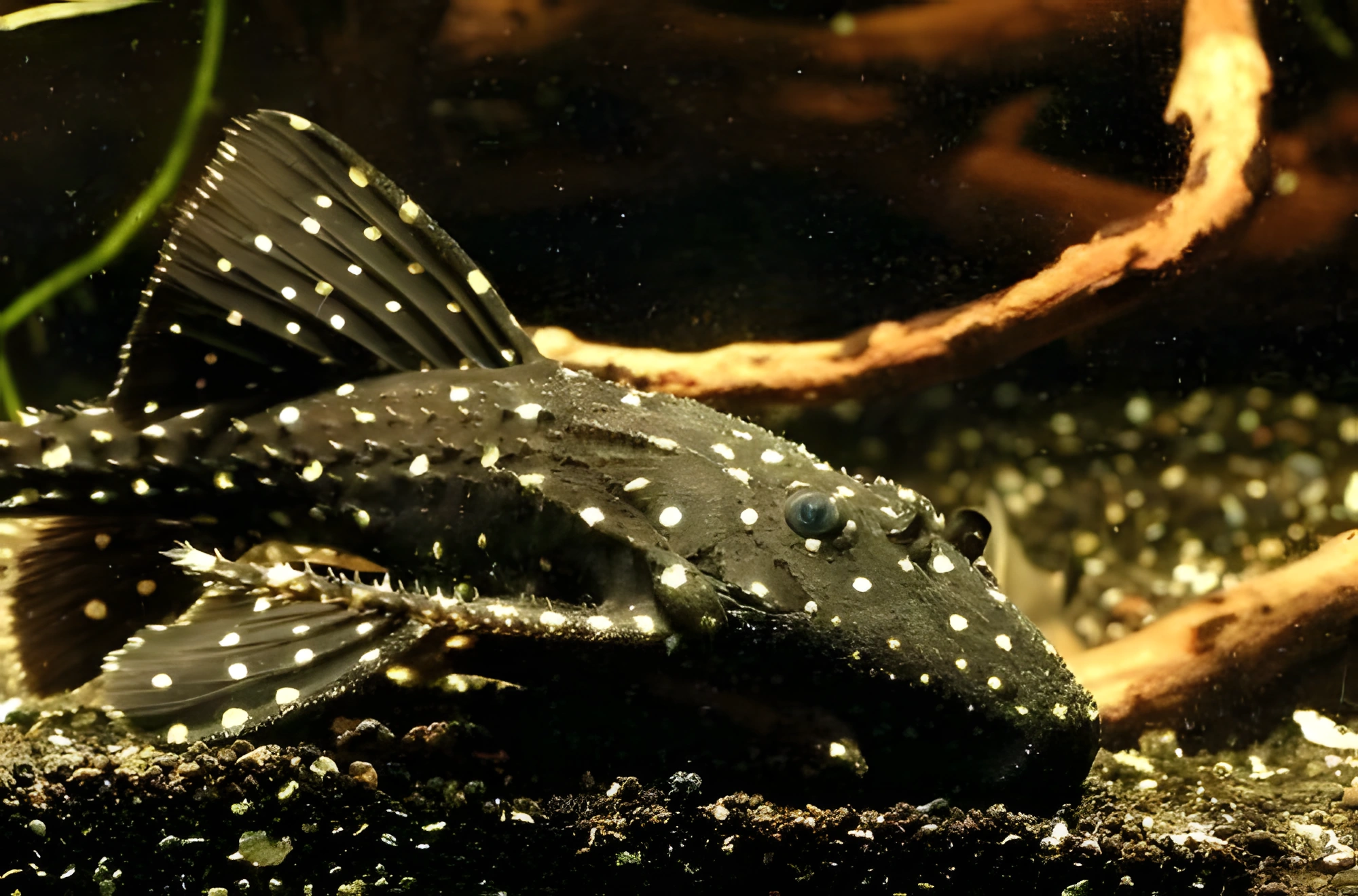
Adult Acanthicus adonis typically reach a length of about 60 cm, but specimens growing up to a meter are sometimes encountered. A distinguishing feature of young fish is their bright spotted coloration. With age, this pattern gradually disappears, and the fish's body acquires a uniform gray hue. The first rays of the dorsal and pectoral fins transform into sharp spines, and the catfish's body itself is covered with numerous prickles. Their tail is large, with elongated filamentous tips.
Habitat
Its origin is linked to South America, where it is found in the lower Tocantins River basin, located in the Brazilian state of Pará. It is possible that the natural distribution of this species is much wider and encompasses vast regions of the Amazon. Interestingly, similar fish are also exported from Peru. These catfish prefer river sections where the current is not too fast and there are plenty of hiding places.
Behavior and Compatibility
Young specimens of this species are peaceful and get along well with other fish of comparable size. However, their behavior changes with age: the catfish become territorial and begin to show aggression towards any other inhabitants that enter their territory.
Care and Maintenance
The optimal aquarium volume for a single catfish should be at least 1000–1500 liters. Various shelters are used for decorating such an aquarium, such as intertwined driftwood, rock formations creating caves and crevices, or decorative elements serving as refuges. Aquatic vegetation may only be appropriate for young fish, as adult Acanthicus adonis tend to dig up plants. Lighting should be subdued. To maintain high water quality within acceptable hydrochemical parameters and temperatures, a powerful filtration system and other specialized equipment are necessary. Regular partial water changes also imply the presence of separate systems for water preparation and drainage. Such aquariums are extremely bulky, their weight can reach several tons, and their maintenance requires significant financial investment, which puts them beyond the scope of amateur aquaristics.
Diet
This species is omnivorous and capable of consuming anything it can swallow. In natural conditions, they are often found near populated areas, where they feed on organic waste. In an aquarium environment, Acanthicus adonis readily accepts a variety of foods: these can be dry, live, and frozen foods, as well as pieces of vegetables and fruits.
Breeding and Reproduction
Despite the scarcity of reliable information, successful cases of Acanthicus adonis breeding in artificial environments have been recorded. Spawning in these catfish occurs in underwater caves, with males taking responsibility for guarding the eggs. Females do not participate in the subsequent care of the offspring.
Diseases
When kept in favorable conditions, fish rarely experience health deterioration. The occurrence of diseases usually indicates problems in keeping, such as polluted water, poor quality food, or injuries. In most cases, eliminating the root cause leads to recovery. However, sometimes medication may be required. Detailed information on symptoms and treatment methods can be found in the section "Diseases of aquarium fish."
How to choose
When choosing, it should be noted that young specimens are often sold as ornamental fish that do not correspond to their enormous potential size. A healthy fish should show activity at night, have clean fins without signs of erosion, and have no visible body damage from sharp odontodes during transport. Avoid specimens with sunken bellies or signs of emaciation, as this may indicate problems with adapting to the aquarium diet.
- inspect the skin for white spots or ulcers
- check the integrity of the long filamentous processes on the fins
- assess the overall plumpness of the specimen, avoiding overly thin fish
Frequently asked questions
The essentials: size, tank volume, water parameters and care
How big does Acanthicus adonis get?
An adult reaches 60 cm in length. Plan the tank around the maximum size: the fish quickly outgrows a cramped setup.
What size aquarium does Acanthicus adonis need?
The minimum recommended volume is 1000 L. A smaller tank speeds up nitrate build-up and raises stress levels.
What water parameters does Acanthicus adonis need?
Temperature 23–30 °C, pH 6–7.5, hardness 2–12 dGH. Stability matters more than exact values: sudden swings are harder on the fish than a small deviation from the ideal.
How long does Acanthicus adonis live?
Around 18 years when kept properly. Lifespan depends directly on tank volume, water quality and a varied diet.
Is Acanthicus adonis aggressive?
Temperament: semi-peaceful (including aggression during spawning / intraspecific conflicts). Keep this in mind when choosing tank mates.
How many Acanthicus adonis should be kept together?
Recommended setup: solitary. Ignoring this is a common cause of stress and disease.
What does Acanthicus adonis eat?
Diet type: any (universal). Feed small portions that are finished within a couple of minutes — overfeeding does more harm than underfeeding.
What is the scientific name of Acanthicus adonis?
The scientific name of the species is Acanthicus adonis, family Armored Catfish (Loricariidae).