Temperature23 – 30 °C
Natural range
- Amazon River
- Amazon Basin
- Brazil area
- Peru area
CatfishConservation status: Least concern LC
Other scientific names: Rinelepis acanthicus
Acanthicus hystrix, known scientifically as Acanthicus hystrix, belongs to the family Loricariidae, or Armored Catfishes. Due to its size and certain behavioral characteristics, this fish is not suitable for beginner aquarists. It is usually found in very large private or public aquariums. It is worth noting that young individuals are quite often offered for sale, but as they grow, they can create significant difficulties in care.
- Required aquarium volume
- 1000 L
- Size in aquarium
- 50 – 60 cm
- Temperature
- 23 – 30 °C
- Temperament
- Aggressive / incompatible / unfriendly
Parameters
Water pHSlightly acidic (6) – Neutral (7.5)
Water dHVery soft (2) – Hard (15)
Water salinityno salt (freshwater)
Size in aquarium50 – 60 cm
Lifespan16 years
TemperamentAggressive / incompatible / unfriendly
Toward small fishnot a predator
Required aquarium volume1000 L
Lightingdimmed
Substrateany (no restrictions)
Water flowweak or moderate
FeedingAny (universal)
CareSolitary
Description
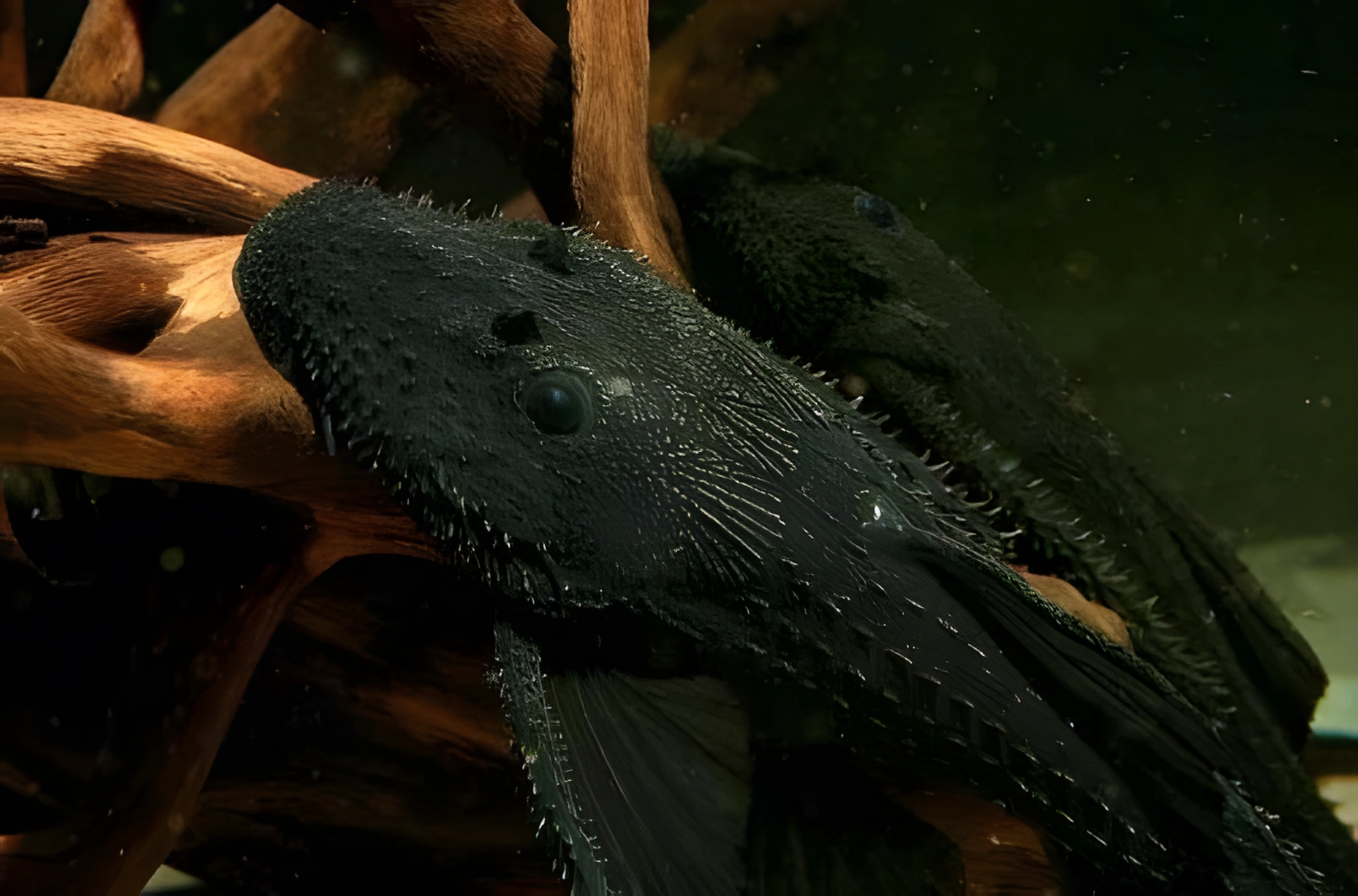
Adults of this fish can reach a length of 50 to 60 centimeters. They have an impressive body, a large head, and powerful fins, the first rays of which are significantly thickened and resemble spines. The entire body surface is covered with numerous sharp thorns. These protective elements serve to defend the catfish from the many predators inhabiting the Amazon. Their coloration is black. Sexual dimorphism is weakly expressed, and it is quite difficult to visually distinguish males from females.
Habitat
This species of catfish originates from South America. Precise data on its distribution range are not always specific, and literature traditionally indicates "Amazon River" as the type locality. However, according to some sources, Acanthicus hystrix is widely distributed throughout the Amazon, covering territories in Brazil and Peru, and also encompassing large river systems, such as the Orinoco in Venezuela. The fish prefers sections of rivers with slow currents. Its presence is often noted near settlements located along riverbanks. This phenomenon is likely explained by the availability of food waste that local residents discharge directly into the water.
Behavior and Compatibility
Young catfish exhibit a peaceful nature and often form groups. However, as they mature, their behavior changes: Acanthicus become increasingly aggressive and territorial, which dictates the need to keep them individually. They are compatible only with other large fish that prefer to inhabit the water column or near its surface.
Care and Maintenance
For keeping an adult specimen, an aquarium of at least 1000 liters will be required. Acanthicus hystrix feels comfortable in subdued lighting and needs a large number of suitable-sized shelters. Caves and grottoes can be created from driftwood, rock fragments, large stones, as well as decorative elements or ordinary PVC pipes. The presence of live aquatic plants in the aquarium is not mandatory, as they will most likely be uprooted and eaten. Maintaining high water quality is ensured by using a powerful filtration system and regular aquarium maintenance. It is also extremely important to maintain a high level of dissolved oxygen, so additional aeration will be very useful.
Diet
This is an omnivorous and rather voracious species. It actively explores the bottom of the aquarium in search of food, eating everything it can find. Their diet can include a wide range of diverse products: dry sinking foods, live or frozen bloodworms, earthworms, chopped pieces of shrimp or mussel meat, as well as various vegetables and fruits. Feeding should be daily. Signs of underfeeding, which are easy to notice, include a sunken belly and hollow eyes.
Breeding and Reproduction
This species does not breed in artificial environments. In the natural environment, spawning occurs during the rainy season, in caves that the fish digs in the steep banks of rivers. After spawning, the male drives away the female and remains with the clutch, protecting it until the fry hatch.
Diseases
Most health problems in fish often arise from unsuitable keeping conditions. Maintaining a stable and comfortable habitat is a key factor for successful keeping. If symptoms of illness appear, the first step is to check the water quality. If deviations are found, it is important to take immediate measures to eliminate them. If the symptoms do not disappear or worsen, medicinal treatment may be required. More detailed information on symptoms and treatment methods can be found in the "Diseases of Aquarium Fish" section.
How to choose
When choosing Acanthicus hystrix, it should be noted that young individuals are most often available for sale, which will eventually grow to impressive sizes and require aquariums of 1000 liters or more. When inspecting fish in the store, pay attention to the following signs of health: activity, absence of skin and fin damage, and clear eyes. A healthy individual should not have a sunken belly, which is a clear sign of emaciation. Keep in mind that this species has strong territorial instincts, so purchasing multiple individuals for one aquarium carries a high risk of aggression as they mature.
Frequently asked questions
The essentials: size, tank volume, water parameters and care
How big does Acanthicus hystrix get?
An adult reaches 50–60 cm in length. Plan the tank around the maximum size: the fish quickly outgrows a cramped setup.
What size aquarium does Acanthicus hystrix need?
The minimum recommended volume is 1000 L. A smaller tank speeds up nitrate build-up and raises stress levels.
What water parameters does Acanthicus hystrix need?
Temperature 23–30 °C, pH 6–7.5, hardness 2–15 dGH. Stability matters more than exact values: sudden swings are harder on the fish than a small deviation from the ideal.
How long does Acanthicus hystrix live?
Around 16 years when kept properly. Lifespan depends directly on tank volume, water quality and a varied diet.
Is Acanthicus hystrix aggressive?
Temperament: aggressive / incompatible / unfriendly. Keep this in mind when choosing tank mates.
How many Acanthicus hystrix should be kept together?
Recommended setup: solitary. Ignoring this is a common cause of stress and disease.
What does Acanthicus hystrix eat?
Diet type: any (universal). Feed small portions that are finished within a couple of minutes — overfeeding does more harm than underfeeding.
What is the scientific name of Acanthicus hystrix?
The scientific name of the species is Acanthicus hystrix, family Armored Catfishes (Loricariidae). It also appears in the literature as: Rinelepis acanthicus.