Temperature22 – 27 °C
Natural range
- Marañón River basin
- Peru area
- Ecuador area
CatfishConservation status: Least concern LC
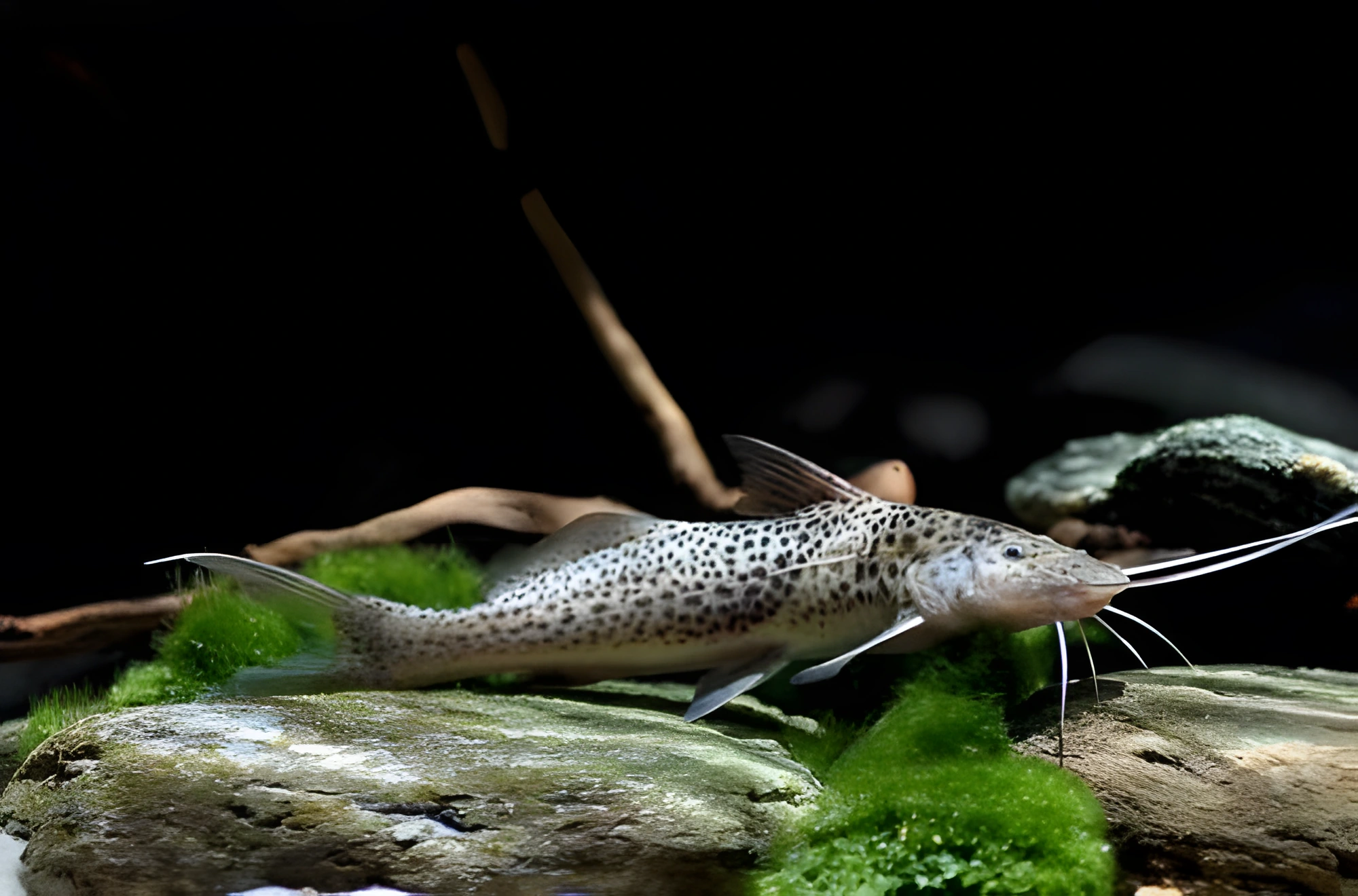
The Muscular Catfish, also known by its scientific name Aguarunichthys torosus, belongs to the family Pimelodidae, or Long-whiskered Catfishes. Its second name is given in honor of the indigenous tribe living in the Peruvian jungle along the Marañón River, where this species was first discovered. Although this catfish is a carnivorous predator, keeping it in an aquarium is not particularly difficult if certain conditions are met. Nevertheless, it is not recommended for beginner aquarists.
- Required aquarium volume
- 500 L
- Size in aquarium
- 34 cm
- Temperature
- 22 – 27 °C
- Temperament
- Aggressive / incompatible / unfriendly
Parameters
Water pHSlightly acidic (5.8) – Neutral (7.2)
Water dHSoft (5) – Hard (15)
Water salinityno salt (freshwater)
Size in aquarium34 cm
Lifespan8 years
TemperamentAggressive / incompatible / unfriendly
Toward small fishnot a predator
Required aquarium volume500 L
Lightingany
Substrateany (no restrictions)
Water flowweak or moderate
FeedingMeat / protein (live, frozen, fresh)
CareSolitary
Description
Adults can reach up to 34 cm in length. This catfish has an elongated and massive body, ending in a small, flat head with six sensitive barbels. Its fins are small. The coloration is light, dotted with numerous dark specks.
Habitat
Its natural habitat is in South America, in the Marañón River basin, which is part of the upper Amazon, primarily in Peru and Ecuador. This catfish inhabits various biotopes, from fast-flowing mountain streams to floodplain lakes and backwaters near the main river channel.
Behavior and Compatibility
This species does not have a friendly disposition. In confined spaces, it will compete with conspecifics and other large bottom-dwelling fish for territory and food resources. The less available space, the more aggressive its behavior becomes. Any small fish will be considered potential prey, so cohabitation with them is out of the question.
Care and Maintenance
For keeping a single Muscular Catfish, an aquarium of at least 500 L will be optimal. The choice of decorations does not play a decisive role, but it is crucial to provide the fish with enough free space. The priority is to maintain high water quality within acceptable temperature ranges and hydrochemical balance parameters. The accumulation of organic waste, such as food remnants and excrement, should be prevented, as the dietary peculiarities of this catfish can significantly pollute the water. The stability of the aquarium environment and its ecological balance depend on the regularity of necessary maintenance procedures and the uninterrupted operation of equipment, especially the filtration system.
Diet
In its natural environment, this predator feeds on other fish. In aquarium conditions, it can adapt to alternative food sources. Its diet can include specialized foods for carnivorous species, earthworms, shrimp and mussel meat, as well as strips of white fish. Feeding is recommended 2–3 times a week.
Breeding and Reproduction
Based on available sources, a separate block cannot be compiled: the data is insufficient or contradictory. The entry can be updated later when verified information becomes available.
Diseases
Most health problems in fish often arise from unsuitable keeping conditions. Maintaining a stable and comfortable habitat is a key factor for successful keeping. If symptoms of illness appear, the first step is to check the water quality. If deviations are found, it is important to take immediate measures to eliminate them. If the symptoms do not disappear or worsen, medicinal treatment may be required. More detailed information on symptoms and treatment methods can be found in the "Diseases of Aquarium Fish" section.
How to choose
When choosing a fish, pay attention to the individual's activity at night, as this species is predominantly nocturnal. A healthy fish should have clean skin without visible damage, ulcers, or film, as well as a firm, well-fed body. It is important to ensure there are no signs of emaciation or apathy. It is recommended to ask the seller about the individual's diet to ensure a smooth transition to the foods offered in the aquarium.
Frequently asked questions
The essentials: size, tank volume, water parameters and care
How big does Aguaruna get?
An adult reaches 34 cm in length. Plan the tank around the maximum size: the fish quickly outgrows a cramped setup.
What size aquarium does Aguaruna need?
The minimum recommended volume is 500 L. A smaller tank speeds up nitrate build-up and raises stress levels.
What water parameters does Aguaruna need?
Temperature 22–27 °C, pH 5.8–7.2, hardness 5–15 dGH. Stability matters more than exact values: sudden swings are harder on the fish than a small deviation from the ideal.
How long does Aguaruna live?
Around 8 years when kept properly. Lifespan depends directly on tank volume, water quality and a varied diet.
Is Aguaruna aggressive?
Temperament: aggressive / incompatible / unfriendly. Keep this in mind when choosing tank mates.
How many Aguaruna should be kept together?
Recommended setup: solitary. Ignoring this is a common cause of stress and disease.
What does Aguaruna eat?
Diet type: meat / protein (live, frozen, fresh). Feed small portions that are finished within a couple of minutes — overfeeding does more harm than underfeeding.
What is the scientific name of Aguaruna?
The scientific name of the species is Aguarunichthys torosus, family Pimelodidae (Long-whiskered Catfishes).