Temperature20 – 25 °C
Natural range
- Niger River Basin
- Ouémé River Basin
- Benin area
- Nigeria area
Predators UnusualConservation status: Least concern LC
Other scientific names: Channa africana, Ophiocephalus africanus, Parophiocephalus africanus
The fish, known scientifically as Parachanna africana, the African snakehead, is a member of the family Channidae (snakeheads). Its native range is considered to be the subequatorial regions of Africa, particularly the territories of Benin, Nigeria, and Cameroon. This species inhabits the lower reaches of river systems that flow into the Gulf of Guinea, as well as numerous tropical swamps.
- Required aquarium volume
- 400 L
- Size in aquarium
- 30 cm
- Temperature
- 20 – 25 °C
- Temperament
- Aggressive / incompatible / unfriendly
Parameters
Water pHSlightly acidic (5) – Neutral (7.5)
Water dHVery soft (3) – Hard (15)
Water salinityno salt (freshwater)
Size in aquarium30 cm
Lifespan10 years
TemperamentAggressive / incompatible / unfriendly
Toward small fishpredator
Required aquarium volume400 L
Lightingdimmed
Substrateany, but dark
Water flownone or stagnant (no flow)
FeedingMeat / protein (live, frozen, fresh)
CareSolitary
Description
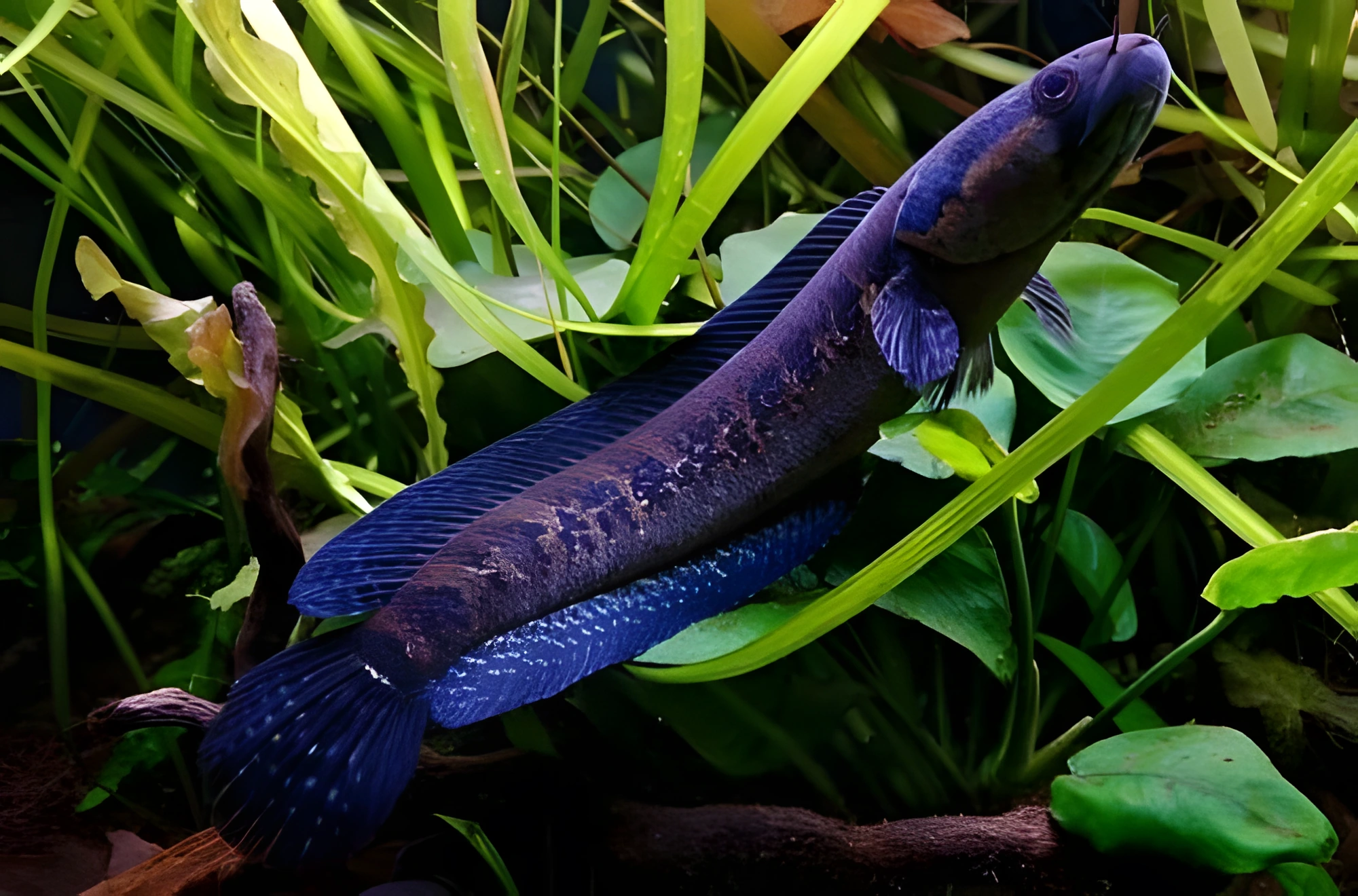
Adults of this species can grow up to 30 cm in length. A distinctive feature is their elongated body and large, significantly extended fins. Their coloration is light gray, adorned with a pattern of 8–11 chevron-like markings. During the breeding season, the fish's overall coloration darkens, and the pattern becomes barely discernible. The fins may acquire a blue tint. Like other members of the family, the African snakehead possesses the unique ability to breathe atmospheric air, which allows it to successfully survive in swampy environments with low oxygen levels. Moreover, these fish can remain out of water for some time and even move short distances over land between bodies of water.
Habitat
The African snakehead inhabits waters of subequatorial Africa, including the Niger and Ouémé river basins, as well as various tropical swamps and coastal river sections in Benin, Nigeria, and Cameroon. In nature, it prefers still or slow-moving waters with abundant vegetation, and is often found in conditions with low dissolved oxygen content. Water parameters in its natural habitat are characterized as soft to moderately hard with an acidic to neutral pH.
Behavior and Compatibility
Despite its predatory nature, this species does not exhibit excessive aggression. The African snakehead can live with other fish if they are large enough not to be perceived as potential food. However, the possibility of attacks should be considered, so keeping them in a species-specific tank is preferable. When young, these fish often gather in groups, but as they reach sexual maturity, they prefer a solitary lifestyle or form a permanent male/female pair.
Care and Maintenance
For keeping a single adult fish, a tank volume of at least 400 liters is recommended. The African snakehead feels comfortable in a dimly lit aquarium with a layer of floating vegetation and bottom shelters created from natural snags. It should be noted that these fish can escape from the aquarium, so a secure lid or similar device is a mandatory condition. Since the fish breathes atmospheric air, it is important to provide sufficient air space between the water surface and the lid. This species is considered hardy, capable of adapting to significant fluctuations in living conditions and surviving where most other fish would not. However, this is not a reason to artificially worsen their living conditions; for an aquarist, these qualities should indicate the snakehead's unpretentiousness and relatively simple care. Aquarium maintenance is standard and includes regular partial water changes, removal of organic waste, and keeping equipment in working order. In its natural environment, this predator hunts from ambush, feeding on small fish, amphibians, and various invertebrates. In aquarium conditions, it can be accustomed to alternative foods such as fresh or frozen pieces of fish meat, shrimp, mussels, and large earthworms. Information sources: FishBase, Wikipedia, SeriouslyFish.
Diet
This predatory species hunts by ambushing its prey. In its natural habitat, it feeds on small fish, amphibians, and various invertebrates. In aquarium conditions, the African snakehead can be successfully accustomed to alternative food sources, including fresh or frozen portions of fish meat, shrimp, mussels, as well as large earthworms and more. Information was taken from the following sources: FishBase, Wikipedia, SeriouslyFish.
Breeding and Reproduction
In nature, breeding coincides with the rainy season. Fish form pairs that exhibit strong parental care. Eggs are laid among floating vegetation and form a floating layer, which is guarded by the male. In aquarium conditions, breeding is rare and requires spacious tanks with a thick layer of floating plants, necessary for nest formation. Fry need protection from their parents as they grow.
Diseases
The species has a strong immune system when kept in proper conditions, but is sensitive to poor water quality and the accumulation of organic waste. The main danger comes from bacterial infections arising from injuries or stress due to unsuitable environmental parameters. To prevent diseases, it is necessary to maintain cleanliness, ensure regular water changes, and provide access to atmospheric air, as these fish are obligate air-breathers.
How to choose
When choosing, attention should be paid to the fish's activity and the absence of external damage, such as ulcers, cloudy mucous membranes, or signs of emaciation. Healthy individuals should show interest in food and have clean, uncompressed fins. It is important to ensure there are no signs of stress or apathy, as snakeheads tend to be secretive in poor store conditions. It is recommended to inquire about the age and feeding conditions from the seller.
Frequently asked questions
The essentials: size, tank volume, water parameters and care
How big does African Snakehead get?
An adult reaches 30 cm in length. Plan the tank around the maximum size: the fish quickly outgrows a cramped setup.
What size aquarium does African Snakehead need?
The minimum recommended volume is 400 L. A smaller tank speeds up nitrate build-up and raises stress levels.
What water parameters does African Snakehead need?
Temperature 20–25 °C, pH 5–7.5, hardness 3–15 dGH. Stability matters more than exact values: sudden swings are harder on the fish than a small deviation from the ideal.
How long does African Snakehead live?
Around 10 years when kept properly. Lifespan depends directly on tank volume, water quality and a varied diet.
Is African Snakehead aggressive?
Temperament: aggressive / incompatible / unfriendly. This is a predatory species — any fish small enough to fit in its mouth will eventually be eaten.
How many African Snakehead should be kept together?
Recommended setup: solitary. Ignoring this is a common cause of stress and disease.
What does African Snakehead eat?
Diet type: meat / protein (live, frozen, fresh). Feed small portions that are finished within a couple of minutes — overfeeding does more harm than underfeeding.
What is the scientific name of African Snakehead?
The scientific name of the species is Parachanna africana, family Snakeheads (Channidae). It also appears in the literature as: Channa africana, Ophiocephalus africanus, Parophiocephalus africanus.