Temperature24 – 28 °C
Natural range
- Congo River Basin
- Democratic Republic of the Congo area
- Republic of the Congo area
CatfishConservation status: Least concern LC
Other scientific names: Ansorgia debauwi, Ansorgia vittata, Ansorgia vittatta, Ansorgiichthys vittatus, Eutropeillus debauwi, Eutropiella debauwi
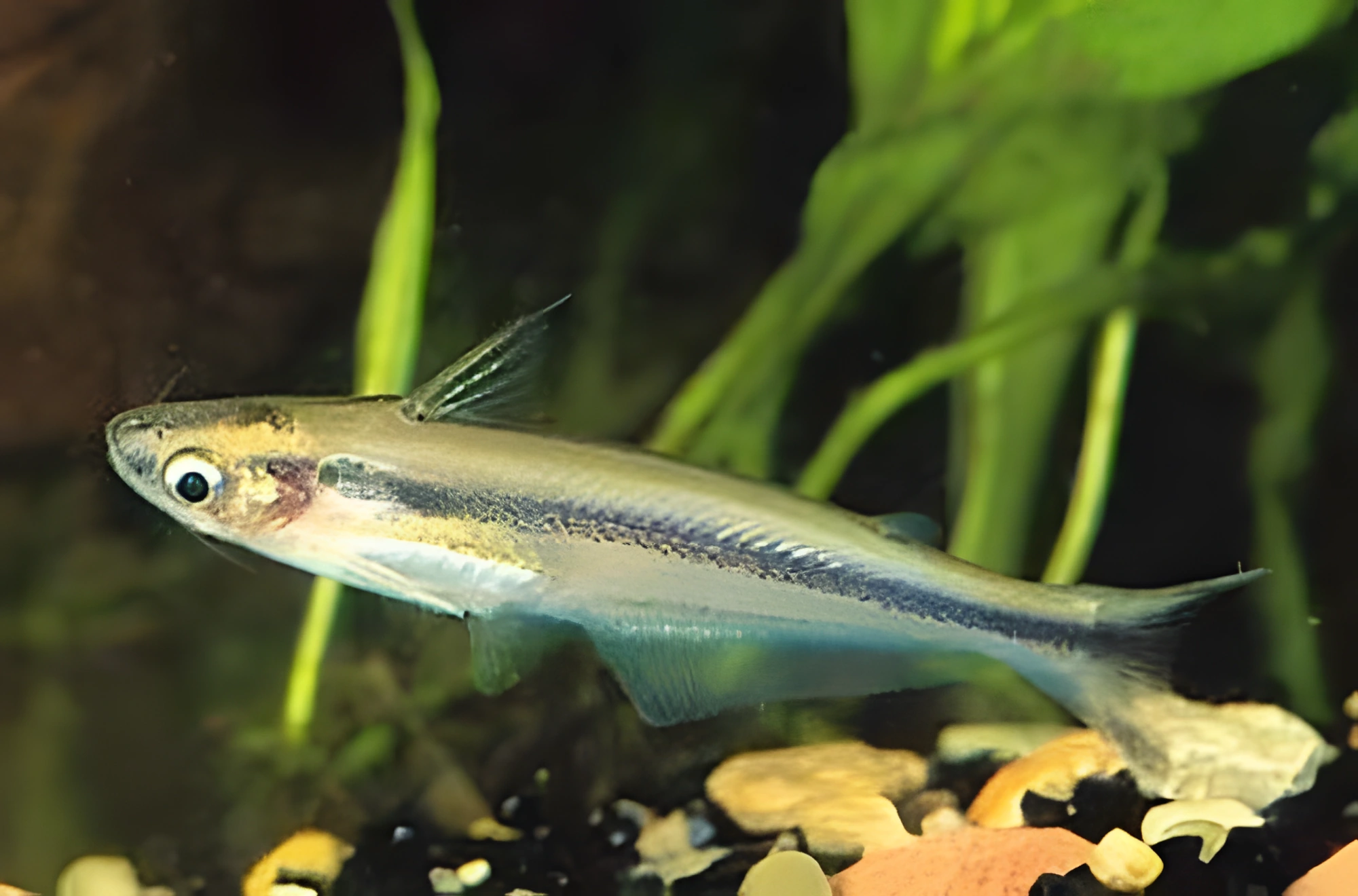
The African Glass Catfish, scientifically known as Pareutropius debauwi, belongs to the family Schilbeidae, commonly known as schilbeid catfishes. This schooling fish is peaceful and easy to care for. Its coloration is not striking with bright hues, so the catfish typically serves as an interesting addition to a freshwater aquarium community.
- Required aquarium volume
- 100 L
- Size in aquarium
- 8 – 10 cm
- Temperature
- 24 – 28 °C
- Temperament
- Peaceful (regular)
Parameters
Water pHSlightly acidic (6) – Neutral (7.5)
Water dHSoft (5) – Hard (15)
Water salinityno salt (freshwater)
Size in aquarium8 – 10 cm
Lifespan8 years
TemperamentPeaceful (regular)
Toward small fishnot a predator
Required aquarium volume100 L
Lightingdimmed or moderate
Substrateany, but dark
Water flowweak or moderate
FeedingSinking (any)
CareMedium group (6–8 individuals)
Description
Adults of this species reach lengths of 8 to 10 cm. The fish's appearance does not entirely match the classic perception of catfishes, which is explained by its active lifestyle. The African Glass Catfish spends a significant portion of its time in the water column, rather than at the bottom, which is typical for many catfishes. Its body is silver with a characteristic black stripe running from head to tail, and its fins are translucent. Confusion often arises with a closely related species – the Striped Glass Catfish. They can be distinguished by the latter's three black stripes on the body and dark spots on the caudal fin. In their juvenile stage, both species are almost indistinguishable. Sexual dimorphism is weakly expressed, with males and females having virtually no external differences.
Habitat
This species originates from the equatorial part of Africa. Its natural habitat covers significant areas of the Congo River basin, where it is predominantly found in areas rich in aquatic vegetation.
Behavior and Compatibility
This species is schooling, so a group of at least 6 individuals is essential for its well-being. When kept alone, the African Glass Catfish becomes timid, seeks shelter, is constantly stressed, and may refuse food. These fish are peaceful and get along well with other species of comparable size from West Africa.
Care and Maintenance
For a school of 6–8 fish, an aquarium volume of 100 to 150 liters is considered optimal. When aquascaping, it is important to provide areas with dense vegetation, as well as open spaces for free swimming. Floating plants and driftwood on the bottom are highly desirable. Any substrate can be used, but dark-colored is preferable. These fish prefer soft, slightly acidic water. Slight deviations in pH and dGH towards neutral or even medium hardness are permissible. It is important that any changes in water parameters occur gradually, without sudden fluctuations. Long-term and successful keeping largely depends on maintaining environmental stability, especially in soft and slightly acidic water conditions. Excessive accumulation of organic matter, which can disrupt the natural nitrogen cycle, should be avoided.
Diet
In a home aquarium, these fish readily consume most popular sinking foods, such as flakes and granules. Live or frozen brine shrimp, bloodworms, and other small invertebrates of appropriate size are excellent for enriching their daily diet.
Breeding and Reproduction
Under certain conditions, breeding is quite feasible. A high-protein diet and keeping them in slightly acidic water (pH 6.5–7.0) at a temperature of about 26–27°C stimulate spawning. Females scatter their eggs among dense thickets of fine-leaved plants, such as Java moss. One female can lay up to 100 eggs, but only a portion of them will be fertilized. The incubation period lasts approximately 72 hours. Initially, the fry feed on the remnants of their yolk sac, and only after that do they begin to forage independently. For ease of feeding and to protect the young from predation by adult fish, they are either transferred to a separate tank, or breeding is initially conducted in a spawning aquarium. Brine shrimp nauplii or special suspension and powder foods designed for fry rearing can be used as first foods.
Diseases
In a favorable environment, health risks for the fish remain minimal. As a rule, diseases in aquariums most often arise due to improper care. Thus, the best protection against diseases is timely and regular aquarium maintenance, providing quality food, and the absence of aggressive tankmates that pose a threat. If symptoms of a particular disease are detected, it is first recommended to carefully assess the living conditions, and only then proceed with treatment. More detailed information on this topic can be found in the "Aquarium Fish Diseases" section.
How to choose
When choosing an African Glass Catfish, preference should be given to individuals that stay in a school and are active in the water column. Healthy fish should have a transparent body without cloudiness, white spots, or fin damage, as well as clear, non-sunken eyes. Avoid specimens showing signs of emaciation, those that stay alone, or constantly lie on the bottom, as this may indicate stress or hidden diseases. Ensure that there are no dead fish in the store's aquarium, as these catfish are sensitive to water quality and may not tolerate transportation well.
Frequently asked questions
The essentials: size, tank volume, water parameters and care
How big does African Glass Catfish get?
An adult reaches 8–10 cm in length. Plan the tank around the maximum size: the fish quickly outgrows a cramped setup.
What size aquarium does African Glass Catfish need?
The minimum recommended volume is 100 L. A smaller tank speeds up nitrate build-up and raises stress levels.
What water parameters does African Glass Catfish need?
Temperature 24–28 °C, pH 6–7.5, hardness 5–15 dGH. Stability matters more than exact values: sudden swings are harder on the fish than a small deviation from the ideal.
How long does African Glass Catfish live?
Around 8 years when kept properly. Lifespan depends directly on tank volume, water quality and a varied diet.
Is African Glass Catfish aggressive?
Temperament: peaceful (regular). Keep this in mind when choosing tank mates.
How many African Glass Catfish should be kept together?
Recommended setup: medium group (6–8 individuals). Ignoring this is a common cause of stress and disease.
What does African Glass Catfish eat?
Diet type: sinking (any). Feed small portions that are finished within a couple of minutes — overfeeding does more harm than underfeeding.
What is the scientific name of African Glass Catfish?
The scientific name of the species is Pareutropius debauwi, family Schilbeid Catfishes (Schilbeidae). It also appears in the literature as: Ansorgia debauwi, Ansorgia vittata, Ansorgia vittatta.