Temperature23 – 28 °C
Natural range
- Ogun State
- Nigeria area
CharacinsConservation status: Endangered EN
Other scientific names: Petersius spilopterus
The African Red-Eyed Tetra, scientifically known as Arnoldichthys spilopterus, belongs to the family Alestidae (African Tetras). This hardy and undemanding fish, both in terms of care and breeding, is distinguished by its beauty and high activity level. Under favorable conditions, its lifespan can reach up to 10 years.
- Required aquarium volume
- 150 L
- Size in aquarium
- 10 cm
- Temperature
- 23 – 28 °C
- Temperament
- Peaceful, active/mobile
Parameters
Water pHSlightly acidic (6) – Neutral (7)
Water dHVery soft (1) – Hard (15)
Water salinityno salt (freshwater)
Size in aquarium10 cm
Lifespan7 years
TemperamentPeaceful, active/mobile
Toward small fishnot a predator
Required aquarium volume150 L
Lightingdimmed or moderate
Substratesandy (regular, light)
Water flowweak or moderate
FeedingAny (universal)
CareMedium group (6–8 individuals)
Description
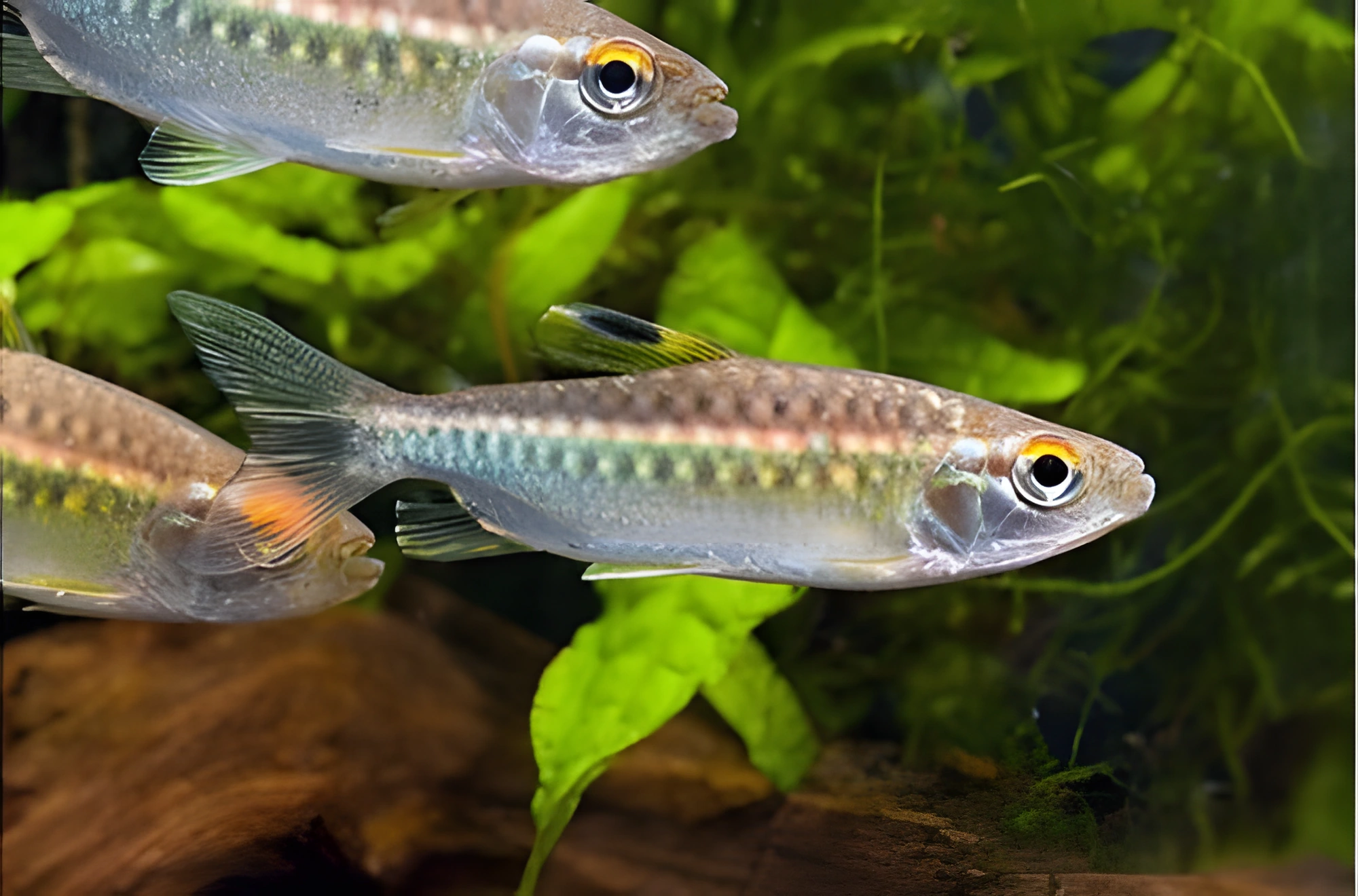
Adults can reach up to 10 cm in length. Their body is somewhat elongated, covered with large scales. A distinctive feature is a broad, light horizontal line running along the center of the body. Above this line, the coloration takes on a gray hue, while below it becomes yellowish with a noticeable blue sheen. Particular attention is drawn to the red pigment located in the upper part of the eye. As a rule, males are distinguished by brighter and more saturated coloration compared to females.
Habitat
Although this species has gained widespread recognition in aquaristics, it is quite rare in the wild. The natural habitat of the African Red-Eyed Tetra is limited to a small section of the Niger River basin, located in Ogun State, Nigeria. Unfortunately, the degradation of these areas due to human activities such as pollution and deforestation has significantly reduced populations.
Behavior and Compatibility
A peaceful, schooling, and extremely active fish. For this reason, it should not be kept with timid and sedentary species. It coexists well with Synodontis catfish, Parrot Cichlids, Kribensis, and other African tetras, provided they are similar in size and temperament.
Care and Maintenance
These active fish will require an aquarium of at least 150 liters. For decoration, it is recommended to use sand or fine gravel, supplemented with several large, smooth stones. Various snags, both natural and decorative, and sturdy, resilient plants are also suitable. It is important to arrange all decorations compactly, mainly along the side and back walls, to leave enough free swimming space. Using a filter with peat filler will help recreate the water conditions characteristic of its natural habitat. Hydrochemical water parameters should be maintained at a slightly acidic pH with low to medium hardness (dGH). Aquarium maintenance includes regular cleaning of the substrate from organic food debris and excrement, as well as weekly water changes of 15–20% of the volume with fresh water.
Diet
These fish are quite undemanding in terms of diet and readily accept all types of food: dry, frozen, or live. A varied menu contributes to the development of their best coloration. Conversely, a poor and monotonous diet, for example, consisting of a single type of food, will negatively affect the vibrancy of their natural hues.
Breeding and Reproduction
Under favorable conditions, there is a high chance of fry appearing even in a community tank. However, to protect them from being eaten, it is necessary to promptly rehouse the young. If targeted breeding is planned, it is recommended to prepare a separate spawning tank. Its setup can be very simple, sometimes even without any decorations. To protect the eggs and then the fry, the bottom should be covered with a fine-mesh net or a thick layer of small-leaved, undemanding plants or mosses. Lighting should be subdued. Equipment-wise, a heater and a simple air-lift filter are sufficient. A smooth change in water conditions (slightly acidic, soft water) and the inclusion of a large amount of protein-rich foods in the diet serve as a stimulus for spawning. In other words, the diet of the African Red-Eyed Tetra should primarily consist of live and frozen food. After some time, the females' abdomens will noticeably round out, and the males' coloration will become more intense – this indicates the beginning of the breeding period. Several females are first transferred to the spawning tank, and the next day, the largest and brightest male is added. The completion of spawning is indicated by significantly 'thinner' females and the presence of eggs among the plants or under the net. After this, the fish are returned to the community tank. Fry hatch within 24 hours and begin actively swimming in search of food on days 2–3. They should be fed specialized micro-foods. They grow very quickly, reaching almost 5 cm in length in just seven weeks.
Diseases
The best defense against any disease is a balanced aquarium biosystem with suitable keeping conditions. Therefore, if a fish's behavior has changed, its color has altered, unusual spots or other symptoms have appeared, the first step should be to check the water parameters. Only after that can treatment begin.
How to choose
When choosing individuals, pay attention to their activity and the condition of their skin. Healthy fish should be active, without visible damage, ulcers, plaque, or signs of emaciation. Avoid purchasing fish that appear lethargic, stay near the water surface, or have clamped fins, as this may indicate stress or the presence of diseases. Since the species is schooling, it is recommended to acquire a group of 6–10 individuals at once to ensure comfortable adaptation in the new aquarium.
Frequently asked questions
The essentials: size, tank volume, water parameters and care
How big does African Tetra get?
An adult reaches 10 cm in length. Plan the tank around the maximum size: the fish quickly outgrows a cramped setup.
What size aquarium does African Tetra need?
The minimum recommended volume is 150 L. A smaller tank speeds up nitrate build-up and raises stress levels.
What water parameters does African Tetra need?
Temperature 23–28 °C, pH 6–7, hardness 1–15 dGH. Stability matters more than exact values: sudden swings are harder on the fish than a small deviation from the ideal.
How long does African Tetra live?
Around 7 years when kept properly. Lifespan depends directly on tank volume, water quality and a varied diet.
Is African Tetra aggressive?
Temperament: peaceful, active/mobile. Keep this in mind when choosing tank mates.
How many African Tetra should be kept together?
Recommended setup: medium group (6–8 individuals). Ignoring this is a common cause of stress and disease.
What does African Tetra eat?
Diet type: any (universal). Feed small portions that are finished within a couple of minutes — overfeeding does more harm than underfeeding.
What is the scientific name of African Tetra?
The scientific name of the species is Arnoldichthys spilopterus, family African Tetras (Alestidae). It also appears in the literature as: Petersius spilopterus.