Temperature18 – 22 °C
Natural range
- Northwestern Gabon area
- Southeastern Equatorial Guinea area
- Gabon area
- Equatorial Guinea area
KillifishConservation status: Least concern LC
Aphyosemion mimbon, known in the aquarium hobby as Mimbon Killifish, belongs to the family Nothobranchiidae. This small fish attracts attention with its bright, rich coloration. Its keeping does not present any particular difficulties, however, breeding attempts can be a serious challenge for beginners.
- Required aquarium volume
- 40 L
- Size in aquarium
- 5 – 6 cm
- Temperature
- 18 – 22 °C
- Temperament
- Peaceful (regular)
Parameters
Water pHSlightly acidic (5.5) – Neutral (6.5)
Water dHVery soft (1) – Soft (6)
Water salinityno salt (freshwater)
Size in aquarium5 – 6 cm
Lifespan2 years
TemperamentPeaceful (regular)
Toward small fishnot a predator
Required aquarium volume40 L
Lightingdimmed
Substrateany (no restrictions)
Water flownone or stagnant (no flow)
FeedingHigh protein (predominantly meat)
CareSmall group (3–4 individuals)
Description
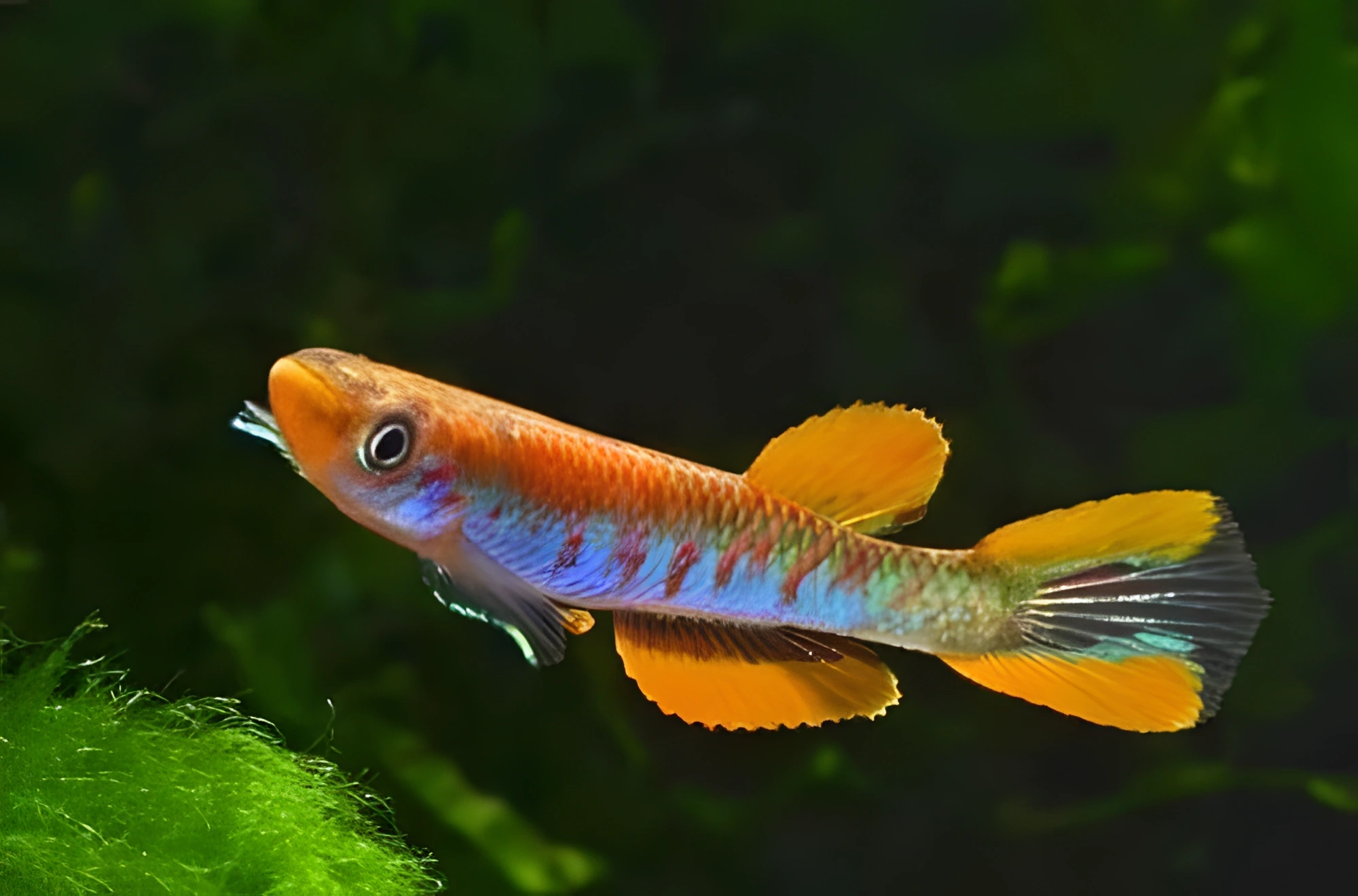
Adult Mimbon Killifish reach a length of 5–6 cm. Males are distinguished by brighter coloration and are usually slightly smaller than females. Their coloration is based on orange hues, complemented by a blue sheen on the sides. Females look much more modest; their bodies are colored in pinkish tones with a scattering of red spots.
Habitat
The natural habitats of this fish are in equatorial Africa, primarily in the northwestern part of Gabon and the southeastern regions of Equatorial Guinea. Here, it inhabits numerous forest streams, ponds, and temporary puddles hidden under the dense canopy of the tropical forest. Typical biotopes of Aphyosemion mimbon are shallow, shaded areas where a thick layer of silt, mud, and fallen plant debris, such as leaves and branches, accumulates on the bottom.
Behavior and Compatibility
Males exhibit territorial behavior. It is recommended to keep a group consisting of one male and several females. It is important to note that females can also show unfriendliness and aggression towards males, especially if the fish were introduced to the aquarium at different times and are not accustomed to each other. Aphyosemion mimbon is usually peaceful towards other fish species. However, due to possible conflicts, it is best to avoid cohabitation with representatives of related species.
Care and Maintenance
Aphyosemion mimbon does not require large spaces. Optimal conditions for 4–5 fish are created in small aquariums of 20–40 liters, equipped with dense aquatic vegetation, including floating species, dark soft substrate, and subdued lighting. Fallen leaves of some trees will add naturalness to the environment; as they decompose, they stain the water a brownish hue and enrich it with tannins, which is very beneficial for the fish. More detailed information on this topic can be found in the article “Which tree leaves can be used in an aquarium.” A simple air-lift filter can be effectively used for filtration. Regular aquarium maintenance includes standard procedures such as weekly partial water changes, removal of organic waste, and preventive equipment maintenance.
Diet
This species is omnivorous. The daily diet of these fish can consist of various dry, frozen, and live foods. A key condition for maintaining their health is a protein-rich diet.
Breeding and Reproduction
In natural conditions, the reproduction of these fish is closely linked to the alternation of dry and wet seasons. When rains become less frequent, the fish begin to lay their eggs in the upper layer of the substrate, such as silt or peat. The spawning process can last several weeks. Typically, during the dry season, water bodies dry up, and fertilized eggs remain in moist soil for up to two months. With the onset of the rainy season and as water bodies fill up, fry emerge from the eggs. This unique reproductive feature creates significant difficulties for breeding Aphyosemion mimbon in home aquariums, as it requires prolonged storage of eggs in a moist substrate in complete darkness.
Diseases
Creating suitable living conditions minimizes the risk of disease. The use of live food can pose a certain threat, as it is often a carrier of parasites. However, the strong immune system of a healthy fish successfully copes with such challenges. More detailed information on symptoms and treatment methods can be found in the "Diseases of Aquarium Fish" section.
How to choose
When purchasing, choose active individuals with clean fins and no visible damage or film on their bodies. It is important to ensure that the fish show natural curiosity and do not appear emaciated. Since the species is sensitive to keeping conditions, it is preferable to acquire specimens from breeders who can confirm the stability of water parameters in the aquarium where the fish were kept. Avoid individuals with signs of lethargy or apathy, as this may indicate stress or hidden diseases.
Frequently asked questions
The essentials: size, tank volume, water parameters and care
How big does Aphyosemion mimbon get?
An adult reaches 5–6 cm in length. Plan the tank around the maximum size: the fish quickly outgrows a cramped setup.
What size aquarium does Aphyosemion mimbon need?
The minimum recommended volume is 40 L. A smaller tank speeds up nitrate build-up and raises stress levels.
What water parameters does Aphyosemion mimbon need?
Temperature 18–22 °C, pH 5.5–6.5, hardness 1–6 dGH. Stability matters more than exact values: sudden swings are harder on the fish than a small deviation from the ideal.
How long does Aphyosemion mimbon live?
Around 2 years when kept properly. Lifespan depends directly on tank volume, water quality and a varied diet.
Is Aphyosemion mimbon aggressive?
Temperament: peaceful (regular). Keep this in mind when choosing tank mates.
How many Aphyosemion mimbon should be kept together?
Recommended setup: small group (3–4 individuals). Ignoring this is a common cause of stress and disease.
What does Aphyosemion mimbon eat?
Diet type: high protein (predominantly meat). Feed small portions that are finished within a couple of minutes — overfeeding does more harm than underfeeding.
What is the scientific name of Aphyosemion mimbon?
The scientific name of the species is Aphyosemion mimbon, family Nothobranchiidae.