Temperature20 – 24 °C
Natural range
- Democratic Republic of the Congo area
- Kinshasa area
KillifishConservation status: Data deficient DD
Other scientific names: Aphyosemion melanopteron, Panchax congicus
Aphyosemion congicum, or the Congo Aphyosemion, is a representative of the family Nothobranchiidae. This fish is not often found in home aquariums, as its keeping requires certain efforts, and breeding offspring is associated with challenging difficulties. A distinctive feature of this Killifish species is its lifespan: with optimal conditions, the Congo Aphyosemion can live for 3 years or even longer.
- Required aquarium volume
- 40 L
- Size in aquarium
- 4 cm
- Temperature
- 20 – 24 °C
- Temperament
- Peaceful (regular)
Parameters
Water pHSlightly acidic (6) – Neutral (7.5)
Water dHSoft (5) – Hard (15)
Water salinityno salt (freshwater)
Size in aquarium4 cm
Lifespan3 years
TemperamentPeaceful (regular)
Toward small fishnot a predator
Required aquarium volume40 L
Lightingdimmed
Substrateany (no restrictions)
Water flownone or stagnant (no flow)
FeedingPlant-based (algae, vegetables)
CareHarem (1 male and several females)
Description
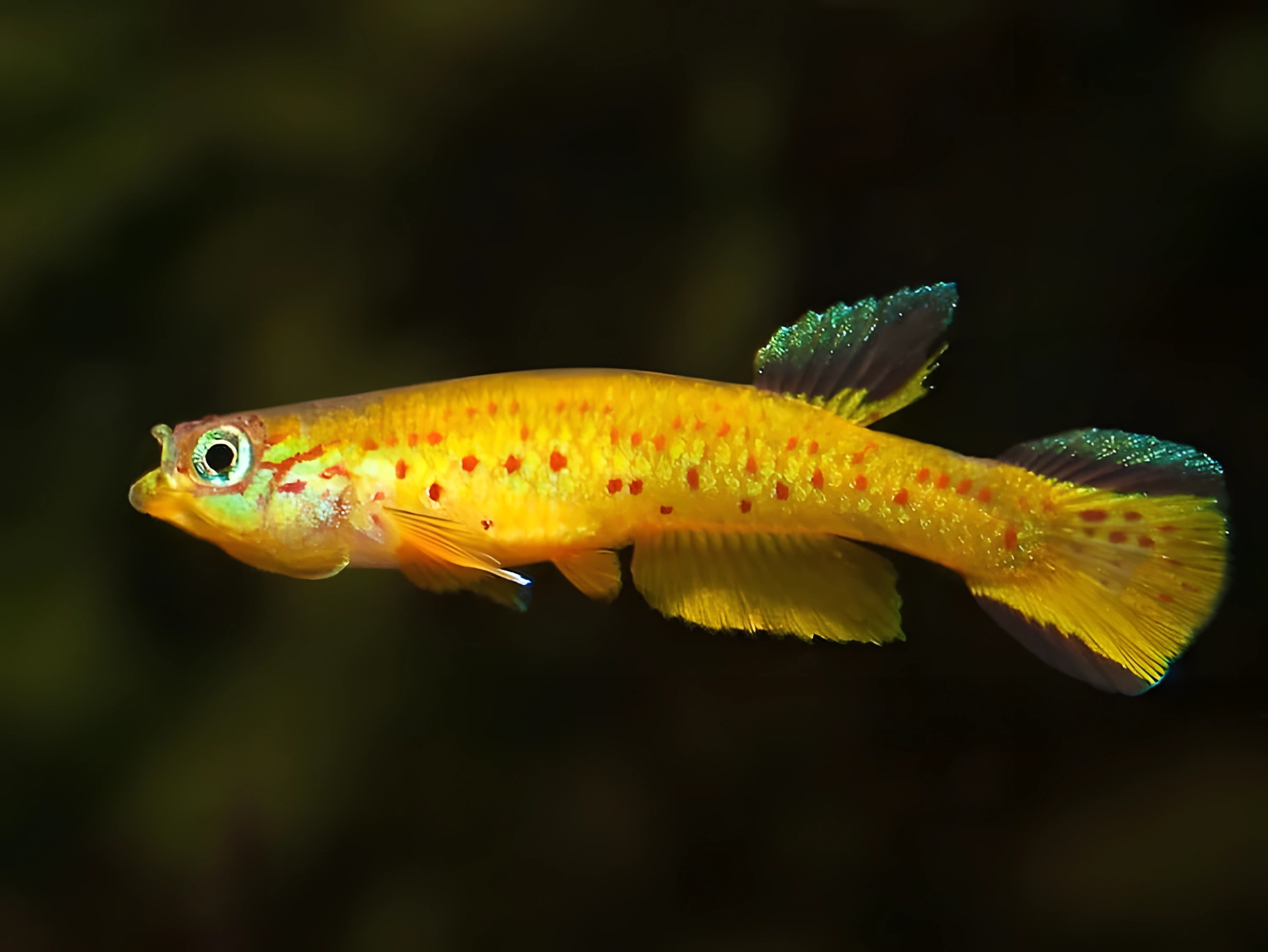
These fish grow to approximately 4 cm in length. Their primary coloration is golden-yellow, adorned with small, irregularly shaped red spots. The pectoral fins are light orange. The tail features yellow tones with red speckles and a dark edge. A slight bluish sheen can be observed on the opercula of the head. An important characteristic of the Congo Aphyosemion, distinguishing it from most other Killifish species, is the absence of seasonality in its life cycle. The lifespan of this species can exceed 3 years.
Habitat
This fish originates from the African continent, but the exact boundaries of its natural range remain not fully defined. It is presumed to inhabit water bodies in the Congo River basin, located in the equatorial part of the Democratic Republic of Congo. The Congo Aphyosemion was first discovered in forest streams of the jungles southeast of the city of Kinshasa.
Behavior and Compatibility
The Congo Aphyosemion is a peaceful and active fish. It coexists well with other non-aggressive species of similar size. However, males may compete for the attention of females. When kept in a small aquarium, it is recommended to limit it to one male with several females.
Care and Maintenance
In its natural habitat, this species prefers small water bodies and puddles formed in the leaf litter of moist equatorial forests. Thanks to this, these fish can be successfully kept in rather modest-sized tanks. For example, an aquarium of 20 liters or more will be sufficient for a pair of Congo Aphyosemions. When aquascaping, it is recommended to use a large number of aquatic plants, including floating ones, which provide necessary shading. The presence of natural driftwood and leaves from certain trees placed on the substrate is also welcome. This species is considered quite hardy, capable of tolerating significant temperature fluctuations, including a brief increase up to 30°C. Nevertheless, the optimal comfortable range for them is 20°C to 24°C. It is important to maintain GH and pH parameters at soft, slightly acidic, or neutral values. The fish is sensitive to water quality, which is especially important to consider in small aquariums. Regular water changes with fresh water should be performed, combined with the removal of organic waste. It is not recommended to use powerful filters that create strong currents; a simple air-driven sponge filter may be a better choice. Congo Aphyosemions readily accept most popular foods. Live and frozen foods, such as bloodworms and large brine shrimp, are most preferred.
Diet
Most common foods are well-accepted by the fish, but preference should be given to live or frozen products, such as bloodworms and large brine shrimp. Breeding this species in a home aquarium is a challenging task. Typically, the fish lay only a few eggs. It is worth noting that the most productive breeding period begins when the fish reach one year of age, and winter is considered the most favorable time for spawning. These fish do not exhibit parental instinct. Fry, once hatched, should be transferred to a separate tank with identical water parameters. Feeding them with brine shrimp nauplii or other small foods promotes rapid growth – they can grow up to 3 cm in 4 months.
Breeding and Reproduction
Breeding in a home aquarium presents certain difficulties. Usually, the fish produce only a small number of eggs. Active reproduction typically begins after they reach one year of age. The most suitable period for spawning occurs during the winter months. These fish do not exhibit parental care. For this reason, hatched fry should, if possible, be moved to a separate aquarium with similar water parameters. It is recommended to feed the young with brine shrimp nauplii or other micro-foods. With such a diet, they grow quickly, reaching 3 cm in length in just 4 months.
Diseases
The species is considered relatively hardy, but sensitive to water quality and the accumulation of organic waste. Under conditions of poor filtration or infrequent water changes, the fish are susceptible to bacterial infections and the development of fin rot. An important aspect of prevention is maintaining stable environmental parameters and avoiding strong currents, which cause stress in fish and weaken their immune system.
How to choose
When selecting individuals, attention should be paid to their activity and the cleanliness of their skin: there should be no white film, ulcers, or fin damage on the body. A healthy fish shows curiosity, stays in the water column, and actively responds to food. Avoid purchasing fish that appear emaciated, stay at the surface, or show signs of apathy, as this species tolerates transportation and adaptation poorly.
Frequently asked questions
The essentials: size, tank volume, water parameters and care
How big does Congo Aphyosemion get?
An adult reaches 4 cm in length. Plan the tank around the maximum size: the fish quickly outgrows a cramped setup.
What size aquarium does Congo Aphyosemion need?
The minimum recommended volume is 40 L. A smaller tank speeds up nitrate build-up and raises stress levels.
What water parameters does Congo Aphyosemion need?
Temperature 20–24 °C, pH 6–7.5, hardness 5–15 dGH. Stability matters more than exact values: sudden swings are harder on the fish than a small deviation from the ideal.
How long does Congo Aphyosemion live?
Around 3 years when kept properly. Lifespan depends directly on tank volume, water quality and a varied diet.
Is Congo Aphyosemion aggressive?
Temperament: peaceful (regular). Keep this in mind when choosing tank mates.
How many Congo Aphyosemion should be kept together?
Recommended setup: harem (1 male and several females). Ignoring this is a common cause of stress and disease.
What does Congo Aphyosemion eat?
Diet type: plant-based (algae, vegetables). Feed small portions that are finished within a couple of minutes — overfeeding does more harm than underfeeding.
What is the scientific name of Congo Aphyosemion?
The scientific name of the species is Aphyosemion congicum, family Nothobranchiidae. It also appears in the literature as: Aphyosemion melanopteron, Panchax congicus.