Temperature18 – 23 °C
Natural range
- Cameroon area
- Gabon area
- Republic of the Congo area
- Equatorial Guinea area
KillifishConservation status: Least concern LC
Other scientific names: Aphyosemion ahli, Aphyosemion bellicauda, Aphyosemion cameronensis, Aphyosemion haasi, Aphyosemion halleri, Aphyosemion microstomum
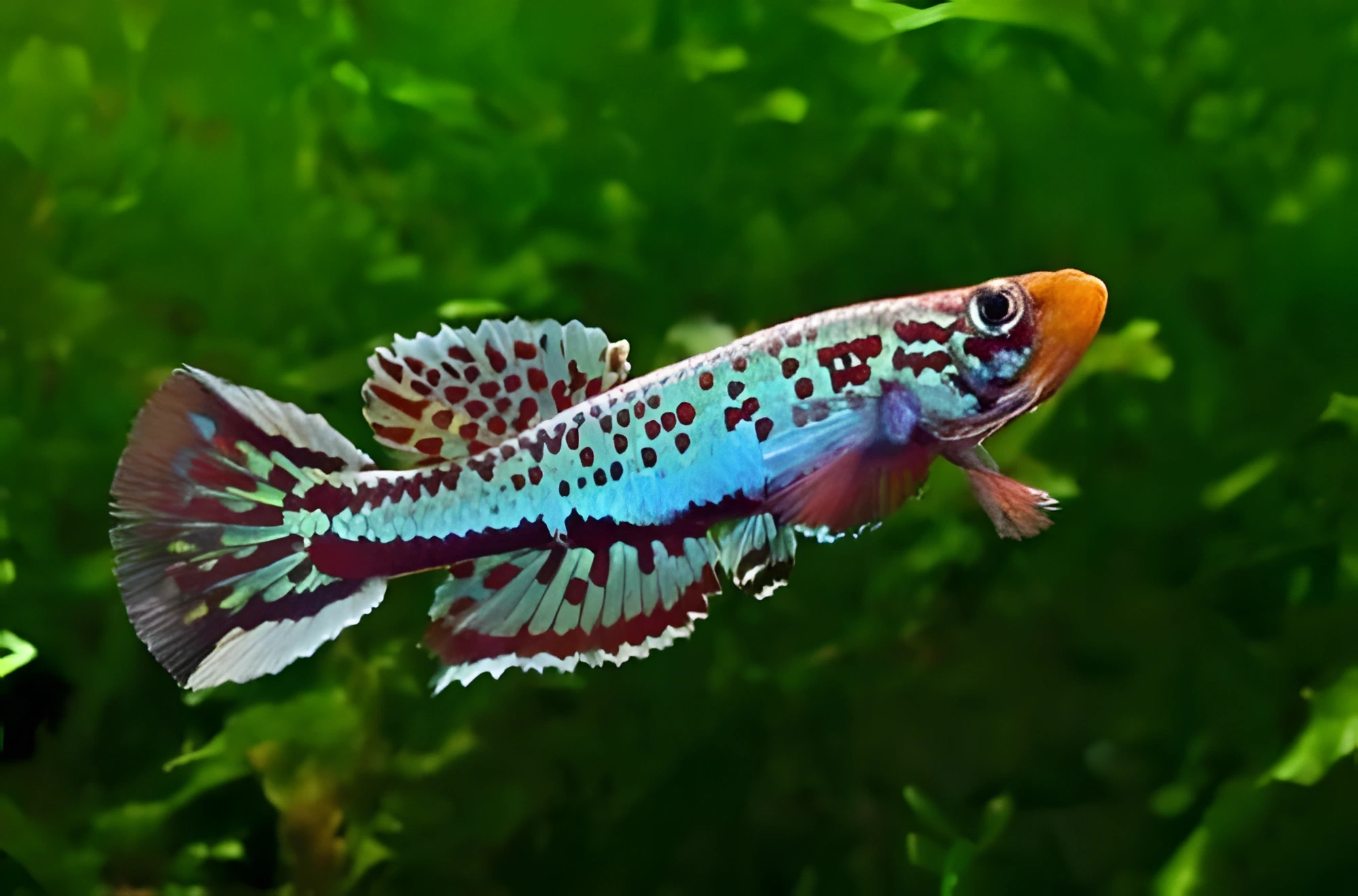
Aphyosemion cameronense, known in scientific literature as Aphyosemion cameronense, is a member of the family Nothobranchiidae. This small fish is distinguished by its bright coloration and rather spirited character. Its maintenance in an aquarium can be somewhat more challenging than with more common species.
- Required aquarium volume
- 40 L
- Size in aquarium
- 4 – 6 cm
- Temperature
- 18 – 23 °C
- Temperament
- Peaceful (regular)
Parameters
Water pHSlightly acidic (5.5) – Neutral (6.5)
Water dHVery soft (2) – Soft (7)
Water salinityno salt (freshwater)
Size in aquarium4 – 6 cm
Lifespan3 years
TemperamentPeaceful (regular)
Toward small fishnot a predator
Required aquarium volume40 L
Lightingdimmed
Substratesoft sandy (including silted)
Water flownone or stagnant (no flow)
FeedingHigh protein (predominantly meat)
CareSmall group (3–4 individuals)
Description
Pronounced sexual dimorphism is a characteristic feature of this species. Males reach a length of up to 4 cm and are distinguished by their bright, variegated coloration, combining blue and red hues. Females, in contrast, are larger, growing up to 6 cm, but their coloration is significantly less vibrant than that of the males.
Habitat
The natural habitats of this species are found in equatorial Africa. Despite its name, its range is significantly wider than Cameroon and also includes the northern parts of Gabon, Congo, and Equatorial Guinea. The fish prefers shallow streams and ponds hidden under the thickets of humid tropical forests. A typical biotope usually consists of a shallow body of water with dim lighting, where plant organic matter accumulates at the bottom—fallen leaves, branches, and tree roots. The substrate consists predominantly of silt and other bottom deposits.
Behavior and Compatibility
Males exhibit belligerent behavior towards each other, actively competing for territory. They are also not very tolerant of females outside the breeding period. Smaller individuals are constantly attacked by larger ones. The presence of shelters somewhat helps to reduce the level of aggression. Such behavior can also extend to other representatives of closely related species.
Care and Maintenance
For 4–5 individuals, an aquarium of 30–40 liters will be optimal. In terms of decor, soft dark substrate and dense thickets of plants, including floating species, are preferred. Lighting should be subdued. These fish require soft, slightly acidic water, as well as relatively cool conditions for tropical species: the temperature should not exceed 23°C. The latter can be a problem in the summer, as cooling the water will be required instead of heating. It is also important to consider that the fish do not tolerate strong currents in the aquarium, which is often a consequence of the filtration system's operation. Therefore, it is recommended to use a simple air-driven filter that does not create excessive water movement.
Diet
Aphyosemion cameronense is an omnivorous fish and can be accustomed to dry freeze-dried foods. Nevertheless, many aquarists note that these fish show a particular preference for live or frozen foods, such as bloodworms, Artemia, large Daphnia, and Drosophila fruit flies.
Breeding and Reproduction
In conditions of an unstable natural environment, where shallow bodies of water can completely dry out, turning into muddy puddles, these fish have developed a unique breeding strategy. They lay their eggs on the substrate or among dense plant thickets. If the body of water dries out, the eggs enter a state of "suspended animation," awaiting the arrival of rains. In such circumstances, the incubation period can last several months. If the water level remains stable, the fry emerge after 14–20 days.
Diseases
Creating suitable living conditions minimizes the risk of disease. The use of live food can pose a certain threat, as it is often a carrier of parasites. However, the strong immune system of a healthy fish successfully copes with such challenges. More detailed information on symptoms and treatment methods can be found in the "Diseases of Aquarium Fish" section.
How to choose
When selecting individuals, it is necessary to pay attention to their activity and the cleanliness of their skin. Healthy fish should show interest in their surroundings, have no visible fin damage, ulcers, or white film on their bodies. Avoid purchasing fish that stay at the water surface, breathe heavily, or show signs of emaciation, as the species is sensitive to transport conditions and can be susceptible to diseases under stress. It is advisable to acquire young individuals, as they adapt more easily to new keeping conditions.
Frequently asked questions
The essentials: size, tank volume, water parameters and care
How big does Aphyosemion cameronense get?
An adult reaches 4–6 cm in length. Plan the tank around the maximum size: the fish quickly outgrows a cramped setup.
What size aquarium does Aphyosemion cameronense need?
The minimum recommended volume is 40 L. A smaller tank speeds up nitrate build-up and raises stress levels.
What water parameters does Aphyosemion cameronense need?
Temperature 18–23 °C, pH 5.5–6.5, hardness 2–7 dGH. Stability matters more than exact values: sudden swings are harder on the fish than a small deviation from the ideal.
How long does Aphyosemion cameronense live?
Around 3 years when kept properly. Lifespan depends directly on tank volume, water quality and a varied diet.
Is Aphyosemion cameronense aggressive?
Temperament: peaceful (regular). Keep this in mind when choosing tank mates.
How many Aphyosemion cameronense should be kept together?
Recommended setup: small group (3–4 individuals). Ignoring this is a common cause of stress and disease.
What does Aphyosemion cameronense eat?
Diet type: high protein (predominantly meat). Feed small portions that are finished within a couple of minutes — overfeeding does more harm than underfeeding.
What is the scientific name of Aphyosemion cameronense?
The scientific name of the species is Aphyosemion cameronense, family Nothobranchiidae. It also appears in the literature as: Aphyosemion ahli, Aphyosemion bellicauda, Aphyosemion cameronensis.