Temperature20 – 26 °C
Natural range
- Paraguay River Basin
- Paraná River Basin
- Uruguay River Basin
- Southern Brazil area
CharacinsConservation status: Least concern LC
Other scientific names: Aphyocharax stramineus, Piabarchus stramineus
Aphyocharax rathbuni, known scientifically as Aphyocharax rathbuni, belongs to the extensive Characidae family. This active, miniature fish is easy to keep and successfully breeds in aquarium conditions. It coexists well with many other freshwater species, making it an attractive choice for beginner aquarists.
- Required aquarium volume
- 40 L
- Size in aquarium
- 3 – 4 cm
- Temperature
- 20 – 26 °C
- Temperament
- Peaceful (regular)
Parameters
Water pHNeutral (6.5) – Neutral (7.5)
Water dHVery soft (2) – Very hard (21)
Water salinityno salt (freshwater)
Size in aquarium3 – 4 cm
Lifespan4 years
TemperamentPeaceful (regular)
Toward small fishnot a predator
Required aquarium volume40 L
Lightingdimmed
Substrateany (no restrictions)
Water flowweak
FeedingAny (universal)
CareMedium group (6–8 individuals)
Description
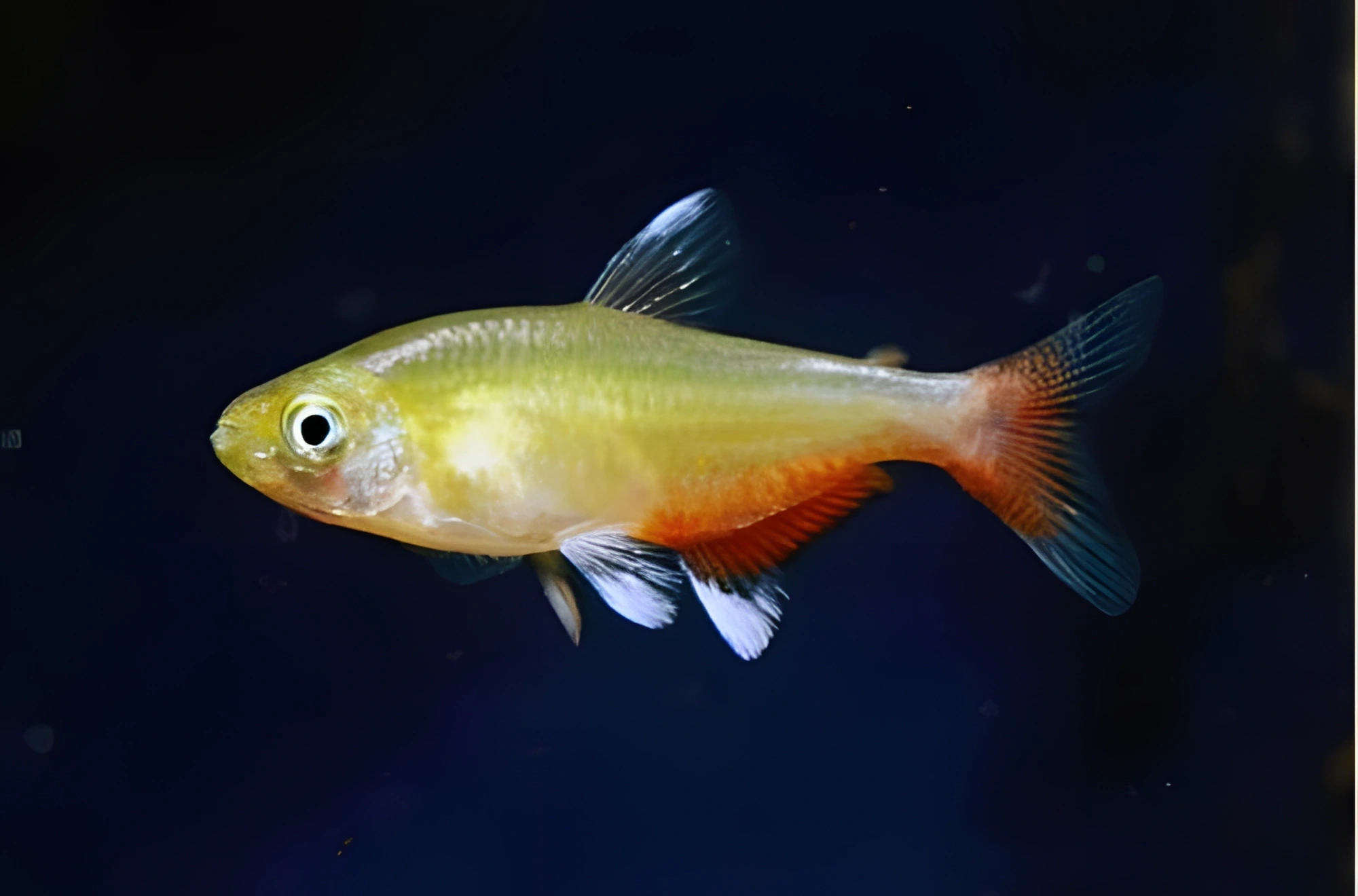
Adults of this fish reach a length of 3 to 4 cm. Sexual dimorphism is weakly expressed, so the differences between males and females are minimal. Young fish have a silvery coloration with a reddish tint on the lower part of the caudal peduncle. Over time, their coloration acquires yellow or golden tones, and the transparent anal and dorsal fins turn red. White markings can be seen on the other fins.
Habitat
Its natural habitat is located in South America, covering the basins of the Paraguay, Paraná, and Uruguay rivers. These bodies of water extend across the territories of the eponymous countries, as well as in southern Brazil and northern Argentina. It prefers to live in small rivers and streams, where it finds shelter in the shade of overhanging and aquatic vegetation.
Behavior and Compatibility
This peaceful and active fish feels best in a school of at least 6–8 individuals. It is well compatible with other non-aggressive species of comparable size. However, it should be noted that the excessive activity of Aphyocharax rathbuni can cause discomfort for some calmer fish. Therefore, the choice of tank mates should be approached with caution.
Care and Maintenance
For comfortable keeping of a school of 6–8 individuals, an aquarium of 40–50 L will be optimal. In the setup, it is recommended to use a sandy substrate and dense thickets of aquatic plants. At the same time, they should be arranged in such a way that free areas for swimming remain. The fish is not demanding regarding the hydrochemical composition of the water and is easy to maintain, easily adapting to a wide range of pH and dGH values. However, such unpretentiousness does not negate the importance of maintaining high water quality. The accumulation of organic waste, which can lead to a dangerous increase in the concentrations of nitrogen cycle products (ammonia, nitrites, nitrates), is unacceptable. The biological balance in the aquarium largely depends on the regularity of maintenance and the uninterrupted operation of the main equipment, including the filtration system.
Diet
This species is omnivorous. Aphyocharax rathbuni readily accepts various foods intended for aquarium fish. Its daily diet may include dry flakes and granules. These are recommended to be combined with live or frozen brine shrimp, bloodworms, and daphnia.
Breeding and Reproduction
Favorable conditions for spawning are achieved in slightly acidic and soft water. The fish scatter their eggs among plants; thanks to sticky threads, the eggs attach to their surface. One female can lay up to 500 eggs. The incubation period lasts 2–3 days, and after just one week, the fry begin to swim freely. Parental instincts are not developed in this species; the fish do not care for their offspring and may eat them if given the opportunity. If breeding is planned, the eggs or hatched fry should be moved to a separate tank with identical water parameters.
Diseases
Cottelata brittani is a hardy and undemanding fish. When suitable keeping conditions are met, health problems usually do not arise. Diseases can appear in cases of injury, contact with already sick fish, or a significant deterioration of habitat parameters (for example, in a dirty aquarium or with poor nutrition). More detailed information on symptoms and treatment methods can be found in the section "Diseases of aquarium fish."
How to choose
When choosing Aphyocharax rathbuni, attention should be paid to the overall activity of the school and the cleanliness of the skin. Healthy fish should be active, without visible damage, ulcers, or film on the body. Avoid individuals with signs of emaciation, sunken bellies, or unnaturally bloated abdomens. Remember that young specimens may appear paler than adults, but their coloration should gradually develop with proper care.
Consider the structural features of males: their anal fins have special hooks that can catch on a net when caught. When purchasing, it is important to ensure that the fish have not sustained fin injuries during transportation or transfer at the store, as any damage can lead to infections or render the male unable to reproduce. It is advisable to acquire a group of 6–8 individuals, as this is a schooling species that experiences stress when kept alone.
Frequently asked questions
The essentials: size, tank volume, water parameters and care
How big does Aphyocharax rathbuni get?
An adult reaches 3–4 cm in length. Plan the tank around the maximum size: the fish quickly outgrows a cramped setup.
What size aquarium does Aphyocharax rathbuni need?
The minimum recommended volume is 40 L. A smaller tank speeds up nitrate build-up and raises stress levels.
What water parameters does Aphyocharax rathbuni need?
Temperature 20–26 °C, pH 6.5–7.5, hardness 2–21 dGH. Stability matters more than exact values: sudden swings are harder on the fish than a small deviation from the ideal.
How long does Aphyocharax rathbuni live?
Around 4 years when kept properly. Lifespan depends directly on tank volume, water quality and a varied diet.
Is Aphyocharax rathbuni aggressive?
Temperament: peaceful (regular). Keep this in mind when choosing tank mates.
How many Aphyocharax rathbuni should be kept together?
Recommended setup: medium group (6–8 individuals). Ignoring this is a common cause of stress and disease.
What does Aphyocharax rathbuni eat?
Diet type: any (universal). Feed small portions that are finished within a couple of minutes — overfeeding does more harm than underfeeding.
What is the scientific name of Aphyocharax rathbuni?
The scientific name of the species is Aphyocharax rathbuni, family Characidae. It also appears in the literature as: Aphyocharax stramineus, Piabarchus stramineus.