Temperature22 – 27 °C
Natural range
- Southern Brazil area
- Bolivia area
- Paraguay area
- Paraná River Basin
CharacinsConservation status: Least concern LC
Other scientific names: Aphyocharax paraguayensis, Cheirodon steindachneri, Chirodon nattereri, Chirodon pulcher
Aphyocharax nattereri, also known as Natterer's Aphyocharax, belongs to the Characidae family. This species is not as commonly found in pet stores as its tetra relatives, yet it possesses no less attractiveness and similar hardiness.
- Required aquarium volume
- 40 L
- Size in aquarium
- 3 – 4 cm
- Temperature
- 22 – 27 °C
- Temperament
- Peaceful (regular)
Parameters
Water pHSlightly acidic (5.5) – Neutral (7.5)
Water dHVery soft (1) – Hard (15)
Water salinityno salt (freshwater)
Size in aquarium3 – 4 cm
Lifespan4 years
TemperamentPeaceful (regular)
Toward small fishnot a predator
Required aquarium volume40 L
Lightingdimmed
Substrateany (no restrictions)
Water flowweak
FeedingAny (universal)
CareMedium group (6–8 individuals)
Description
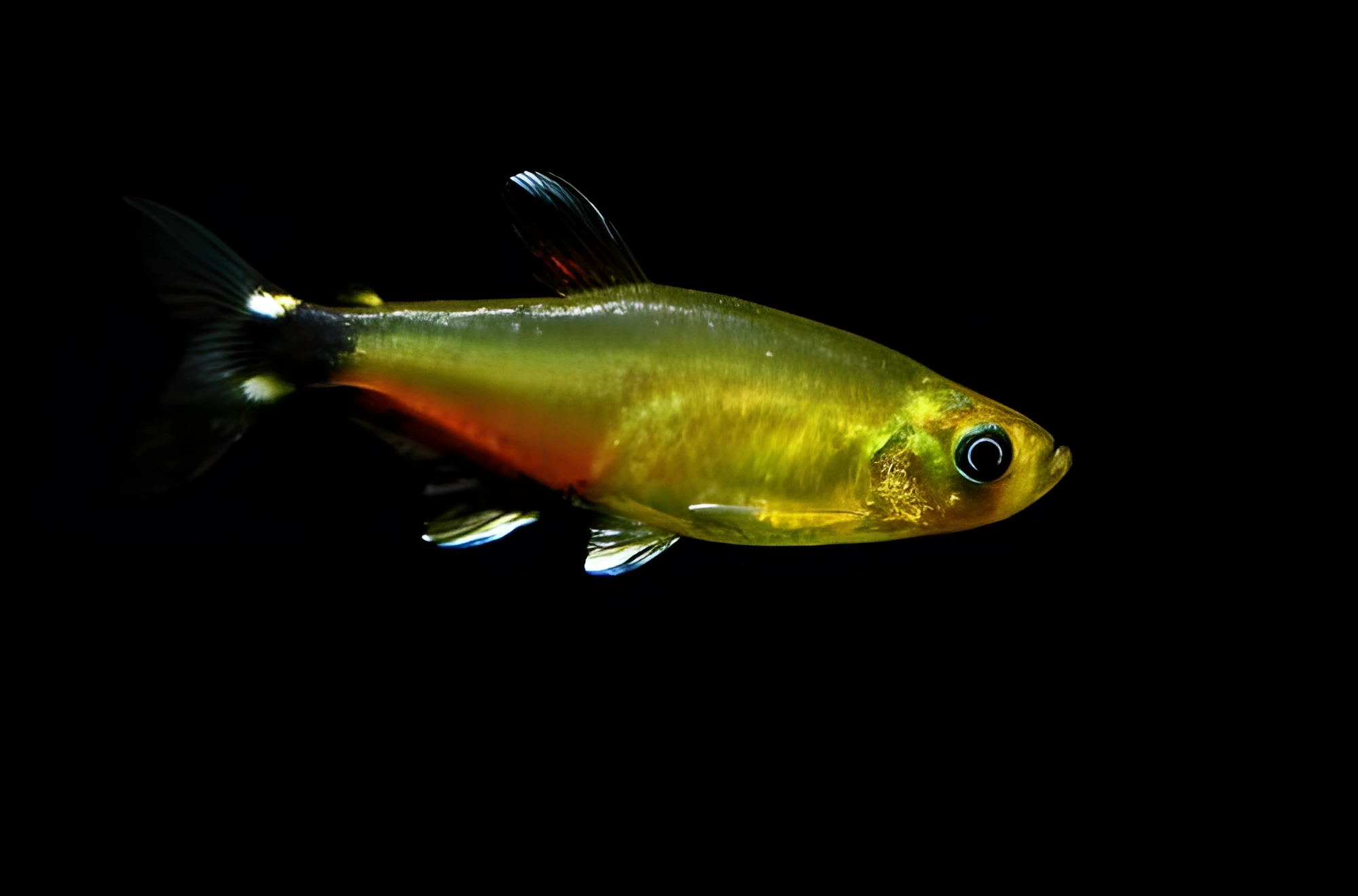
Adult Aphyocharax nattereri typically reach a length of about 3 cm or more. Their coloration is predominantly golden or yellow, with black and white spots marking the tips of their fins and the base of the caudal fin. Males may exhibit red hues in the lower posterior part of their bodies; otherwise, they differ little from females.
Habitat
The natural habitat of Aphyocharax nattereri spans South America, specifically the river systems of southern Brazil, as well as Bolivia and Paraguay. These fish are most often found in small streams, rivers, and shallow tributaries of larger bodies of water, preferring areas with abundant driftwood and riparian aquatic vegetation, where they find shelter in the shade of plants.
Behavior and Compatibility
This peaceful and active fish coexists well with other species of similar size. Due to its modest size, it should not be housed with large fish. It is recommended to keep them in schools of at least 6–8 individuals. Good tank mates can include other tetras, small South American cichlids, including apistogrammas, as well as cyprinids and other species.
Care and Maintenance
For a school of 6–8 fish, an optimal aquarium volume starts from 40 liters. The aquascape benefits from elements that recreate their natural environment: dense aquatic vegetation should alternate with open swimming areas. Driftwood decor (pieces of wood, roots, branches) will also be appropriate. It is important to note that these fish are prone to jumping out of the water, so a lid on the aquarium is essential. Keeping Aphyocharax nattereri is not difficult even for beginner aquarists. The fish are hardy and can adapt to wide fluctuations in hydrochemical parameters (pH and dGH). Nevertheless, this does not negate the need to maintain high water quality. The accumulation of organic waste, as well as sudden changes in temperature, pH, and dGH, should be avoided. The stability of the aquatic environment largely depends on the effective operation of the filtration system and regular aquarium maintenance.
Diet
This omnivorous species easily adapts to home feeding, accepting most appropriately sized foods. The daily diet can include dry foods such as flakes and pellets, supplemented with live or frozen organisms, such as daphnia, Artemia, or bloodworms.
Breeding and Reproduction
For successful spawning of Aphyocharax nattereri, soft, slightly acidic water conditions (dGH 2–5, pH 5.5–6.0) are preferred. The fish scatter their eggs among dense aquatic plants rather haphazardly, without forming an organized clutch, so the eggs may be dispersed throughout the bottom. Despite their small size, Aphyocharax nattereri are quite prolific: one female can lay hundreds of eggs. Parental instincts are absent in this species, and the fish do not care for their offspring. Moreover, adult fish may eat their fry if given the opportunity. When planning breeding, it is recommended to move the eggs to a separate aquarium with similar water parameters. The incubation period lasts about 24 hours. In the first days of life, the fry feed on their yolk sacs, and then begin to actively search for food. Since the fry are very small, they require microscopic food, such as paramecium or special liquid/powdered fry foods.
Diseases
Cottelata brittani is a hardy and undemanding fish. When suitable keeping conditions are met, health problems usually do not arise. Diseases can appear in cases of injury, contact with already sick fish, or a significant deterioration of habitat parameters (for example, in a dirty aquarium or with poor nutrition). More detailed information on symptoms and treatment methods can be found in the section "Diseases of aquarium fish."
How to choose
When selecting Aphyocharax nattereri individuals, it is important to pay attention to their overall activity and the condition of their fins, which should be intact, without signs of damage or whitish film. Healthy fish stay in a school, are curious, and actively move through the water column. Avoid purchasing specimens that appear apathetic, stay alone near the surface or bottom, or have sunken bellies, which may indicate emaciation or internal diseases. Since the species is quite rare in trade, it is recommended to clarify the keeping conditions at the specific store before purchasing, as stress from transportation and changes in water parameters can negatively affect the immunity of these sensitive fish.
Frequently asked questions
The essentials: size, tank volume, water parameters and care
How big does Aphyocharax nattereri get?
An adult reaches 3–4 cm in length. Plan the tank around the maximum size: the fish quickly outgrows a cramped setup.
What size aquarium does Aphyocharax nattereri need?
The minimum recommended volume is 40 L. A smaller tank speeds up nitrate build-up and raises stress levels.
What water parameters does Aphyocharax nattereri need?
Temperature 22–27 °C, pH 5.5–7.5, hardness 1–15 dGH. Stability matters more than exact values: sudden swings are harder on the fish than a small deviation from the ideal.
How long does Aphyocharax nattereri live?
Around 4 years when kept properly. Lifespan depends directly on tank volume, water quality and a varied diet.
Is Aphyocharax nattereri aggressive?
Temperament: peaceful (regular). Keep this in mind when choosing tank mates.
How many Aphyocharax nattereri should be kept together?
Recommended setup: medium group (6–8 individuals). Ignoring this is a common cause of stress and disease.
What does Aphyocharax nattereri eat?
Diet type: any (universal). Feed small portions that are finished within a couple of minutes — overfeeding does more harm than underfeeding.
What is the scientific name of Aphyocharax nattereri?
The scientific name of the species is Aphyocharax nattereri, family Characidae. It also appears in the literature as: Aphyocharax paraguayensis, Cheirodon steindachneri, Chirodon nattereri.